Fertility Myths Debunked: What Science Actually Says About Conception


Fertility is a field where misinformation thrives. A combination of historical folklore, misinterpretation of statistics, wishful thinking, and the desperate human need for control when facing the uncertainty of conception has produced an astonishing volume of myths — many of which are actively harmful because they either create false reassurance or unnecessary anxiety.
Understanding what science actually says about conception — what is true, what is false, and what is genuinely uncertain — is one of the most empowering steps any person or couple trying to conceive can take. This guide systematically examines the most common fertility myths, replaces them with the current scientific consensus, and identifies where genuine uncertainty exists.
Myth: You Can Get Pregnant Any Day of Your Cycle
The truth: Conception is only possible during a narrow window in each cycle — approximately five to six days per cycle at most, and often fewer. This fertile window encompasses the five days prior to ovulation (because sperm can survive in the female reproductive tract for up to five days) and the day of ovulation itself (because the egg is viable for only 12 to 24 hours).
Outside this window — which in a regular 28-day cycle typically falls around days 9 to 14 — conception is not physiologically possible, regardless of when intercourse occurs. The widespread belief that pregnancy can happen "any time" of the month causes couples either to have intercourse at the wrong times repeatedly, or to not track the fertile window at all — a missed opportunity for optimising timing.
The corollary myth — that intercourse immediately before or during menstruation cannot lead to pregnancy — is partially true: conception cannot result from intercourse during menstruation itself, because ovulation has not yet occurred in that cycle. However, women with short cycles may ovulate early enough that sperm from late-menstrual-phase intercourse can survive to fertilise an egg at ovulation.
Support Every Attempt with Conceive Plus
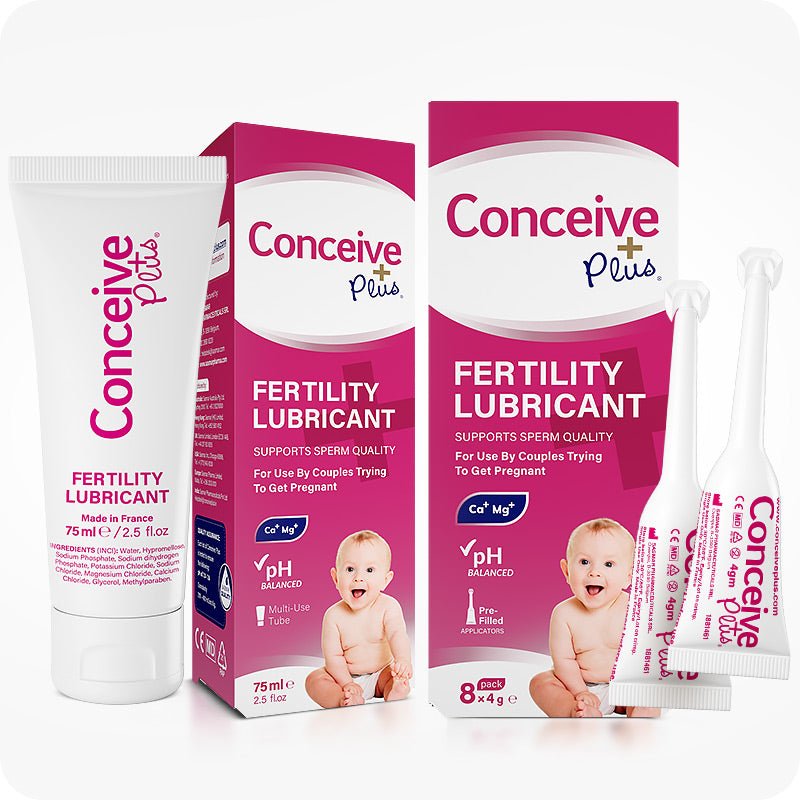
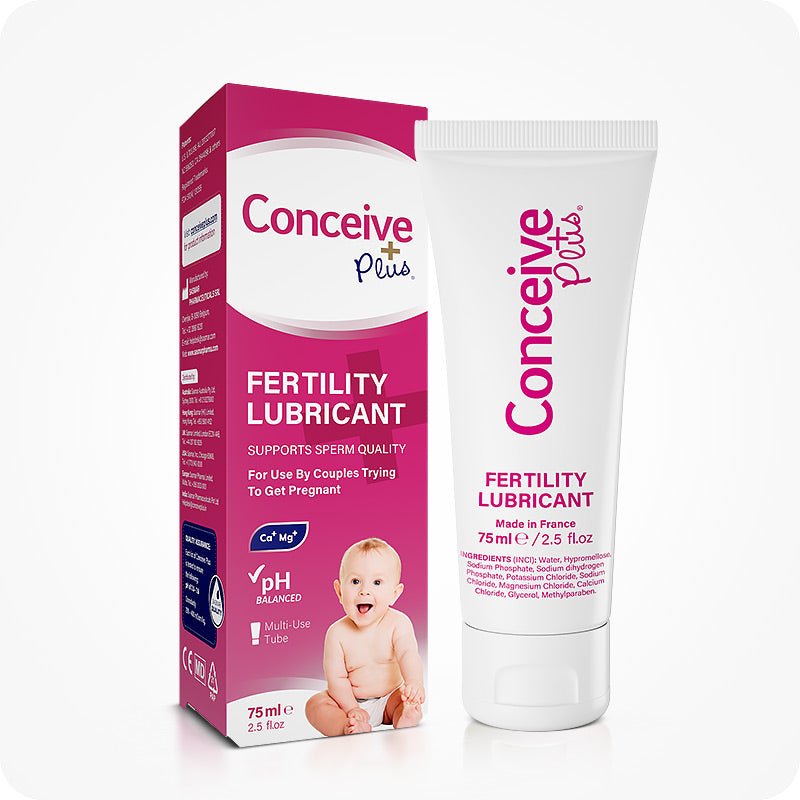
Our fertility-friendly lubricant is scientifically formulated to support sperm motility while providing the comfort you need during your fertile window. Unlike standard lubricants that can harm sperm, Conceive Plus contains the calcium and magnesium ions naturally found in the female reproductive tract.
Myth: You Should Have Sex Every Day During Your Fertile Window
The truth: Frequency of intercourse within the fertile window matters, but daily sex is not required — and may marginally reduce sperm quality in men with borderline semen parameters by not allowing sufficient time for sperm to accumulate between ejaculations. The current evidence suggests that every-other-day intercourse during the fertile window is as effective as daily intercourse, with the practical advantage of being more sustainable.
The most important intercourse timing is the day of ovulation (or the estimated day) and the one to two days prior — the days with the highest probability of conception per act of intercourse. Ovulation predictor kits (OPKs) that detect the LH surge are useful for identifying the 24 to 36 hours before ovulation — the optimal window for intercourse.
For most couples with normal fertility, two to three times per week throughout the cycle (not just during the fertile window) is sufficient to ensure that intercourse always coincides with any ovulation that occurs, without the performance pressure and scheduling stress that can accompany highly regimented timing.
Myth: Lying on Your Back After Sex Helps Conception
The truth: There is no scientific evidence that post-coital positions — lying on your back, elevating your hips, or any other position — improve conception rates. Sperm begin moving toward the fallopian tubes within seconds of ejaculation, with the fastest swimmers reaching the tubes within minutes. The anatomical design of the cervix and cervical mucus during the fertile window creates a direct pathway for sperm entry regardless of body position.
A randomised controlled trial published in the British Medical Journal (the ALIFE trial) specifically tested whether 15 minutes of supine rest after IUI improved pregnancy rates. It did not — the trial found no difference. If lying still for 15 minutes makes no difference after IUI (where sperm are placed directly at the cervix), it is difficult to argue that position changes after natural intercourse would have an effect.
This myth is harmless, but the anxiety it creates — worrying that getting up "too soon" has ruined a chance — adds unnecessary stress to an already stressful process.
Myth: Fertility Declines Sharply at 35
The truth: Age-related fertility decline is real — but the dramatic narrative of a fertility "cliff" at age 35 is a significant oversimplification that causes unnecessary panic for many women in their early to mid-30s, and potentially false reassurance for women in their late 30s.
The reality is a gradual decline that accelerates progressively throughout the 30s and 40s. Studies of fertility in different age groups (often from historical populations or carefully conducted prospective cohorts) show the following picture: fertility is at its peak in the early 20s; declines modestly through the late 20s; declines more noticeably through the early to mid-30s; declines more substantially from the late 30s; and declines sharply after 40. There is no sudden "cliff" at 35 — it is a continuous process.
The "35" threshold is a statistical risk category used in clinical medicine — women over 35 are classified as "advanced maternal age" for the purpose of offering additional screening. It was chosen as a point at which the risk of chromosomal abnormality in the egg (primarily due to non-disjunction during meiosis) exceeds the risk of amniocentesis-related pregnancy loss. It was never intended to mark a dramatic fertility endpoint.
At 35, most women remain fertile. At 38 or 39, fertility is meaningfully reduced but many women conceive naturally. At 40+, fertility declines more substantially, but natural conception remains possible for many women. Proactive action — seeing a fertility specialist, optimising nutrition and supplements, and not delaying evaluation — is more useful than panic at any specific age threshold.
A Complete Fertility Support System for Both Partners
When both partners optimise their nutrition, conception chances improve significantly. Conceive Plus offers a complete range of scientifically formulated fertility supplements for women and men — plus our fertility-friendly lubricant.
Myth: Stress Causes Infertility
The truth: This myth requires nuance because it contains a kernel of truth that has been dramatically amplified beyond the evidence. Chronic severe stress can disrupt reproductive hormone regulation — elevated cortisol suppresses GnRH pulsatility, which reduces LH and FSH, which can impair ovulation and reduce testosterone in men. This is most clearly seen in extreme stress conditions: famine, athletes training at excessive volumes, eating disorders, and severe psychological trauma.
However, the everyday stress of trying to conceive, work pressure, or relationship strain is not a major cause of infertility in the clinical sense. Large prospective studies have found only weak associations between self-reported stress and time to pregnancy in the general population. The PRISM trial — the largest randomised trial of psychological intervention in IVF — found that cognitive behavioural therapy reduced psychological distress significantly but did not improve IVF live birth rates.
The harmful aspect of the "stress causes infertility" myth is that it adds guilt to an already distressing situation. Women who have been trying to conceive for a year are commonly told — often by well-meaning friends or family — to "just relax and it will happen." This advice is both unhelpful and medically inaccurate. Infertility is almost always caused by diagnosable physical factors — ovulation disorders, sperm abnormalities, tubal damage, uterine factors — not by psychological states.
That said, managing stress is still worthwhile — not primarily as a fertility intervention, but for quality of life and overall health. The toll of infertility-related stress is real and significant, and evidence-based approaches (mindfulness, CBT, support groups) genuinely reduce that toll regardless of their effect on conception rates.
Myth: If You've Conceived Before, You Won't Have Fertility Problems
The truth: Secondary infertility — difficulty conceiving after having already had a successful pregnancy — is as common as primary infertility, affecting approximately 10% of couples who already have one or more children. It accounts for roughly 50% of all infertility cases.
Secondary infertility can result from changes in either partner's fertility since the previous pregnancy: new ovarian conditions, fallopian tube damage from a uterine infection or surgical procedure, changes in sperm parameters, uterine abnormalities such as fibroids or endometrial scarring (Asherman's syndrome), or simply the natural age-related decline in fertility that may have occurred since the first conception.
The myth that prior conception is a guarantee of future fertility causes couples experiencing secondary infertility to delay seeking medical evaluation, often waiting longer than they otherwise would before getting help. If conception is not occurring within the same timeframes that would trigger evaluation in a couple without previous children — typically 12 months under 35, or six months over 35 — evaluation is warranted regardless of prior reproductive history.
Myth: Regular Lubricants Are Fine to Use When Trying to Conceive
The truth: Standard commercial lubricants — including well-known brands like KY Jelly, Durex, Astroglide, and coconut oil — can significantly reduce sperm motility and survival. Laboratory studies have found that standard lubricants reduce sperm progressive motility by 60 to 90% within 30 to 60 minutes of exposure. This is caused by osmolality and pH incompatibility with the sperm microenvironment, as well as the lubricant viscosity interfering with sperm movement.
A fertility-friendly lubricant is formulated to be isotonic and pH-balanced to match the cervical mucus environment during the fertile window, allowing sperm to move freely through it. Conceive Plus is the only fertility lubricant that also contains calcium and magnesium ions — essential co-factors for the sperm capacitation process that prepares sperm for fertilisation.
If you need lubrication during the fertile window, this is not a minor consideration — it directly affects sperm reaching the egg.
Myth: You'll Know You've Ovulated Because of How You Feel
The truth: Ovulation is clinically silent for most women most of the time. The ovulatory surge and follicle rupture produce no reliable sensations that can be used for timing. Approximately 20% of women report mid-cycle pain (mittelschmerz) that may indicate ovulation, but this pain can precede ovulation by hours to days and is not a reliable timing marker.
The only reliable methods for confirming ovulation and timing intercourse are:
Ovulation predictor kits (OPKs): detect the LH surge that precedes ovulation by 24 to 36 hours — the most practical home method.
Basal body temperature (BBT) tracking: the characteristic post-ovulation temperature rise (0.2 to 0.5°C) confirms that ovulation has occurred — but only retrospectively, after the fertile window has passed.
Ultrasound monitoring: the most accurate method, showing follicle development and confirming rupture — used in medically monitored cycles.
AMH and antral follicle count: these measure ovarian reserve (the quantity of eggs remaining) rather than confirming any specific ovulation.
Myth: Fertility Problems Are Mostly a Female Issue
The truth: Male factor infertility contributes to approximately 40 to 50% of all infertility cases, either as the sole cause (20 to 30%) or as a contributing factor (10 to 20%). Yet fertility evaluation frequently begins with the female partner — and male testing is often delayed, even when simple, non-invasive semen analysis could quickly identify a male factor and redirect investigation appropriately.
Both partners should be evaluated early in the infertility work-up. A semen analysis is simple, inexpensive, non-invasive, and provides crucial information. Male factor is as important as female factor, and ignoring it wastes time and subjects the female partner to potentially unnecessary investigation and treatment.
The persistence of this myth has real consequences: couples may spend months or years optimising the female partner's fertility while an undiagnosed male factor significantly limits their chances. Any fertility evaluation should include semen analysis from the outset.
Frequently Asked Questions
Q: How accurate are home ovulation predictor kits?
LH-detecting OPKs are generally accurate — they detect the LH surge that triggers ovulation within 24 to 36 hours. The most common sources of inaccuracy are: testing at the wrong time of day (midday urine tends to give the clearest result), testing too infrequently and missing the surge, and PCOS causing elevated baseline LH that gives false positives. Digital OPKs and monitors that also measure oestrogen improve accuracy.
Q: Can diet improve fertility?
Yes, substantially. A Mediterranean-style diet is associated with better fertility outcomes in both women and men. Specific dietary factors linked to improved fertility include higher intake of monounsaturated fats, plant proteins, antioxidant-rich fruits and vegetables, whole grains, and omega-3 fatty acids. High intake of trans fats, red meat, and refined carbohydrates is associated with worse outcomes.
Q: Is it true that having sex in certain positions improves conception chances?
No. The position during intercourse does not affect conception rates. Sperm begin swimming toward the cervix within seconds of ejaculation and reach the fallopian tubes within minutes. No sexual position or post-coital position has been shown to increase the probability of conception in clinical studies.
Q: Does caffeine affect fertility?
High caffeine intake is associated with reduced fertility — particularly above 300 to 500 mg per day (approximately 3 to 5 cups of coffee). At moderate intakes (below 200 mg/day — one to two cups of coffee), evidence is less clear, with most studies finding no significant impact. During the two week wait and early pregnancy, limiting caffeine to below 200 mg/day is a reasonable precaution.
Q: Can supplements really improve fertility?
Yes, for specific populations with specific deficiencies or conditions. Methylfolate significantly reduces neural tube defect risk and is recommended for all women trying to conceive. Myo-inositol has strong evidence for improving ovulation in PCOS. CoQ10 has evidence for supporting egg quality and sperm motility. Vitamin D supplementation is important for those who are deficient. The key is targeted supplementation based on need, not taking everything indiscriminately.
Q: Is infertility always permanent?
No. Many causes of infertility are treatable or reversible. Anovulation in PCOS responds to lifestyle changes and ovulation induction medication. Sperm parameters improve with nutritional and lifestyle interventions. Hormonal disorders can be treated. Blocked tubes can be surgically corrected in some cases. Even conditions that do not fully resolve can often be worked around with assisted reproduction. Very few diagnoses lead to a complete inability to conceive with any available treatment.
Q: Does a tilted uterus cause infertility?
No. A retroverted (tilted backward) uterus is a normal anatomical variant present in approximately 20 to 25% of women. It does not affect fertility and does not require treatment. The uterus also changes position slightly throughout the menstrual cycle. A retroverted uterus has no impact on sperm reaching the fallopian tubes or on implantation.
Q: Is it true that birth control pills cause long-term infertility?
No. Combined oral contraceptive pills suppress ovulation while taken, but fertility typically returns within one to three months of stopping — sometimes within weeks. Multiple large studies have found no increase in infertility rates in long-term oral contraceptive users compared to non-users. The perception that "the pill takes time to leave your system" typically reflects the time it takes to establish a regular ovulatory cycle, which was already irregular before the pill in some women.
Q: Does eating pineapple core after ovulation help implantation?
This is a popular TTC folk remedy based on bromelain, an enzyme in pineapple core. The hypothesis is that bromelain has anti-inflammatory and immunomodulatory properties that might improve endometrial receptivity. However, there is no clinical evidence that eating pineapple core improves implantation rates. While eating pineapple is nutritious and harmless, it should not be considered a reliable fertility intervention.
Q: Can you improve your chances of conceiving twins through diet or supplements?
Spontaneous twin conception depends primarily on genetics (family history of twins on the maternal side) and maternal age (older women release more than one egg per cycle more frequently). Consuming wild yams was proposed as increasing twin rates based on an anecdotal observation about a Nigerian tribe with high twin rates, but no controlled evidence supports this. Increasing twin rates intentionally through diet or supplements is not supported by science.
Conclusion
Fertility myths are pervasive because conception involves significant uncertainty, and uncertainty creates space for misinformation to fill. Replacing myths with evidence does something practically useful: it focuses attention on the things that actually make a difference — optimising the fertile window, supporting both partners' health, pursuing medical evaluation appropriately, using evidence-based supplements, and avoiding harmful products during the conception window.
The most empowering thing you can do when trying to conceive is to understand what is true, act on it consistently, and seek evaluation when things are not progressing as they should.
A Complete Fertility Support System for Both Partners
When both partners optimise their nutrition, conception chances improve significantly. Conceive Plus offers a complete range of scientifically formulated fertility supplements for women and men — plus our fertility-friendly lubricant.