Ovulation Tracking Methods: How to Know When You're Most Fertile


Ovulation Tracking Methods: How to Know When You're Most Fertile
Understanding your fertile window is one of the most powerful steps you can take when trying to conceive. Ovulation tracking transforms the guesswork of timing intercourse into a data-driven strategy—and it can significantly increase your monthly chances of conception.
The fertile window is shorter than most people realise: approximately 6 days, ending on the day of ovulation. Sperm can survive in the female reproductive tract for up to 5 days, which is why intercourse in the days before ovulation can result in pregnancy. The egg itself survives for only 12–24 hours after release.
This guide covers every reliable ovulation tracking method available in 2026—from simple calendar calculations to advanced cycle monitors—so you can choose the approach that fits your life and cycle.
Why Ovulation Tracking Matters
Without tracking, couples typically estimate their fertile window using the "day 14" rule—assuming ovulation occurs on day 14 of a 28-day cycle. This is statistically inaccurate for the majority of women. Research shows that only about 30% of women have a fertile window that includes day 14. In a study of 221 women, fewer than 10% ovulated on exactly day 14.
Cycle length varies naturally between women (normal range: 24–35 days) and within the same woman month to month. Ovulation can be affected by stress, illness, travel, exercise, and hormonal fluctuations. Without tracking, you might consistently miss your fertile window entirely—even while having regular intercourse.
The Calendar Method (Rhythm Method)
Ready to support your fertility journey? Explore the full Conceive Plus range at https://conceiveplus.com.au. Trusted by fertility specialists worldwide.
The simplest approach is the calendar method: tracking your cycle length over 6–12 months and estimating ovulation at approximately (cycle length minus 14) days.
How it works: If your cycle is consistently 28 days, ovulation likely occurs around day 14. If 32 days, around day 18.
Accuracy: Low to moderate. Only reliable if your cycles are very regular. A cycle that varies by even 4–5 days can shift your estimated ovulation by the same amount—potentially causing you to miss the fertile window entirely.
Best for: Women with very regular cycles as a complementary tool, not a standalone method.
Basal Body Temperature (BBT) Charting
Basal body temperature (BBT) is your resting temperature measured immediately upon waking, before any activity. After ovulation, progesterone causes a sustained rise in BBT of 0.2–0.5°C that persists until your next period.
How it works: Take your temperature at the same time every morning (before getting up) using a basal thermometer (reads to two decimal places). Chart the results over several months to identify the characteristic "thermal shift" pattern that signals ovulation has occurred.
Limitation: BBT tells you that ovulation has already happened—it cannot predict it in advance. You can use retrospective BBT data to identify your pattern and time intercourse more precisely in future cycles.
Accuracy: Moderate. Reliable for identifying post-ovulatory phase length and confirming ovulation occurred. Disrupted by poor sleep, alcohol, illness, or taking temperature at inconsistent times.
Best for: Women who want to understand their cycle pattern over time, combined with other methods for real-time prediction.
Cervical Mucus Monitoring
Oestrogen rising in the lead-up to ovulation causes the cervix to produce progressively more watery, stretchy mucus—commonly described as "egg white cervical mucus" (EWCM). This mucus is specifically designed to transport and nourish sperm.
How it works: Check cervical mucus daily by observing discharge in underwear or on toilet tissue, or by inserting a clean finger into the vagina. Track the consistency: dry → sticky → creamy → watery → egg-white. The presence of EWCM indicates high fertility.
Accuracy: Moderate to high when used consistently. Studies show that women who identify EWCM and time intercourse accordingly have higher monthly conception rates than those using calendar methods alone.
Limitation: Requires learning to identify mucus patterns accurately. Can be disrupted by infections, medications (antihistamines reduce mucus), and some fertility treatments.
Best for: Women who want a no-cost, natural method. Particularly useful combined with BBT charting (the Sympto-Thermal method).
Ovulation Predictor Kits (OPKs)
Ovulation predictor kits detect the luteinising hormone (LH) surge in urine that precedes ovulation by 24–48 hours. A positive OPK is the most reliable near-real-time predictor of impending ovulation.
How it works: Start testing urine from around day 10 of your cycle (or earlier if your cycles are short). Test at the same time each day—afternoon testing (between 12pm and 6pm) is generally most sensitive. A positive result (test line as dark or darker than the control line) indicates your LH surge.
Accuracy: High. Detects ovulation 24–48 hours in advance for most women. However, some women—particularly those with PCOS—have chronically elevated LH, which can produce false positive-like readings throughout the cycle.
Best for: Most women as the primary real-time ovulation detection tool. Digital OPKs eliminate the line-reading ambiguity of traditional strip tests.
Digital vs. Strip OPKs
Strip tests are cost-effective (can be purchased in bulk for pennies each) but require interpreting line darkness, which is subjective. Digital OPKs provide a clear smiley face or negative result, reducing error—but cost significantly more per test. For high-frequency testing during a cycle, strips are more practical.
Cycle Monitors and Smart BBT Devices
Advanced cycle monitors combine hormone testing with algorithmic cycle analysis to predict and confirm ovulation with greater accuracy than single-method approaches.
Urine Hormone Monitors
Devices like Clearblue Advanced Fertility Monitor detect both oestrogen metabolite (E3G) and LH in urine, identifying up to 6 fertile days per cycle—more than LH-only OPKs. These are particularly useful for women with irregular cycles or who want maximum fertile day identification.
Wearable BBT Monitors
New wearable devices continuously monitor body temperature overnight, providing more accurate BBT readings than manual thermometers and using algorithms to predict ovulation. Some can predict ovulation 1–3 days in advance rather than just confirming it after the fact.
Accuracy: High to very high, especially when combining hormone data with temperature tracking. These represent the current gold standard for home ovulation monitoring.
Fertility Apps
Dozens of fertility tracking apps are now available, ranging from simple period trackers to sophisticated cycle analysis tools. The better ones incorporate BBT charting, mucus tracking, OPK results, and symptom logging to provide personalised fertility predictions.
Research on their effectiveness is mixed. Apps that simply use cycle history to predict ovulation have similar accuracy to the calendar method. Apps that incorporate actual data (BBT, OPK results) can provide much higher accuracy predictions.
Key features to look for: ability to log multiple fertility signs, OPK integration, BBT charting with visual thermal shift identification, and cycle irregularity accommodation.
Saliva Ferning Microscopes
A more unusual but validated method, saliva ferning tests look for the "fern" crystal pattern that forms in dried saliva as oestrogen rises before ovulation. Handheld microscopes (available for around $30–50) allow you to observe this pattern at home.
Accuracy: Moderate. Some women find this method unreliable, particularly if saliva is contaminated by food, drink, or toothbrushing. It's better as a supplementary confirmation than a primary tracking method.
Transvaginal Ultrasound Monitoring
The gold standard for confirming ovulation is serial transvaginal ultrasound—used in fertility clinics to monitor follicle growth and confirm ovulation. This isn't typically done at home, but it's worth knowing about for those undergoing fertility treatment.
Ultrasound can identify developing follicles, measure their diameter (a mature follicle is approximately 18–24mm), and confirm post-ovulatory collapse. Some fertility clinics offer monitored natural cycles for diagnostic purposes.
Blood Tests
A mid-luteal progesterone blood test (typically done on day 21 of a 28-day cycle, or 7 days after a positive OPK) can confirm whether ovulation occurred and whether progesterone levels are adequate to support implantation. This is particularly useful for women with irregular cycles or suspected luteal phase defects.
Combining Methods: The Sympto-Hormonal Approach
The most accurate approach for most women is combining multiple methods:
- OPK for real-time LH surge detection (primary alert)
- Cervical mucus monitoring to confirm fertile-type mucus is present
- BBT charting to confirm ovulation occurred and identify cycle patterns
When all three confirm consistent findings, you have a high-confidence picture of your fertile window. Using this combined approach has been shown to increase conception rates in studies of natural cycle timing.
Optimising Your Fertile Window
Once you've identified your fertile window, make the most of it:
- Have intercourse every 1–2 days during the fertile window (daily is not necessary and may reduce sperm count in some men)
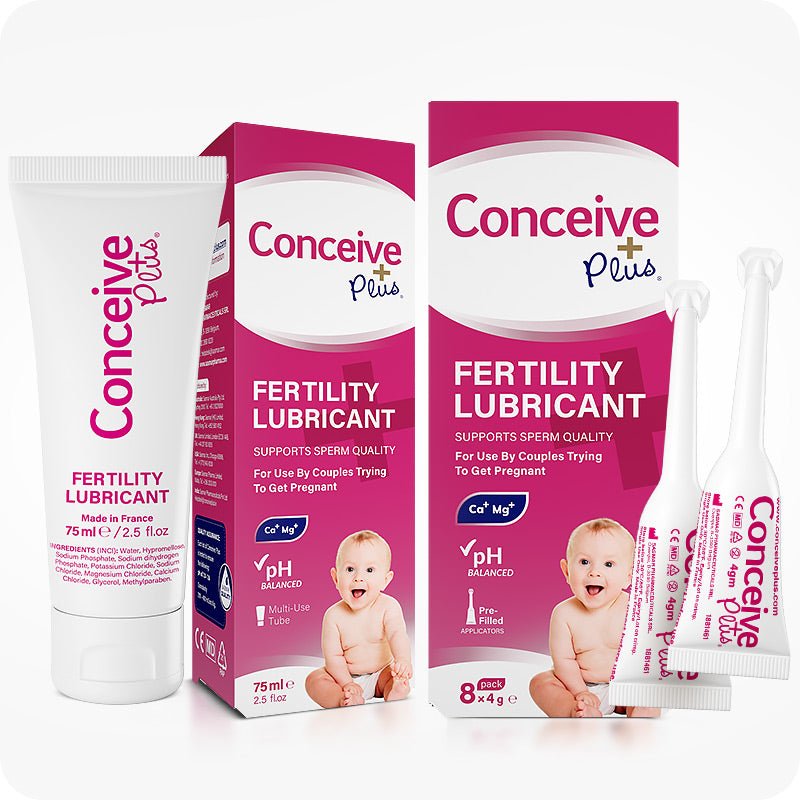
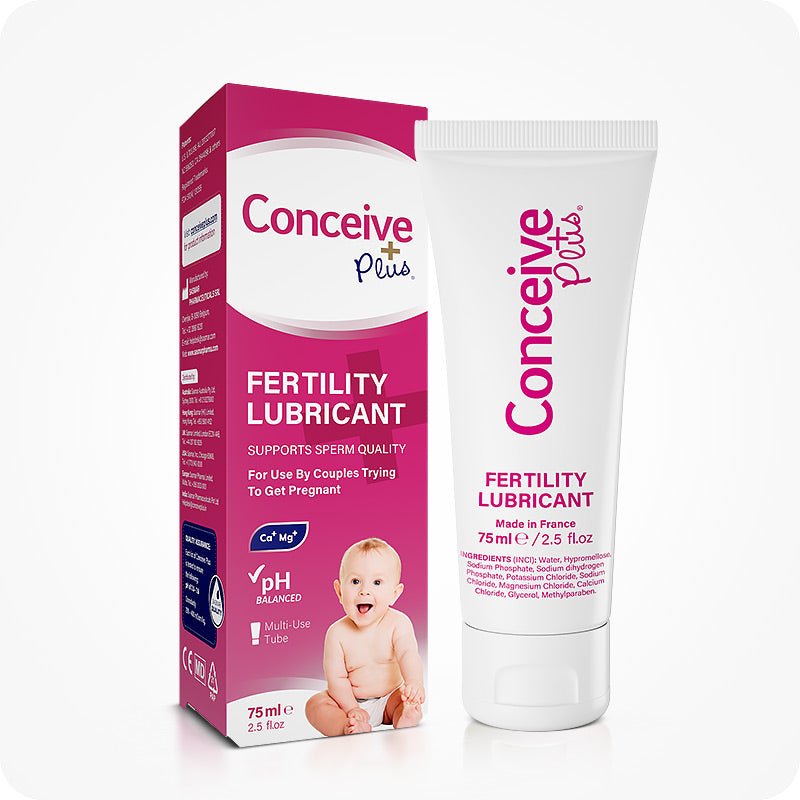
- Consider using a fertility-supportive lubricant like Conceive Plus if dryness is an issue—available at conceiveplus.com.au/collections/fertility-lubricants. Conventional lubricants can harm sperm, so a sperm-friendly option is essential.
- Take a quality prenatal supplement containing folate, vitamin D, and iodine throughout your TTC journey
- Maintain relaxed, pressure-free intercourse—anxiety about timing can affect both frequency and sperm quality
When Ovulation Doesn't Happen: Anovulation
Some women experience anovulatory cycles—cycles where menstruation occurs but no egg is released. These can feel like normal periods and are surprisingly common: studies suggest 15–25% of reproductive-age cycles may be anovulatory at some point, rising with age and certain conditions.
Signs that may suggest anovulation:
- No clear LH surge on OPKs over multiple cycles
- No thermal shift on BBT charts
- Low day-21 progesterone on blood test
- Irregular cycles (length varies by more than 7 days)
- Known PCOS diagnosis
If anovulation is suspected, see your GP or gynaecologist. Blood tests, ultrasound, and hormone panels can identify the cause, and many causes are treatable.
Frequently Asked Questions About Ovulation Tracking
Q: How soon after getting a positive OPK should we have sex?
As soon as possible after a positive OPK, and again 24 hours later. The LH surge precedes ovulation by 24–36 hours, so you have a narrow window to get sperm in place.
Q: What time of day should I take an OPK?
Between 12pm and 6pm is generally recommended, as LH is secreted earlier in the morning and reaches urine several hours later. Reduce fluid intake in the 1–2 hours before testing for a more concentrated sample.
Q: Can I get pregnant if I didn't notice any EWCM?
Yes. Not all women produce obvious EWCM, and some have internal mucus changes that aren't easily detected externally. OPKs are more reliable than mucus monitoring alone.
Q: What if my OPK never turns positive?
Test more frequently (twice daily) and check that you're starting early enough in your cycle. If still no positive after 2–3 cycles, see your doctor—anovulation may need investigation.
Q: My cycles are irregular—which tracking method works best?
OPKs with daily testing (from around day 8) combined with cervical mucus monitoring works better than calendar-based predictions for irregular cycles. A cycle monitor that tracks multiple hormones can also help.
Q: Can stress delay ovulation?
Yes. Acute or chronic stress can suppress the GnRH pulse generator, delaying LH surge and therefore ovulation. A cycle that's usually 28 days can extend to 35+ days under stress.
Q: Is it possible to ovulate twice in one cycle?
Technically yes—superfecundation, releasing two eggs in rapid succession, can occur. However, the hormonal environment after the LH surge suppresses further ovulation within the same cycle.
Q: Does ovulation always occur 14 days before my next period?
Approximately—the luteal phase (post-ovulation to next period) is relatively fixed at 12–16 days for most women. The variability in cycle length comes from variation in the follicular phase (pre-ovulation), not the luteal phase.
Q: Can I track ovulation while breastfeeding?
Ovulation can resume during breastfeeding but is often irregular and unpredictable. OPKs combined with mucus monitoring are your best tools, but conception is less predictable until cycles regularise.
Q: How many cycles of tracking before I should see a doctor?
If you've been tracking for 6–12 months with confirmed ovulation (positive OPKs and progesterone confirmation) without conception, or if you cannot identify ovulation at all after 2–3 cycles of careful tracking, seek medical evaluation.
Making Tracking Work for You
The best ovulation tracking method is the one you'll use consistently. For most women, starting with OPKs plus a fertility app provides a reliable, low-cost foundation. Adding BBT charting and cervical mucus monitoring builds a richer picture over time.
Remember that ovulation tracking is one piece of the fertility puzzle. Equally important: a quality prenatal supplement, sperm-friendly lubricant, and both partners in good health. Support your fertile window with the full Conceive Plus range—from fertility lubricants to comprehensive supplements—available at conceiveplus.com.au.
Ready to support your fertility journey? Explore the full Conceive Plus range at https://conceiveplus.com.au. Trusted by fertility specialists worldwide.