Ovulation Tracking: Your Complete Guide to Knowing Your Fertile Days


Ovulation Tracking: Your Complete Guide to Knowing Your Fertile Days
Ovulation tracking is the single most impactful thing most couples can do to significantly increase their chances of conceiving each cycle. Yet many couples trying to conceive rely on guesswork, average-cycle assumptions, or incomplete tracking methods — and miss their fertile window entirely. This guide gives you everything you need to understand ovulation tracking, choose the right method, and translate tracking data into well-timed intercourse.
Whether you're just starting out or have been trying to conceive for a while, understanding your cycle with precision through ovulation tracking changes the odds in your favour.
Why Ovulation Tracking Matters So Much
The average couple's probability of conceiving in any given cycle is approximately 20–25% when intercourse timing is optimal. But when timing is based on guesswork, that probability drops significantly. Studies consistently show that many women ovulate earlier or later than the "expected" Day 14 — in fact, a landmark study of over 7,500 cycles found that fewer than 30% of women had their fertile window fall on the "standard" Days 10–17 assumed by most ovulation tracking apps.
The fertile window — the days when conception is possible — lasts approximately 5–6 days per cycle: the 4–5 days before ovulation and the day of ovulation itself. Eggs survive only 12–24 hours post-ovulation; sperm survive 3–5 days in fertile cervical mucus. Intercourse timed within this window through accurate ovulation tracking is the biological prerequisite for natural conception.
Understanding Your Cycle: The Basics for Ovulation Tracking
Ready to support your fertility journey?
Conceive Plus offers clinically-backed fertility supplements and lubricants designed for couples trying to conceive. Shop the range →
The menstrual cycle is divided into two main phases separated by ovulation. The follicular phase (from menstruation to ovulation) is highly variable — it can range from 10 to 21+ days. The luteal phase (ovulation to next period) is remarkably consistent at 12–16 days. This means total cycle length = follicular phase length + luteal phase length, and if your cycles are irregular, it's the follicular phase that varies. This is exactly why ovulation tracking methods that detect actual events (rather than counting days) are essential.
Ovulation Tracking Method 1: Basal Body Temperature (BBT) Charting
Basal body temperature is your resting temperature measured immediately upon waking. Progesterone, which rises sharply after ovulation, causes BBT to rise by approximately 0.2–0.5°C. This thermal shift, when sustained for 3+ days, confirms that ovulation has occurred — making BBT charting a key ovulation tracking tool.
The main limitation of BBT for ovulation tracking: it confirms ovulation after it has occurred. This is useful for learning your pattern over several cycles, but doesn't provide advance warning within a current cycle. BBT ovulation tracking is most powerful when combined with another method.
Ovulation Tracking Method 2: LH (Ovulation) Tests
LH (luteinising hormone) surges 24–36 hours before ovulation, triggering egg release. LH tests — ovulation predictor kits (OPKs) — detect this surge in urine. A positive OPK indicates that ovulation is likely within the next 24–36 hours, giving advance notice of the most fertile window — making this the most actionable ovulation tracking tool for most couples.
Types of LH ovulation tracking tests range from inexpensive single-line strips to digital tests (displaying a smiley face or "peak" reading) to advanced hormone monitors that also track oestrogen, identifying more fertile days and giving earlier warning of the approaching fertile window through more complete ovulation tracking data.
Limitation for ovulation tracking: Women with PCOS may have multiple LH surges per cycle or chronically elevated LH, making OPK ovulation tracking interpretation unreliable.
Ovulation Tracking Method 3: Cervical Mucus Monitoring
Cervical mucus changes predictably through the menstrual cycle — a free and hormone-free form of ovulation tracking. Approaching ovulation, mucus becomes increasingly wet, clear, and stretchy — often described as resembling raw egg whites. This egg-white cervical mucus (EWCM) indicates peak fertility and is the most sperm-friendly environment. Intercourse timed to the presence of EWCM — particularly Peak Day — captures the highest-probability fertile window, making mucus monitoring a powerful complement to other ovulation tracking methods.
The Symptothermal Approach: Combining Ovulation Tracking Methods
The most accurate form of natural fertility tracking combines BBT, LH tests, and cervical mucus monitoring — the symptothermal method. This approach has been studied extensively and, when followed consistently, has an effectiveness rate comparable to many hormonal contraceptives for avoiding pregnancy — and conversely, can maximise conception timing. In practice: use LH tests and mucus monitoring for ovulation tracking to identify your approaching fertile window, time intercourse accordingly, and use BBT to confirm ovulation occurred.
Technology-Assisted Ovulation Tracking
A growing category of devices and apps makes ovulation tracking more accessible: FDA-cleared fertility apps like Natural Cycles, advanced hormone monitors like the Clearblue Advanced Fertility Monitor (measuring both LH and oestradiol for more fertile days), wearable sensors like the Ava bracelet (validated in clinical studies), and quantitative monitors like Inito (measuring FSH, LH, oestrogen, and progesterone in urine). Each offers different features relevant to ovulation tracking precision.
Fertility-Friendly Lubricant: An Important Part of Your Conception Strategy
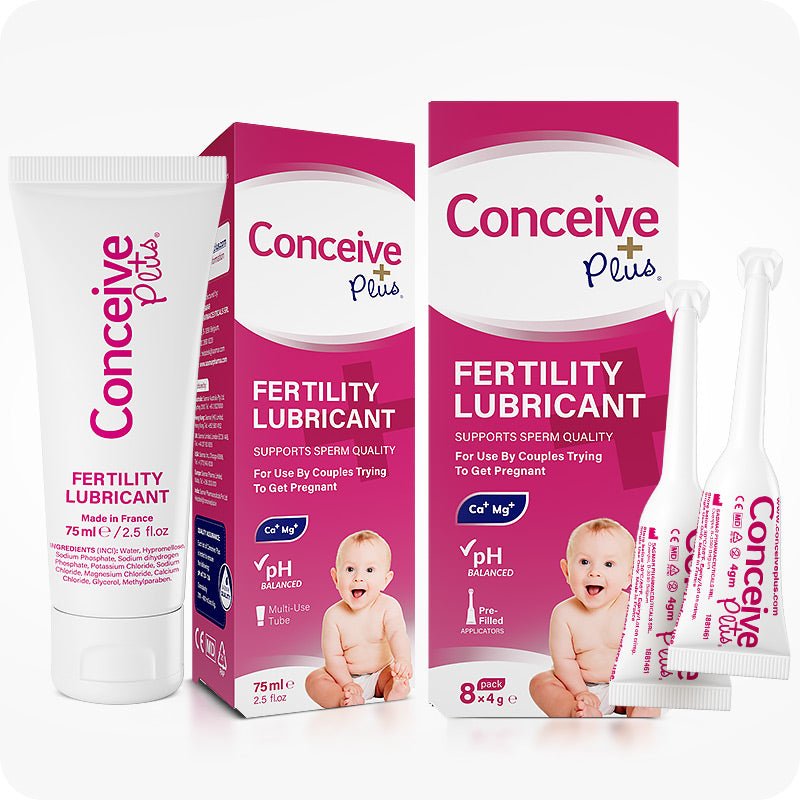
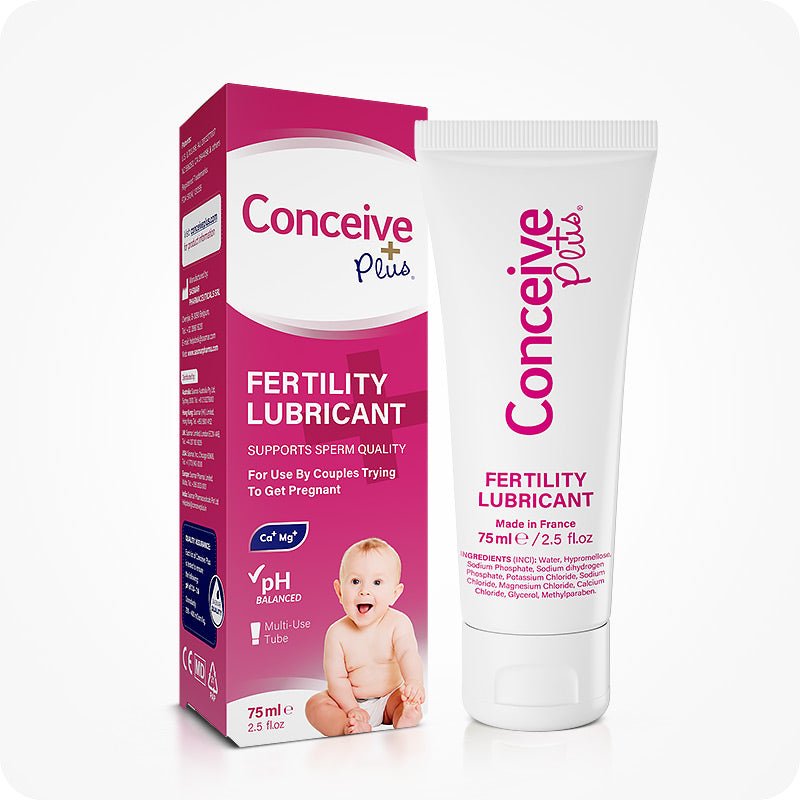
When ovulation tracking correctly identifies the fertile window, couples typically increase intercourse frequency — but vaginal dryness can make this uncomfortable and actually harm conception chances. Many standard lubricants are toxic to sperm, reducing motility within minutes. Conceive Plus fertility lubricant is specifically formulated to be sperm-compatible — with a pH and osmolality matching natural fertile cervical mucus. Using Conceive Plus during your ovulation tracking-identified fertile window means lubrication doesn't compromise conception chances. Visit conceiveplus.com.au/collections/fertility-lubricants to learn more.
Ovulation Tracking When Cycles Are Irregular
Irregular cycles make calendar-based prediction unreliable but don't make ovulation tracking impossible — in fact, ovulation tracking is even more important with irregular cycles. Begin LH testing earlier and test twice daily to avoid missing a short surge. Cervical mucus monitoring is particularly valuable as it responds to actual hormone levels, not predicted cycle day. Consult your GP if cycles are consistently shorter than 21 days or longer than 35 days — this may indicate PCOS, thyroid dysfunction, or premature ovarian insufficiency.
Frequently Asked Questions About Ovulation Tracking
Q: Can I get pregnant if I have sex after ovulation?
A: Eggs survive only 12–24 hours post-ovulation. If intercourse occurs more than ~24 hours after ovulation, conception is very unlikely for that cycle. This is why ovulation tracking in advance, rather than detecting after, matters so much.
Q: How many days before ovulation should I start having sex?
A: Aim to have intercourse every 1–2 days starting from the beginning of fertile cervical mucus or a flashing LH result on your ovulation tracking device. This ensures sperm are present when the egg is released.
Q: My LH test is always negative — could I not be ovulating?
A: A persistently negative ovulation tracking LH test when testing correctly can indicate anovulatory cycles. Try testing twice daily. If this continues, consult your doctor — anovulation is treatable.
Q: I have PCOS — can I still track ovulation?
A: Yes, but with modifications. PCOS causes elevated LH that makes standard OPK ovulation tracking unreliable. Cervical mucus monitoring and BBT remain useful. Advanced quantitative monitors that measure progesterone are more reliable for PCOS ovulation tracking.
Q: How many cycles should I track before I have a clear ovulation tracking picture?
A: Most women can identify patterns within 2–3 cycles of consistent ovulation tracking. Tracking for 3–6 months gives a more robust picture of your ovulation pattern.
Q: Does stress affect when I ovulate?
A: Yes. Significant psychological or physical stress can delay or suppress ovulation — which is why BBT ovulation tracking during stressful periods may show a prolonged follicular phase.
Q: Do fertility apps work well for ovulation tracking?
A: Calendar-based apps that simply predict ovulation based on average cycle length are unreliable. Apps that incorporate actual ovulation tracking data — BBT readings, LH test results, mucus observations — are significantly more accurate.
Q: When should we start ovulation tracking?
A: Start ovulation tracking from your very first month of trying to conceive. This builds your baseline data fastest and means you're never missing fertile windows due to poor timing.
Start Your Conceive Plus Journey Today
Trusted by thousands of couples worldwide. Science-backed fertility support for both partners.
Shop Conceive Plus Now →