Ovulation Tracking: The Complete Guide to Finding Your Fertile Window


Ovulation Tracking: The Complete Guide to Finding Your Fertile Window
Ovulation tracking is one of the most powerful, evidence-based strategies a woman can use to improve her chances of conception. By identifying the days when you're most fertile, you can time intercourse precisely — dramatically improving your odds per cycle. Yet despite its importance, many women have never been taught to track their ovulation accurately, or they rely on calendar estimates that can be wildly off.
This comprehensive guide covers every major ovulation tracking method — from simple calendar calculations to sophisticated fertility monitors — with evidence-based guidance on when to use each approach, how to combine methods for maximum accuracy, and what to do when your results are confusing or inconsistent. Conceive Plus supports your ovulation tracking journey with fertility lubricants and supplements designed for couples timing their conception window precisely.
Understanding Ovulation: The Basics
Ovulation is the release of a mature egg from one of your ovaries. This typically occurs once per menstrual cycle, usually around the midpoint — but the exact timing varies significantly between women and even between cycles in the same woman.
A common myth is that ovulation always occurs on day 14 of a 28-day cycle. In reality, cycle length varies enormously. Women with shorter cycles (21–24 days) may ovulate on day 10–12, while those with longer cycles (35+ days) may not ovulate until day 20 or later.
The egg is only viable for 12–24 hours after release. However, sperm can survive in fertile cervical mucus for up to 5 days. This creates a fertile window of approximately 6 days — the 5 days leading up to ovulation, plus the day of ovulation itself. Conception is most likely with intercourse 1–2 days before ovulation.
Method 1: Calendar Tracking (Rhythm Method)
Ready to support your fertility journey?
Conceive Plus offers clinically formulated fertility supplements and lubricants trusted by couples worldwide.
Shop Conceive Plus →Calendar tracking estimates your ovulation date by tracking the length of your menstrual cycles over several months. The basic calculation: subtract 14 from your typical cycle length to estimate ovulation day (e.g., a 30-day cycle suggests ovulation around day 16).
Accuracy: Low to moderate. Works best for women with very regular cycles. Completely unreliable for women with irregular cycles. Does not account for cycle-to-cycle variability.
Best for: Initial orientation; combined with other methods; natural family planning
Limitations: Even women with regular-seeming cycles experience variability. Stress, illness, travel, and other factors shift ovulation. Calendar tracking alone misses ovulation in many cycles.
Practical tip: Track at least 3–6 cycles to identify patterns before relying on calendar estimates. Apps like Clue, Flo, or Apple Health can automate this tracking.
Method 2: Basal Body Temperature (BBT) Tracking
Your basal body temperature shifts slightly — by 0.2–0.5 degrees Celsius — after ovulation, due to the thermogenic effect of progesterone produced by the corpus luteum. By tracking your morning temperature daily, you can identify this shift and confirm that ovulation occurred.
Accuracy: High for confirming ovulation; limited for predicting it. BBT rises after ovulation, so it confirms what has already happened rather than predicting it in advance.
Best for: Confirming ovulation; identifying luteal phase length; detecting potential issues (very short luteal phase, persistent low BBT)
How to do it correctly:
- Use a BBT thermometer (reads to 0.01 degrees — standard thermometers are not precise enough)
- Take temperature every morning at the same time, before getting out of bed or speaking
- Chart on paper or use an app (Kindara, Fertility Friend) that auto-charts
- Factors that raise BBT: alcohol, poor sleep, illness, stress — note these on your chart
- Look for a sustained rise of at least 0.2 degrees over at least 3 days to confirm ovulation
The biphasic pattern: A healthy chart shows lower temperatures in the follicular phase (before ovulation) and consistently higher temperatures in the luteal phase (after ovulation) — a clear biphasic pattern. A monophasic chart may indicate anovulatory cycles.
Method 3: Cervical Mucus Monitoring
Cervical mucus is produced by glands in the cervix and changes dramatically throughout your cycle in response to oestrogen and progesterone. Monitoring these changes provides real-time information about where you are in your cycle.
Cervical mucus changes across the cycle:
- Post-period (dry phase): Little to no mucus; vaginal sensation is dry
- Early follicular phase: Sticky, thick, cloudy, white or yellow mucus; not stretchy
- Approaching ovulation: Creamy, lotion-like, wetter feeling
- Peak fertility (periovulatory): Clear, slippery, stretchy — resembles raw egg whites. This egg white cervical mucus (EWCM) indicates peak fertility
- Post-ovulation (luteal phase): Mucus abruptly becomes thick, sticky, or dry again
Accuracy: High for identifying the fertile window when interpreted correctly. Requires practice over several cycles.
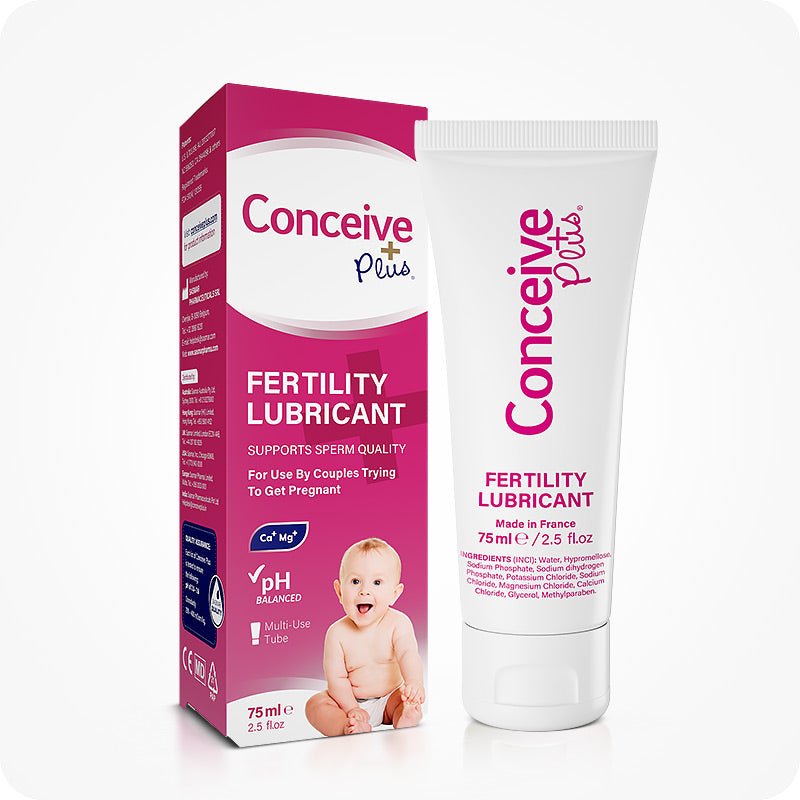
Limitations: Infections, medications (antihistamines dry mucus; clomiphene changes mucus quality), and other factors can alter mucus patterns. If you have insufficient cervical mucus, a fertility lubricant like Conceive Plus can supplement natural moisture during your fertile window without harming sperm.
Method 4: Ovulation Predictor Kits (OPKs)
Ovulation predictor kits detect the surge in luteinising hormone (LH) that occurs 24–48 hours before ovulation. LH surge triggers the final maturation and release of the egg. A positive OPK indicates that ovulation is likely within the next day or two.
Types of OPKs:
- Standard threshold OPKs: Show a positive line when LH exceeds a threshold (typically 25–40 mIU/mL). Give a binary positive/negative result.
- Digital OPKs: Display a smiley face or digital readout. Easier to interpret; eliminates line-darkness ambiguity.
- Quantitative/multi-hormone monitors: (Clearblue Advanced, Mira, Inito) — track LH and oestrogen to identify a broader fertile window including the rising oestrogen days before the LH surge.
Accuracy: Very high for detecting LH surge. Most reliable method for identifying your two peak fertile days.
How to use OPKs effectively:
- Start testing around cycle day 10 for a 28-day cycle (adjust for your cycle length)
- Test at the same time each day; early to mid-afternoon is generally most reliable
- Don't use first morning urine (unlike pregnancy tests)
- Test twice daily when close to your expected ovulation date to avoid missing a short surge
Method 5: Fertility Monitors
Advanced fertility monitors like the Clearblue Advanced Fertility Monitor, Mira Fertility Tracker, and Inito Fertility Monitor provide quantitative hormone tracking rather than simple threshold detection.
These devices measure LH, oestrogen, and in some cases FSH and progesterone from urine test strips. By tracking your personal hormone patterns over time, they become increasingly accurate and can identify your specific fertile window — including the high-fertility days before peak.
A 2020 study in Frontiers in Public Health found that cycle monitors correctly identified the fertile window in 99.4% of cycles among women with regular cycles, significantly outperforming calendar methods.
Best for: Women who have tried standard OPKs without success; those with irregular cycles; women who want quantitative hormone data; those who've been TTC for several months
Combining Methods: The Symptothermal Approach
The most accurate non-medical ovulation tracking combines BBT charting with cervical mucus monitoring — and adds OPKs for real-time detection. This symptothermal method cross-validates observations from multiple biological signals:
- OPK positive — ovulation likely within 24–48h — time intercourse
- EWCM appearing — peak fertility — continue intercourse
- BBT rise sustained for 3+ days — ovulation confirmed; fertile window closed
A meta-analysis of symptothermal method studies found it correctly identified the fertile window in over 95% of cycles with proper training. The Pearl Index (failure rate) for women using the symptothermal method correctly for contraception is comparable to the hormonal pill — demonstrating the precision of combined tracking.
Using Ovulation Tracking to Time Intercourse
Once you've identified your fertile window, timing intercourse optimally is straightforward:
- Most fertile: The 2 days before ovulation (LH surge day and the following day)
- Also fertile: The 3–4 days before the LH surge, while EWCM is present
- Least fertile: Day of ovulation or after — the egg is viable for only 12–24 hours
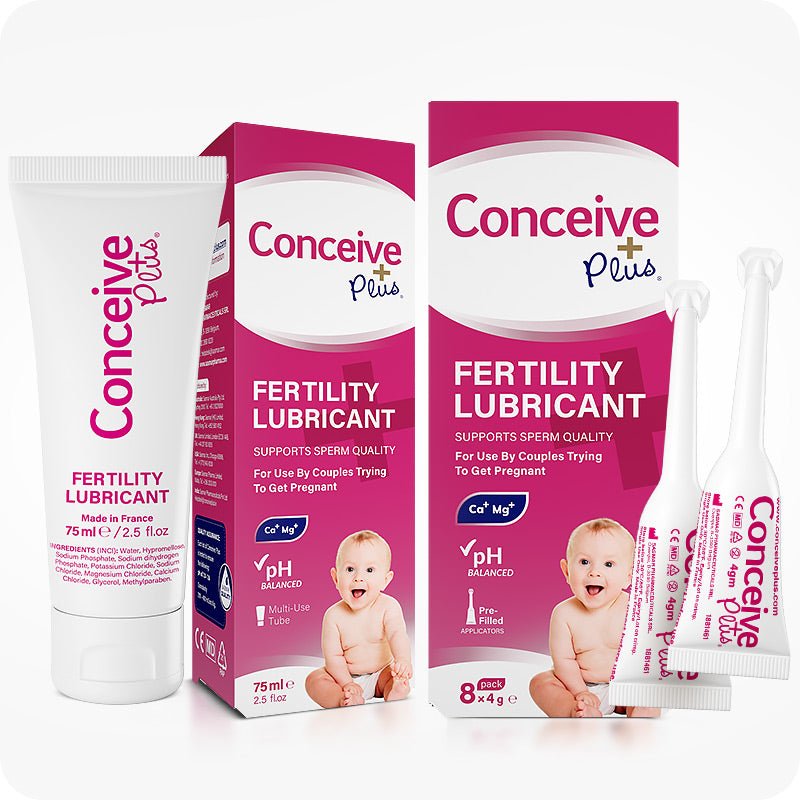
Aim for every-other-day intercourse through the fertile window. If natural lubrication is insufficient during timed intercourse, use a sperm-friendly fertility lubricant like Conceive Plus — it's pH-matched to fertile cervical mucus (7.2–8.0) and contains calcium and magnesium ions that support sperm function, unlike standard lubricants which can immobilise sperm.
When Ovulation Tracking Shows Irregular or Absent Ovulation
If your OPKs never show a positive, your BBT chart has no clear biphasic pattern, or your cycles are longer than 35 days or shorter than 21 days, you may be experiencing irregular ovulation or anovulatory cycles. Common causes include:
- PCOS (polycystic ovary syndrome) — the most common cause of ovulatory dysfunction
- Thyroid disorders (both hypothyroidism and hyperthyroidism)
- Hyperprolactinaemia (elevated prolactin)
- Significant under/overweight
- Excessive exercise and low body fat
- Perimenopause
- Stress and disrupted sleep patterns
If tracking reveals no evidence of ovulation over 2–3 cycles, speak with your GP or gynaecologist. Ovulatory dysfunction is very treatable in most cases — but it needs to be identified first.
Frequently Asked Questions: Ovulation Tracking
Q: How long does it take to learn my fertile window?
A: Allow 2–3 cycles to establish your pattern. Combine methods for accuracy from the start. Apps improve their predictions with more cycle data.
Q: Can I get pregnant if I have sex after ovulation?
A: Very unlikely. The egg survives only 12–24 hours after release. For conception, sperm need to be waiting in the fallopian tube when the egg arrives — which requires intercourse before ovulation.
Q: My LH surge is very short — I keep missing it. What should I do?
A: Test twice daily (morning and afternoon) during your expected fertile window. Consider a quantitative monitor (Mira, Inito) that tracks the LH rise over multiple days rather than a single threshold.
Q: Do OPKs work if I have PCOS?
A: Standard OPKs are unreliable with PCOS because LH levels are chronically elevated. This creates persistent false positives. Quantitative monitors that track your personal LH baseline are more useful. BBT charting helps confirm when/if ovulation occurred.
Q: Can stress delay or suppress ovulation?
A: Yes. Significant physical or emotional stress can suppress GnRH release from the hypothalamus, blunting the LH surge and delaying or preventing ovulation. Even moderate stress can shift ovulation by several days.
Q: Is egg white cervical mucus always present before ovulation?
A: Not always. Some women consistently produce little EWCM due to dehydration, antihistamine use, past cervical procedures, or low oestrogen. OPKs are especially important in this case. A sperm-friendly lubricant can compensate for reduced cervical mucus.
Q: Should I track ovulation if I've been TTC for less than 3 months?
A: Yes — tracking helps you understand your cycle from the start. Many couples discover they've been missing their fertile window entirely once they start tracking. It's valuable information regardless of how long you've been trying.
Q: How does breastfeeding affect ovulation tracking?
A: Breastfeeding raises prolactin, which typically suppresses ovulation. As feeding frequency decreases, ovulation may resume before your first postpartum period — you can be fertile without menstruating. Tracking is especially important when TTC after a previous pregnancy if still breastfeeding.
Q: Are there any signs of ovulation beyond mucus and temperature?
A: Yes — some women experience mittelschmerz (a mild twinge or ache on one side of the lower abdomen at ovulation), breast tenderness, a slight increase in libido, or light spotting. These signs are less reliable than OPKs or BBT but add to the overall picture.
Take the Next Step with Conceive Plus
Join hundreds of thousands of couples who trust Conceive Plus for their fertility journey. Our products are FDA-cleared, clinically researched, and designed for real results.
Explore Conceive Plus Products