Endometriosis and Fertility: Understanding the Connection and Your Path to Conception


Endometriosis affects an estimated 10 to 15% of women of reproductive age — approximately 190 million women worldwide. It is one of the leading causes of pelvic pain and female infertility. Yet despite its prevalence, endometriosis is profoundly underdiagnosed, with the average delay from symptom onset to diagnosis spanning seven to ten years in many countries. For women trying to conceive, this diagnostic delay can have significant consequences — making early awareness and proactive management essential.
This guide provides a thorough, evidence-based overview of endometriosis and its relationship to fertility, the mechanisms through which it impacts conception, and the full range of medical, surgical, nutritional, and lifestyle strategies available to women navigating conception with endometriosis.
What Is Endometriosis?
Endometriosis is a chronic inflammatory condition in which tissue similar to the endometrium — the lining of the uterus — grows outside the uterus. These endometriotic implants can develop on the ovaries, fallopian tubes, pelvic peritoneum, bladder, bowel, and in rare cases, distant sites including the lungs.
Like the endometrium within the uterus, these implants respond to the hormonal fluctuations of the menstrual cycle — growing, breaking down, and bleeding with each cycle. Because this blood has no way to exit the body, it triggers an intense inflammatory response, resulting in adhesions (scar tissue), cysts (endometriomas or "chocolate cysts" on the ovaries), and fibrosis that can distort pelvic anatomy over time.
Endometriosis is classified into four stages (I to IV) based on the extent and depth of implants, the presence of endometriomas, and the degree of adhesions. However, stage does not reliably predict symptom severity or fertility impact — women with minimal disease can experience severe pain and significant fertility challenges, while some with extensive disease conceive without difficulty.
Optimise Your Body for Conception
Conceive Plus Women's Fertility Support provides the evidence-based nutrients your body needs for healthy ovulation and egg quality — including methylfolate, myo-inositol, CoQ10, vitamin D3, and zinc.
How Endometriosis Affects Fertility
Endometriosis impairs fertility through multiple overlapping mechanisms. The precise contribution of each mechanism varies with disease extent and location:
Anatomical distortion: Adhesions caused by endometriosis can encapsulate the ovaries, partially or completely block the fallopian tubes, fix the uterus in a tilted position (retroversion), and distort the normal relationship between the ovary and the fallopian tube opening. When the tube cannot sweep up a released egg — because it is blocked by adhesions or fixed away from the ovary — fertilisation cannot occur naturally.
Endometriomas and ovarian reserve: Ovarian endometriomas (chocolate cysts) directly damage the healthy ovarian tissue surrounding them. Histological studies confirm that endometriomas destroy primordial follicles — the irreplaceable stock of eggs — both through direct mechanical compression and through the toxic, iron-rich fluid within the cyst. Women with ovarian endometriomas consistently show reduced ovarian reserve, measured by lower AMH (anti-Müllerian hormone) levels and lower antral follicle counts, compared to women without endometriomas.
Inflammatory peritoneal environment: Peritoneal fluid from women with endometriosis has elevated concentrations of prostaglandins, cytokines, macrophages, and other inflammatory mediators. This hostile biochemical environment impairs folliculogenesis (follicle development), disrupts the LH surge and ovulation, can be toxic to eggs in the peritoneal cavity, and reduces sperm function and survival in the pelvis.
Impaired endometrial receptivity: Research has found molecular abnormalities in the endometrium of women with endometriosis that may impair implantation. Abnormal expression of integrins and other receptivity markers, altered immune cell populations in the uterine lining, and dysregulated progesterone signalling all contribute to reduced endometrial receptivity even when the endometrium appears structurally normal on ultrasound.
Egg quality: Emerging evidence suggests that the inflammatory peritoneal environment in endometriosis impairs egg quality. Women with endometriosis undergoing IVF have been found to produce fewer mature eggs, with higher rates of abnormal fertilisation, compared to women with other causes of infertility — though this is contested in the literature and may reflect reduced ovarian reserve rather than a direct effect on egg quality.
Conception Statistics and Realistic Expectations
The impact of endometriosis on fertility varies considerably by stage and location:
Women with minimal or mild endometriosis (stages I and II) have cumulative natural conception rates approaching those of the general population over 12 to 18 months, though monthly fecundity rates (probability of conception per cycle) are reduced — estimated at 2 to 10% compared to 15 to 20% in fertile couples.
Women with moderate to severe endometriosis (stages III and IV), particularly with tubal damage, ovarian endometriomas, or significant adhesions, have substantially reduced natural conception rates and typically require medical assistance.
The reassuring context is that IVF outcomes in women with endometriosis, while lower than in unexplained infertility, remain good in absolute terms — particularly in women with adequate ovarian reserve. Many women with endometriosis achieve their families, often through a combination of surgery, monitoring, and assisted reproduction.
Support Every Attempt with Conceive Plus
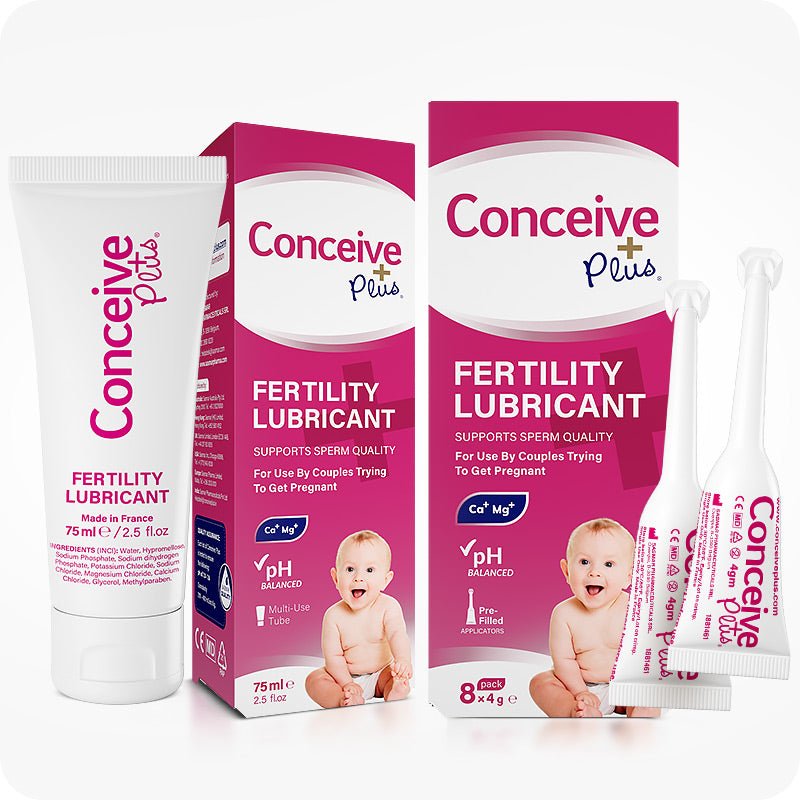
Our fertility-friendly lubricant is scientifically formulated to support sperm motility while providing the comfort you need during your fertile window. Unlike standard lubricants that can harm sperm, Conceive Plus contains the calcium and magnesium ions naturally found in the female reproductive tract.
Medical and Surgical Approaches to Endometriosis and Fertility
The management of endometriosis in women trying to conceive requires careful balancing of surgery's potential benefits against its risks — particularly the risk of inadvertently damaging ovarian reserve during ovarian surgery.
Laparoscopy and excision: Surgical removal (excision) or destruction (ablation) of endometriotic implants can restore pelvic anatomy, remove adhesions, and reduce the inflammatory burden in the pelvis. For women with stage I or II endometriosis trying to conceive naturally, a Cochrane review found that laparoscopic surgery doubles the monthly pregnancy rate compared to diagnostic laparoscopy alone. For stage III/IV disease with distorted anatomy or tubal involvement, surgery is typically necessary before natural conception attempts or IUI can be considered.
Ovarian endometrioma surgery: This is among the most controversial areas of reproductive medicine. Removing an endometrioma requires removing some of the surrounding ovarian cortex — inevitably destroying some primordial follicles. Multiple studies confirm that ovarian surgery for endometrioma reduces AMH and follicle counts. For this reason, many fertility specialists recommend against operating on endometriomas before IVF in women with already-reduced ovarian reserve, unless the cyst is large (above 4 to 5 cm), rapidly growing, or causing severe symptoms. The decision requires individualised specialist assessment.
Hormonal suppression: Gonadotropin-releasing hormone (GnRH) analogues, the Mirena coil, and other hormonal treatments effectively suppress endometriosis. However, hormonal suppression also prevents conception and does not improve fertility after cessation of treatment in clinical trials. These treatments are appropriate for symptom management rather than fertility enhancement.
IVF: IVF bypasses the fallopian tubes entirely and is highly effective for women with moderate to severe endometriosis, particularly those with tubal involvement, significant adhesions, or reduced ovarian reserve. The potential benefits of medical suppression of endometriosis (typically with three to six months of GnRH analogue) before IVF in women with deep infiltrating endometriosis or severe disease remain under investigation.
Nutrition and Lifestyle Strategies for Endometriosis
While nutrition cannot cure endometriosis, compelling evidence suggests that dietary and lifestyle interventions can meaningfully reduce inflammation — the central driver of disease activity — and support overall fertility.
Anti-inflammatory diet: The Mediterranean dietary pattern — rich in vegetables, fruits, whole grains, legumes, olive oil, and oily fish — has the strongest evidence for reducing inflammatory markers. A longitudinal study found that women who reported higher intake of omega-3 fatty acids had a 22% lower risk of endometriosis diagnosis. Anti-inflammatory eating reduces prostaglandin synthesis, cytokine production, and oxidative stress — all of which are elevated in endometriosis.
Reduce red and processed meat: Observational studies have found associations between high red meat consumption and increased endometriosis risk. Red meat promotes prostaglandin synthesis and contains arachidonic acid, a precursor to pro-inflammatory eicosanoids. Reducing red meat and eliminating processed meat is a practical dietary modification.
Omega-3 fatty acids: EPA and DHA from oily fish, algae oil, or high-quality fish oil supplements have direct anti-inflammatory activity. They competitively inhibit the production of pro-inflammatory prostaglandins (particularly PGE2 and PGF2α, which drive dysmenorrhoea), and modulate the immune environment of the pelvis.
Vitamin D: Lower vitamin D levels have been observed in women with endometriosis compared to controls, and some evidence suggests vitamin D modulates immune function in ways relevant to endometriosis activity. Vitamin D insufficiency is highly prevalent; testing and supplementing to reach optimal levels (40 to 60 ng/mL) is appropriate.
N-acetyl cysteine (NAC): A small but intriguing Italian randomised trial found that NAC supplementation (600 mg three times daily) reduced endometrioma size over three months in a subgroup of women, with 24% experiencing stable or reduced cysts and several cancelling planned surgery. The antioxidant and anti-inflammatory effects of NAC provide a plausible mechanism. While this requires replication in larger trials, NAC has an excellent safety profile and may be worth discussing with your specialist.
Curcumin: A bioactive component of turmeric with well-documented anti-inflammatory and anti-oestrogenic properties. In preclinical models, curcumin has shown capacity to reduce endometriotic implant size by inhibiting angiogenesis (new blood vessel formation that feeds implants). While human trial data is limited, incorporating turmeric into the diet and considering a bioavailable curcumin supplement is low-risk and theoretically beneficial.
Stress and sleep management: Psychological stress elevates cortisol and inflammatory cytokines — mechanisms that can worsen endometriosis symptoms. Women with endometriosis report high rates of anxiety and depression, partly as a consequence of chronic pain and the fertility diagnosis. Mindfulness-based stress reduction, yoga, adequate sleep hygiene, and psychological support are all relevant components of holistic management.
Pelvic physiotherapy: For women with endometriosis-related pelvic pain, pelvic floor dysfunction, and dyspareunia (painful intercourse), specialised pelvic physiotherapy can reduce pain, improve pelvic floor function, and make intercourse more comfortable — removing a significant barrier to natural conception attempts.
Frequently Asked Questions
Q: Can I get pregnant naturally with endometriosis?
Many women with endometriosis conceive naturally. Success depends significantly on the stage and location of disease. Women with mild endometriosis have pregnancy rates close to the general population, though it may take longer. Those with severe disease, tubal involvement, or significant ovarian damage typically need medical assistance, but many still achieve pregnancy with appropriate support.
Q: Should I have surgery before trying to conceive with endometriosis?
This depends on your situation. For women with tubal involvement, significant adhesions, or endometriomas causing symptoms, surgery may significantly improve natural conception chances. For women with mild endometriosis or no anatomical distortion, some specialists recommend proceeding directly to natural attempts or IUI without surgery. For women with reduced ovarian reserve and endometriomas, the risks of surgery to ovarian reserve must be weighed carefully. Consult a fertility specialist with endometriosis expertise.
Q: Does endometriosis affect egg quality?
The evidence is mixed. Some studies suggest the inflammatory peritoneal environment in endometriosis can affect egg quality, while others find no difference after controlling for ovarian reserve. Ovarian endometriomas directly reduce the ovarian reserve surrounding them. Women with endometriosis undergoing IVF tend to have fewer eggs retrieved, though whether these eggs are of lower quality remains debated.
Q: How does endometriosis affect AMH levels?
Endometriosis — particularly ovarian endometriomas — is associated with reduced AMH levels compared to age-matched women without endometriosis. Endometriomas damage primordial follicles in the surrounding ovarian cortex. Ovarian surgery for endometrioma further reduces AMH. Regular monitoring of ovarian reserve is advisable for women with endometriosis who wish to preserve fertility.
Q: Does diet really help endometriosis?
Diet cannot cure endometriosis, but anti-inflammatory dietary patterns — particularly high omega-3, high vegetable/fruit intake, and low red/processed meat consumption — have been associated with lower disease risk and may reduce disease activity by lowering systemic inflammation. While strong randomised trial evidence in endometriosis specifically is limited, the anti-inflammatory diet approach is well-supported and low-risk.
Q: Can endometriosis cause miscarriage?
Women with endometriosis have modestly higher rates of miscarriage than the general population — estimated at approximately two times the background rate. Proposed mechanisms include endometrial receptivity abnormalities, elevated uterine contractility, and immune dysregulation. However, many women with endometriosis carry pregnancies to term without complications.
Q: What is an endometrioma and does it need to be removed?
An endometrioma (or "chocolate cyst") is a cyst on the ovary filled with old, oxidised blood from endometriotic implants. Whether to remove it before fertility treatment is complex. While large endometriomas (above 4-5 cm) may impair IVF access and response, surgery also risks damaging the healthy ovarian tissue around the cyst, reducing ovarian reserve. Most guidelines recommend conservative management (surveillance rather than surgery) for endometriomas being treated with IVF.
Q: How do I know if my pain is from endometriosis?
Common symptoms include dysmenorrhoea (painful periods that worsen over time), dyspareunia (pain during intercourse, particularly with deep penetration), dyschezia (painful bowel movements during menstruation), dysuria (painful urination), and chronic pelvic pain. However, symptom severity does not correlate with disease stage, and many women have significant disease with minimal symptoms. Definitive diagnosis requires laparoscopy with histological confirmation.
Q: What supplements help with endometriosis?
Anti-inflammatory supplements with evidence relevant to endometriosis include omega-3 fatty acids (reduce prostaglandin synthesis), vitamin D (immune modulation), N-acetyl cysteine (antioxidant/anti-inflammatory), magnesium (reduces uterine cramping), and curcumin (anti-inflammatory, anti-angiogenic). These support overall health and may reduce symptom burden but are adjuncts to, not substitutes for, medical management.
Q: Is IVF recommended for women with endometriosis?
IVF is frequently recommended for women with moderate to severe endometriosis, particularly when natural conception attempts have failed, when there is tubal involvement, or when ovarian reserve is reduced. IVF success rates in endometriosis, while somewhat lower than in unexplained infertility, remain good in absolute terms. Your fertility specialist will consider disease stage, ovarian reserve, age, and partner factors in making recommendations.
Conclusion
Endometriosis is a complex condition, but the path to conception with endometriosis is more navigable than it may initially appear. Understanding the specific mechanisms through which your endometriosis affects fertility — anatomy, ovarian reserve, implantation, inflammation — allows for targeted, informed decision-making about medical and lifestyle interventions.
Work closely with a specialist experienced in endometriosis and fertility. Support the medical approach with an anti-inflammatory diet, targeted supplementation, and attention to the lifestyle factors within your control. Many women with endometriosis build their families — sometimes through natural conception, sometimes with medical assistance, always with determination.
Optimise Your Body for Conception
Conceive Plus Women's Fertility Support provides the evidence-based nutrients your body needs for healthy ovulation and egg quality — including methylfolate, myo-inositol, CoQ10, vitamin D3, and zinc.