PCOS and Fertility: Your Complete Guide to Conceiving with Polycystic Ovary Syndrome


PCOS and Fertility: Your Complete Guide to Conceiving with Polycystic Ovary Syndrome
PCOS (polycystic ovary syndrome) affects approximately 1 in 10 women of reproductive age in Australia — making it the most common hormonal condition impacting fertility. But here's the reassuring truth: the majority of women with PCOS can and do conceive, often naturally, with the right knowledge and support. This guide covers everything you need to know about navigating PCOS and fertility, from understanding your hormones to using targeted supplements like Conceive Plus to support ovulation and improve your chances.
Understanding PCOS and How It Affects Fertility
PCOS is a complex endocrine disorder characterised by at least two of three features (Rotterdam criteria):
- Irregular or absent ovulation (oligo- or anovulation)
- Clinical or biochemical signs of elevated androgens (excess testosterone)
- Polycystic ovary morphology on ultrasound (≥20 follicles per ovary or enlarged ovary volume)
The primary fertility challenge with PCOS is irregular ovulation. While a woman without PCOS typically ovulates once per cycle (releasing one mature egg), women with PCOS may ovulate infrequently, unpredictably, or not at all — making timing intercourse for conception genuinely difficult.
Underlying PCOS is often insulin resistance: the body's cells don't respond efficiently to insulin, causing the pancreas to overproduce it. Elevated insulin stimulates the ovaries to produce excess androgens (testosterone), which disrupt the normal hormonal cascade required for follicle maturation and ovulation.
PCOS Fertility Challenges: What to Expect
Ready to take the next step in your fertility journey?
Shop Conceive Plus →Women with PCOS trying to conceive commonly encounter:
- Irregular periods: Cycles may range from 21 days to several months — or be absent entirely
- Difficult ovulation tracking: Standard cycle apps and calculators are unreliable with variable cycles
- Elevated LH baseline: This can cause false-positive OPK results, making it hard to identify the true LH surge
- Reduced egg quality: Chronic androgen excess and insulin resistance may compromise oocyte development
- Higher miscarriage risk: Some studies suggest modestly elevated early pregnancy loss rates in PCOS, possibly related to insulin resistance and inflammation
Despite these challenges, research consistently shows that with proper management, the majority of women with PCOS achieve pregnancy — many within 6–12 months of optimised treatment.
Diagnosing PCOS: What Tests to Request
If you suspect PCOS, your GP can arrange:
- Blood hormone panel: LH, FSH, testosterone (total and free), DHEA-S, SHBG, oestradiol — ideally on days 2–5 of your cycle
- Insulin and fasting glucose: To assess insulin resistance (HOMA-IR calculation)
- Thyroid function (TSH, T4): Thyroid disorders can mimic PCOS symptoms
- Prolactin: Elevated prolactin can suppress ovulation independently
- Transvaginal ultrasound: To assess ovarian morphology and uterine lining
- AMH (anti-Müllerian hormone): Often elevated in PCOS, reflecting high follicle count
Conceive Plus Ovulation Support is formulated with the 40:1 Myo-Inositol to D-Chiro Inositol ratio clinically studied in PCOS — the same ratio found naturally in the human body. Combined with folate, vitamin D, and CoQ10, it's designed to support more regular ovulation and healthier eggs.
Explore Conceive Plus Ovulation Support →
Natural Approaches to Improve PCOS Fertility
Before reaching for medication, there's a substantial evidence base for lifestyle and nutritional interventions in PCOS:
Weight Management (If Applicable)
Even a 5–10% reduction in body weight in overweight women with PCOS has been shown to restore spontaneous ovulation in up to 55–60% of cases. The mechanism is improved insulin sensitivity reducing androgen production.
Importantly, PCOS also affects lean women — weight loss is not universally applicable, and non-obese women with PCOS should not be advised to lose weight.
Low Glycaemic Index (GI) Diet
A low-GI diet reduces insulin spikes and improves metabolic parameters in PCOS. Key principles:
- Prioritise complex carbohydrates (oats, legumes, sweet potato, quinoa)
- Increase dietary fibre (targets 30g/day)
- Reduce refined sugar and processed carbohydrates
- Include protein and healthy fats with every meal to blunt glucose response
Exercise
Both aerobic exercise and resistance training improve insulin sensitivity in PCOS independently of weight loss. A 2020 meta-analysis in the Journal of Clinical Endocrinology and Metabolism found exercise significantly improved menstrual regularity and reduced androgen levels.
Aim for at least 150 minutes of moderate-intensity exercise per week. Resistance training 2–3 times per week provides additional metabolic benefits.
Stress Reduction
Cortisol dysregulation is common in PCOS and can worsen hormonal imbalance. Practices like yoga, mindfulness meditation, and adequate sleep (7–9 hours) support HPA axis normalisation.
Inositol Supplementation: The Evidence for PCOS Fertility
Myo-Inositol (MI) and D-Chiro Inositol (DCI) are among the most extensively studied natural interventions for PCOS fertility. Here's what the research shows:
A 2019 Cochrane systematic review of 32 trials concluded that Myo-Inositol supplementation:
- Significantly improved ovulation rates compared to placebo
- Reduced fasting insulin and insulin resistance (HOMA-IR)
- Lowered total testosterone levels
- Improved clinical pregnancy rates
The optimal MI:DCI ratio of 40:1 reflects the physiological ratio found in follicular fluid. This specific ratio is used in Conceive Plus Ovulation Support and has shown superiority over Myo-Inositol alone in comparative studies.
A 2020 randomised trial in Reproductive BioMedicine Online found that women with PCOS taking the 40:1 MI/DCI combination had a 65% ovulation rate versus 35% in the placebo group over 3 months.
Medical Treatments for PCOS-Related Infertility
If lifestyle changes and supplements don't restore ovulation within 3–6 months, your doctor may discuss:
Letrozole (First-Line)
An aromatase inhibitor, letrozole is now the preferred first-line ovulation induction agent for PCOS (superseding Clomid per ASRM guidelines). It achieves ovulation in 70–80% of patients and live birth rates of approximately 27% per cycle.
Clomifene Citrate (Clomid)
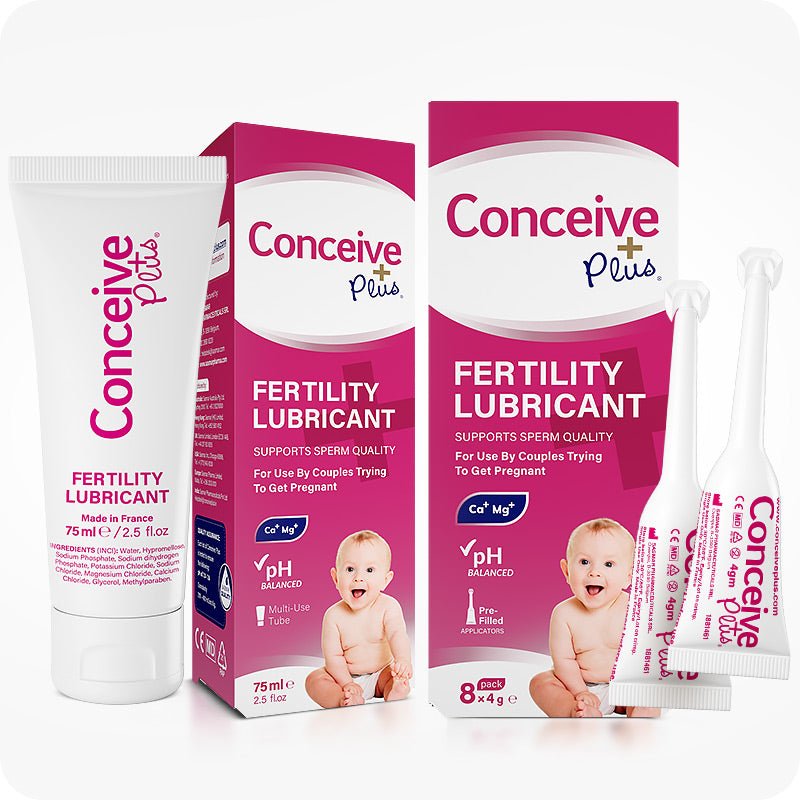
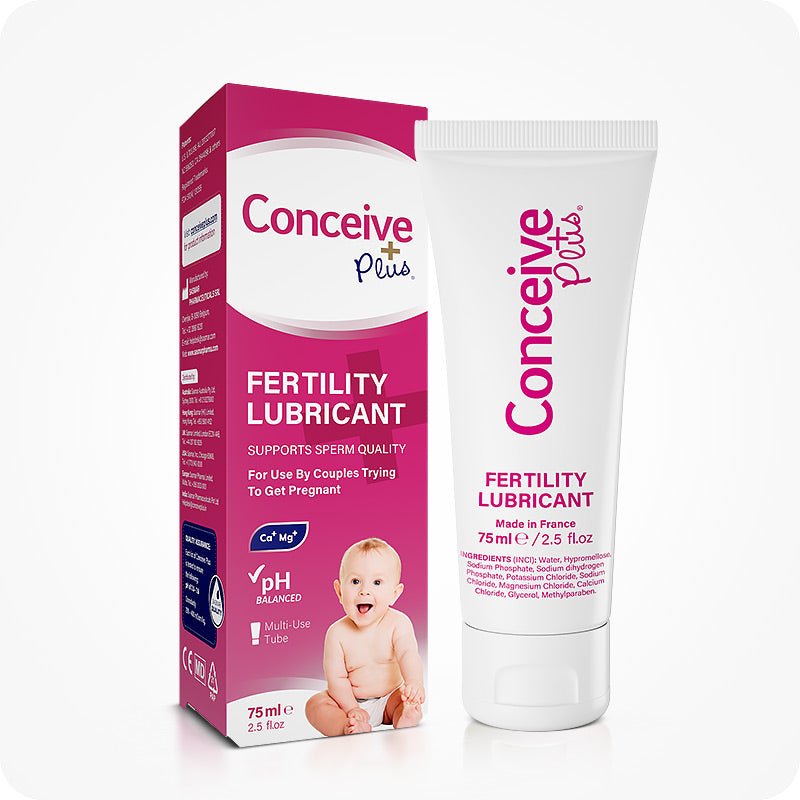
A selective oestrogen receptor modulator. Effective but associated with thicker cervical mucus (reducing sperm penetration) and a thinner uterine lining versus letrozole. A Conceive Plus fertility lubricant may help address cervical mucus concerns during Clomid treatment.
Metformin
An insulin-sensitising medication that reduces androgen production. Often used alongside letrozole. Can restore menstrual regularity and improve ovulation independently.
Gonadotrophins (Injectable FSH)
Reserved for cases where oral medications fail. Requires careful monitoring to prevent ovarian hyperstimulation syndrome (OHSS) — a risk higher in PCOS patients due to high AFC (antral follicle count).
IVF with IVM
In vitro maturation (IVM) is particularly suited to PCOS — immature eggs are retrieved and matured in the laboratory, avoiding the OHSS risk of conventional IVF stimulation protocols.
Ovulation Tracking Strategies for PCOS
Standard cycle apps are unreliable for PCOS. Use these adapted approaches:
- Quantitative hormone monitors: Mira and similar devices measure actual LH concentrations — identifying the true peak even with elevated baselines
- Dual-hormone monitors: Clearblue Advanced Fertility Monitor tracks both oestrogen rise and LH surge for a more complete fertile window picture
- Serial ultrasound monitoring: During medical ovulation induction, follicle tracking by a fertility clinic is standard
- BBT charting: Confirms ovulation retrospectively; useful as secondary confirmation
- Cervical mucus monitoring: Can be unreliable in PCOS due to androgen effects on mucus production — but still worth tracking
PCOS and Pregnancy: Managing Early Pregnancy
Once pregnant with PCOS, additional monitoring may be recommended:
- Early pregnancy scan (6–8 weeks) to confirm intrauterine pregnancy and heartbeat
- Gestational diabetes screening (earlier than standard screening, often at 16–20 weeks)
- Blood pressure monitoring (PCOS increases preeclampsia risk modestly)
- Continuation of folate supplementation throughout first trimester
Conceive Plus is formulated with the evidence-based nutrients PCOS research highlights — Myo-Inositol, D-Chiro Inositol, methylfolate, CoQ10, and vitamin D — to support your hormonal balance and ovulation. Join thousands of Australian women who've trusted Conceive Plus on their TTC journey.
Shop Conceive Plus in Australia →
Frequently Asked Questions: PCOS and Fertility
Can I get pregnant naturally with PCOS?
Yes — many women with PCOS conceive naturally. The key is identifying your ovulation pattern and optimising your hormonal environment through lifestyle, nutrition, and targeted supplementation.
How long does it typically take to get pregnant with PCOS?
With optimised management (lifestyle changes, inositol supplementation), many women see restored ovulation within 3–6 months. Pregnancy often follows within 6–12 months. If ovulation remains absent, medical ovulation induction achieves pregnancy in the majority within 3–6 treatment cycles.
Does Myo-Inositol really work for PCOS?
The evidence is strong. Multiple randomised controlled trials and meta-analyses confirm significant improvements in ovulation rate, hormonal profiles, and pregnancy rates. It's well-tolerated with minimal side effects.
Is PCOS hereditary?
There is a significant genetic component — if your mother or sister has PCOS, your risk is substantially higher. However, environmental factors (diet, activity level, stress) significantly influence how PCOS manifests.
Does PCOS get better with age?
Hormonal features of PCOS (androgen excess, irregular cycles) often improve somewhat after 35 as androgen production naturally declines. However, the metabolic aspects (insulin resistance) may worsen without lifestyle management.
Can a fertility lubricant help with PCOS?
Yes — PCOS can reduce cervical mucus quality and quantity due to androgen effects. A sperm-friendly lubricant like Conceive Plus mimics natural fertile-quality mucus, providing a supportive medium for sperm travel.
Should I take Metformin for PCOS while trying to conceive?
Metformin can improve ovulation rates and is sometimes used alongside letrozole. Discuss with your fertility specialist whether metformin is appropriate for your specific PCOS phenotype and reproductive goals.
What is the best diet for PCOS fertility?
A Mediterranean-style, low-GI diet is consistently supported by the evidence: abundant vegetables, legumes, whole grains, olive oil, fish, and lean protein. Minimise refined carbohydrates, sugar, and ultra-processed foods.
How does PCOS affect IVF success?
Women with PCOS typically produce more eggs in IVF (due to high AFC) but have higher OHSS risk. IVF success rates are generally comparable to or better than age-matched controls. A freeze-all strategy (freeze embryos, transfer later) significantly reduces OHSS risk.
Can stress cause PCOS or make it worse?
Stress doesn't cause PCOS, but chronic stress dysregulates cortisol and HPA axis function, which can worsen hormonal imbalance and further disrupt already-irregular ovulation. Stress management is a meaningful part of PCOS management.
Start Your Journey with Conceive Plus
Join thousands of couples who've trusted Conceive Plus to support their fertility naturally. Science-backed. Clinically formulated.
Explore All Products →