Ovulation Tracking Methods: Complete Guide to Timing Intercourse for Pregnancy


Ovulation Tracking Methods: Complete Guide to Timing Intercourse for Pregnancy
If you're trying to conceive, understanding your ovulation cycle is one of the most powerful tools you have. Timing intercourse in the fertile window — the 5–6 days leading up to and including ovulation — dramatically increases your monthly chance of conception. This guide covers every major ovulation tracking method, the science behind each, and how to combine them for maximum accuracy.
In Australia, it's estimated that around 1 in 6 couples experience difficulty conceiving. But for many couples without underlying fertility issues, the problem is simply timing. Sperm can survive in the female reproductive tract for up to 5 days, but an egg survives only 12–24 hours after release. This asymmetry means you need to identify your fertile window — and ovulation tracking is how you do it.
Understanding Your Menstrual Cycle and Fertile Window
The menstrual cycle averages 28 days but varies widely — anywhere from 21 to 35 days is considered normal. Ovulation typically occurs about 14 days before your next period, not necessarily 14 days after your last one. In a 28-day cycle, ovulation around day 14 works out correctly. But in a 35-day cycle, ovulation may not occur until day 21.
Your fertile window is:
- 5 days before ovulation (sperm can survive this long)
- The day of ovulation itself
- Potentially 1 day after ovulation (though the window is very short)
This gives a practical fertile window of 6 days per cycle. Research shows that the two most fertile days are the day before ovulation and the day of ovulation itself, with conception chances of approximately 30% and 25% respectively on those days.
LH Ovulation Predictor Kits (OPKs): The Gold Standard
Ready to support your fertility journey?
Discover Conceive Plus — trusted by couples worldwide for evidence-based fertility support.
Shop Conceive Plus Now →Ovulation predictor kits detect the surge in luteinising hormone (LH) that occurs 24–36 hours before ovulation. This makes them the most clinically validated home method for identifying your fertile window before ovulation occurs.
How to Use OPKs Effectively:
- When to start testing: For a 28-day cycle, start on day 10. For longer cycles, subtract 17 from your cycle length to find your start day.
- Time of day: Test between 10am and 8pm (not first morning urine — LH surges appear in blood first, then urine). Avoid testing after large fluid intake.
- Frequency: Once daily is standard. Twice daily (morning and afternoon) reduces the risk of missing a short surge.
- Interpreting results: A positive is when the test line is as dark as or darker than the control line. A faint line is negative — any LH is detectable even outside the surge.
- After a positive: Ovulation is expected within 24–36 hours. Time intercourse for that day and the day after.
Limitations of OPKs:
Women with PCOS may have chronically elevated LH, leading to multiple "positive" readings without true ovulation. Women with POI (premature ovarian insufficiency) or post-menopausal LH levels will also get false positives. In these cases, combining OPKs with basal body temperature (BBT) is essential.
Basal Body Temperature (BBT) Charting
BBT charting involves taking your temperature every morning before getting up, using a basal thermometer (which measures to 0.1°C). Progesterone released after ovulation raises basal temperature by 0.2–0.5°C, causing a shift that persists until your next period (or continues if pregnant).
BBT Charting Method:
- Take temperature at the same time each morning, immediately upon waking, before any movement
- Record on a paper or digital chart (apps like Natural Cycles, Ovia, or Kindara are popular in Australia)
- Look for a thermal shift — three consecutive higher readings above your pre-ovulation average
- The shift confirms ovulation has occurred — typically 1–2 days after the actual event
Key Limitation:
BBT confirms ovulation after it has happened. By the time you see the thermal shift, your most fertile window has passed. This is why BBT charting is most useful in conjunction with OPKs — OPKs predict, BBT confirms. After 2–3 months of charting, you'll have enough data to predict your fertile window in advance.
Cervical Mucus Monitoring (Billings Method)
Throughout your cycle, cervical mucus (vaginal discharge) changes in consistency and appearance due to oestrogen fluctuations. Monitoring these changes is a free, evidence-based way to identify your fertile window.
The Mucus Pattern:
- Post-period / early cycle: Dry or very little discharge
- Approaching ovulation: Sticky, white or cloudy, with low water content
- Peak fertile mucus: Clear, slippery, stretchy — like raw egg white. This "egg-white cervical mucus" (EWCM) is the hallmark of peak fertility. It facilitates sperm transport and survival.
- After ovulation: Mucus becomes thick, cloudy, and decreases in quantity as progesterone dominates
How to Check:
Check mucus throughout the day by observing discharge on underwear or toilet paper, or by inserting clean fingers at the vaginal opening. Record observations on your fertility chart alongside BBT and OPK results.
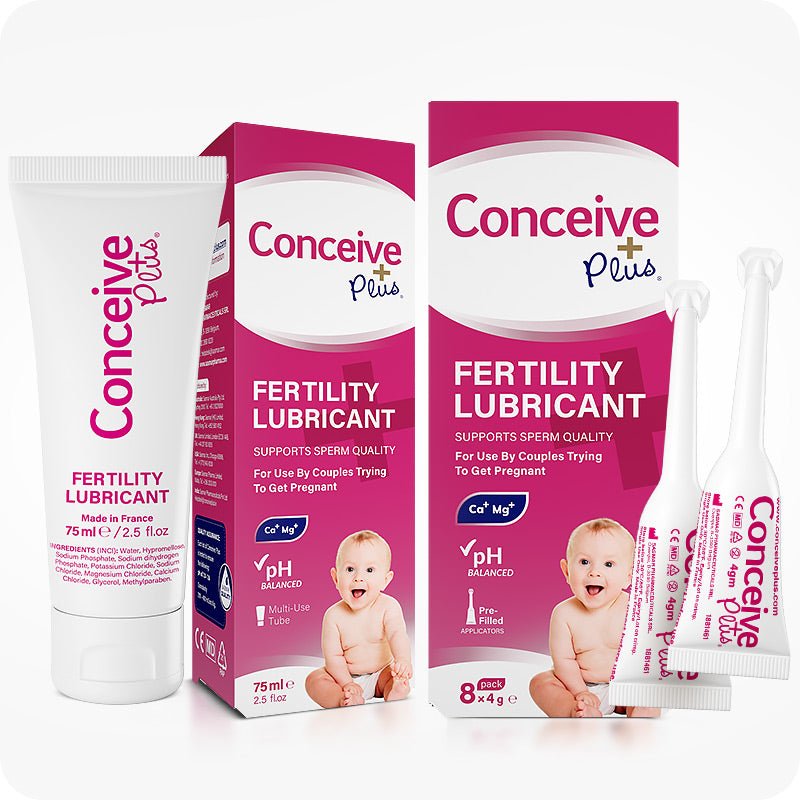
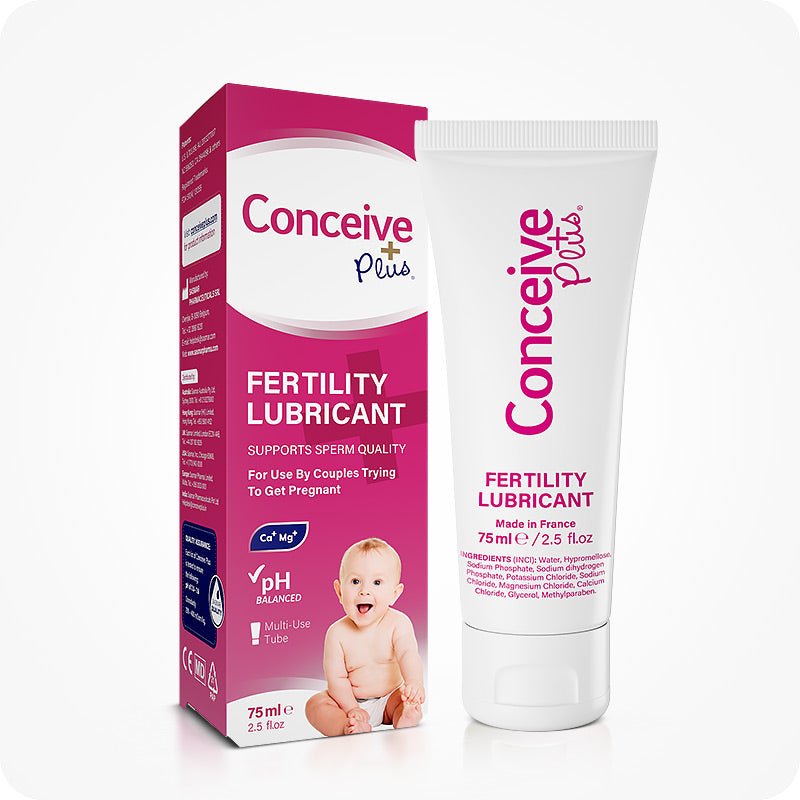
Note: Lubricants (except fertility-specific ones) can interfere with cervical mucus assessment and sperm transport. If you use lubricant during intercourse, choose a sperm-friendly option like Conceive Plus Fertility Lubricant, which is isotonic and pH-balanced to support sperm motility rather than impair it.
Fertility Apps and Cycle Tracking Software
Australia has enthusiastically adopted fertility app technology. Popular options include:
- Natural Cycles: The only app registered as a contraceptive device with the TGA. Uses BBT data with an algorithm to predict fertile days. Also used in "plan" mode for conception.
- Clue: Strong cycle prediction with symptom tracking. Free version is useful; Plus adds cycle comparison.
- Kindara: Designed around FAM (Fertility Awareness Method) with wearable temperature sensor (Wink) integration.
- Ovia Fertility: Popular for TTC (trying to conceive) with supplement and nutrition tracking.
- OvuSense: Uses vaginal sensor to track core body temperature overnight — extremely accurate, particularly for irregular cycles.
Apps that combine OPK data entry, BBT charting, and cervical mucus logging are the most powerful. Using a single signal alone (e.g., just app cycle prediction based on period dates) is the least accurate approach and should not be relied on if you've been trying for more than 3–4 months.
Wearable Fertility Monitors
Wearable fertility technology has matured significantly. Options available in Australia include:
- Tempdrop: An armband worn during sleep that tracks BBT automatically. Ideal for shift workers or those with irregular sleep schedules who struggle with traditional BBT timing.
- OvuSense Core: A vaginal sensor that measures continuous core temperature overnight — generally considered more accurate than underarm or oral BBT for detecting the progesterone-driven thermal shift.
- Inito: A hormone fertility monitor that tests LH, oestrogen, PdG (progesterone metabolite), and FSH from urine — giving a comprehensive hormonal picture. Available in Australia.
- Mira Plus: Quantitative LH monitor that shows your personal LH curve rather than just a positive/negative — useful for women with PCOS who need to distinguish true surges from elevated baseline LH.
When to Have Sex During Your Fertile Window
Timing intercourse effectively is surprisingly nuanced. Research on optimal timing:
- Every 1–2 days throughout the fertile window gives the best cumulative pregnancy rates
- Daily intercourse in the fertile window does not reduce conception chance — sperm counts remain adequate in healthy men
- Intercourse 1–2 days before the LH surge positive is ideal, as sperm are already present when ovulation occurs
- Don't wait for the positive OPK to have sex for the first time — by then you may have less than 24 hours before ovulation
Conceive Plus Fertility Lubricant and Ovulation Tracking
If vaginal dryness is an issue during your fertile window — which is common, especially around ovulation when natural lubrication can vary — using a sperm-compatible lubricant is important. Standard lubricants (KY Jelly, Vaseline, most water-based lubricants) can impair sperm motility by up to 87% in laboratory conditions.
Conceive Plus Fertility Lubricant is specifically formulated to:
- Match the isotonic nature of fertile cervical mucus
- Maintain the optimal pH range (7.0–8.5) that sperm require for motility
- Contain calcium and magnesium ions to support sperm function
- Not interfere with OPK tests (unlike products containing hormones)
Shop Conceive Plus products in Australia →
Irregular Cycles and Ovulation Tracking Challenges
Irregular cycles make ovulation tracking harder but not impossible:
- PCOS: May experience irregular or anovulatory cycles. OPKs can show multiple surges. Myo-inositol supplementation often helps regulate cycles. Continuous temperature monitoring (OvuSense) is particularly useful.
- Post-pill cycles: Can take 3–6 months to regularise after stopping hormonal contraception. Begin tracking immediately — some women ovulate normally within weeks of stopping.
- Thyroid issues: Both hypothyroidism and hyperthyroidism can disrupt ovulation. If your cycles are very irregular and you've been trying for >6 months, request a TSH test.
- Breastfeeding: Prolactin suppresses LH and ovulation. Ovulation can occur before the first post-partum period, making conception possible but unpredictable.
When to Seek Medical Advice
See your GP or a fertility specialist if:
- You've been tracking correctly and trying for 12 months (6 months if over 35)
- Your cycles are consistently irregular (shorter than 21 days or longer than 35)
- You never see egg-white cervical mucus or a clear BBT thermal shift
- You have no positive OPK readings despite several months of testing
- You've had two or more miscarriages
Frequently Asked Questions About Ovulation Tracking
How accurate are ovulation predictor kits?
Standard LH OPKs are approximately 97–99% sensitive to the LH surge when used correctly. However, they don't guarantee ovulation actually occurs — they confirm the LH surge, not egg release. This is why BBT confirmation is useful.
Can I get a positive OPK and not ovulate?
Yes. This is called a "luteinised unruptured follicle" (LUF) syndrome and can occur occasionally in otherwise healthy women. It's more common in women with PCOS or endometriosis. BBT charting will show no thermal shift if ovulation doesn't occur.
How many days after a positive OPK should I expect ovulation?
Ovulation typically occurs 24–36 hours after the LH surge peaks. Have intercourse on the day of your positive OPK and the following day for best timing.
Can stress delay ovulation?
Yes. High cortisol levels can suppress GnRH (gonadotrophin-releasing hormone), delaying or preventing ovulation. This can cause your period to come late without being pregnant — a confusing situation for many women tracking their cycles.
Is it possible to ovulate without a period?
Yes — technically, you can ovulate before your first post-partum period or when transitioning off contraception. This is why tracking ovulation signs is more reliable than relying on period dates alone.
What does it mean if I never see egg-white cervical mucus?
Some women produce fertile-quality mucus but in very small amounts. It may also be affected by antihistamines, dehydration, or Clomid. If you never see any fertile mucus, discuss with your doctor — cervical mucus quality can affect conception even when ovulation is occurring.
Should both partners track fertility?
While ovulation tracking is done by women, involving the male partner — including managing their own health, avoiding scrotal heat, and understanding the fertility window — significantly improves TTC outcomes. Both partners' health matters.
Can I use an ovulation test to confirm pregnancy?
Some women use OPKs as crude hCG tests (since both LH and hCG bind the same receptors), but hCG concentration is much lower than LH surge levels. A proper pregnancy test is far more reliable. Don't use OPKs to rule in or out pregnancy.
Ready to support your fertility journey?
Discover Conceive Plus — trusted by couples worldwide for evidence-based fertility support.
Shop Conceive Plus Now →