Miscarriage Recovery and Trying Again: A Complete Guide to Reclaiming Your Fertility


Miscarriage Recovery and Trying Again: A Complete Guide to Reclaiming Your Fertility
Pregnancy loss is one of the most painful experiences a person can face. And yet, miscarriage is remarkably common — affecting approximately 1 in 5 known pregnancies. Despite how common it is, the emotional and physical aftermath of a miscarriage is rarely discussed with sufficient depth. This guide is for those navigating the deeply personal question: how do I recover, and when is it safe — and right — to try again?
We approach this topic with both clinical accuracy and compassion, covering the physical recovery timeline, emotional healing, what investigations to pursue, and how to optimise your fertility for the next pregnancy.
Understanding Miscarriage: What Actually Happens
A miscarriage, clinically termed a spontaneous abortion, is the loss of a pregnancy before 20 weeks of gestation. The vast majority (approximately 80%) occur in the first trimester, before 13 weeks. The most common cause — accounting for up to 60% of first-trimester losses — is a chromosomal abnormality in the embryo. These anomalies arise randomly during the fertilisation or early division process and do not reflect anything the parents did or did not do.
Other causes include:
- Uterine abnormalities (fibroids, septum, asherman's syndrome)
- Hormonal imbalances (thyroid dysfunction, progesterone deficiency)
- Immunological factors (antiphospholipid syndrome)
- Sperm DNA fragmentation (increasingly recognised as a cause of recurrent loss)
- Infections (less common)
- Lifestyle factors (smoking, excessive alcohol, uncontrolled diabetes)
Understanding the cause — particularly after recurrent losses — is essential for preventing future miscarriages and may require specialist investigation.
Physical Recovery After Miscarriage
Ready to support your fertility journey?
Shop Conceive Plus Now →Immediate Recovery (First 2–4 Weeks)
Following a miscarriage, the body undergoes a process of uterine evacuation — either naturally, medically (misoprostol), or surgically (MVA or D&C). Physical recovery timelines vary based on gestational age and management method:
- Natural or medical management: Bleeding typically lasts 1–2 weeks; cramping resolves within days to a week
- Surgical management (MVA/D&C): Lighter bleeding, usually resolves within 1–2 weeks; cervix closes within days
- hCG clearance: Human chorionic gonadotropin (the pregnancy hormone) typically clears from the bloodstream within 2–6 weeks
Return of Menstruation
Most women experience their first period 4–6 weeks after a miscarriage, once hCG has cleared and the pituitary gland resumes normal signalling. This first cycle may be heavier or lighter than usual and is considered normal. Regular cycle patterns typically return within 2–3 cycles.
Physical Fertility
From a purely physiological standpoint, ovulation can return as early as 2 weeks after a first-trimester miscarriage — sometimes before the first period. This means physical fertility is restored quickly, even if emotional readiness takes much longer.
When Is It Safe to Try Again?
This is one of the most common questions after pregnancy loss, and guidance has evolved significantly in recent years.
The Old Advice: Wait 3 Months
Traditional guidance recommended waiting 3 months (3 menstrual cycles) before trying again, based on the belief that the uterus needed extended recovery time and that early conception after miscarriage carried higher risks.
Current Evidence: Earlier May Be Safer
A landmark 2010 WHO study and subsequent research including a large UK cohort study published in The Lancet found that conceiving within 3 months of a miscarriage was associated with the best outcomes — lowest risk of a subsequent miscarriage and highest live birth rates. This research shifted international guidelines, with the WHO now stating there is no medical reason to delay trying beyond one normal cycle, primarily to allow dating of a subsequent pregnancy.
The Royal Australian and New Zealand College of Obstetricians and Gynaecologists (RANZCOG) broadly aligns with this, recommending that most couples can try again after one cycle, with the caveat that emotional readiness is a key factor.
Emotional Recovery: There Is No Timeline
Physical recovery and emotional recovery are entirely separate timelines. Grief after pregnancy loss is real, valid, and can be profound — regardless of gestational age. Perinatal grief encompasses shock, sadness, guilt, anger, and anxiety about future pregnancies, and it may intensify rather than diminish in the weeks after the loss as the initial numbness lifts.
Strategies for Emotional Healing
- Allow grief without a timeline — there is no "correct" amount of time to feel sadness
- Seek peer support — organisations like SANDS Australia and Miscarriage Australia provide peer connection with others who understand
- Consider professional support — perinatal loss counsellors and psychologists offer structured grief therapy
- Communicate with your partner — both partners grieve, often differently, and this requires explicit conversation
- Be cautious with due date approaches — the original due date can be particularly difficult and may require additional support around that time
Investigating Recurrent Miscarriage
Recurrent miscarriage (RM) is clinically defined as two or more consecutive pregnancy losses. At this threshold, specialist investigation is recommended in Australia through public fertility services or private reproductive medicine clinics.
Standard recurrent miscarriage investigations include:
Female Partner
- Antiphospholipid antibodies (APA) — including lupus anticoagulant, anticardiolipin, and anti-β2 glycoprotein antibodies. Antiphospholipid syndrome (APS) is a treatable condition and accounts for approximately 15% of recurrent miscarriages
- Thrombophilia screen — factor V Leiden, prothrombin gene mutation
- Pelvic ultrasound — uterine morphology, fibroids, polyps
- Hysteroscopy — direct visualisation of the uterine cavity
- Thyroid function and thyroid antibodies — subclinical hypothyroidism and Hashimoto's are associated with recurrent loss
- Karyotype of both partners — to identify balanced translocations (rare but important)
Male Partner
- Semen analysis — basic parameters
- Sperm DNA fragmentation test — increasingly recommended in recurrent miscarriage workups; high fragmentation (>25% DFI) is associated with early pregnancy loss even with normal semen parameters
Optimising Fertility Before Trying Again
The period between pregnancy loss and your next conception attempt is a valuable window for optimisation. Conceive Plus offers a range of products specifically designed to support couples through exactly this phase.
Female Nutritional Support
- Methylfolate (400–800 mcg) — essential for neural tube development from before conception. If you have experienced miscarriage, consider the more bioavailable methylfolate form rather than folic acid
- CoQ10 (200–600 mg) — supports egg mitochondrial function and energy production; evidence suggests it may improve egg quality, particularly important for women over 35
- Vitamin D — deficiency is extremely common in Australia in winter months and is associated with both miscarriage and implantation failure
- Iron and B12 — to replenish any losses from miscarriage-related bleeding
- Omega-3 fatty acids (DHA/EPA) — anti-inflammatory, supports endometrial health
Male Partner Optimisation
If sperm DNA fragmentation is a concern (or has been identified), a comprehensive antioxidant supplement protocol is the primary evidence-based intervention. Zinc, selenium, CoQ10, vitamin C, and folate all reduce oxidative damage to sperm DNA. Conceive Plus mens fertility supplement provides this complete antioxidant stack.
Shop Conceive Plus Fertility Supplements →
Fertility Lubricant
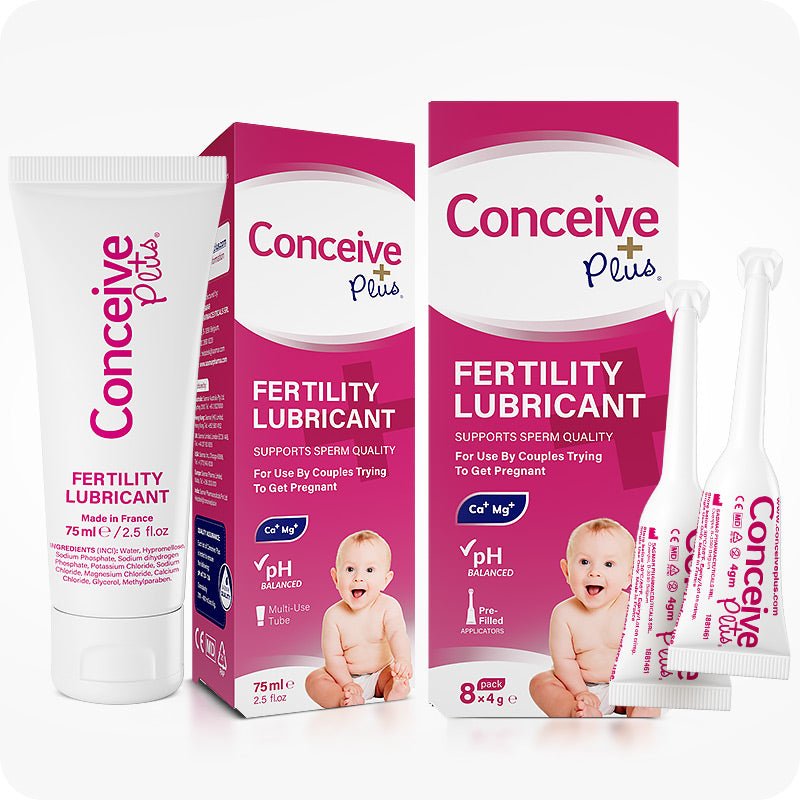
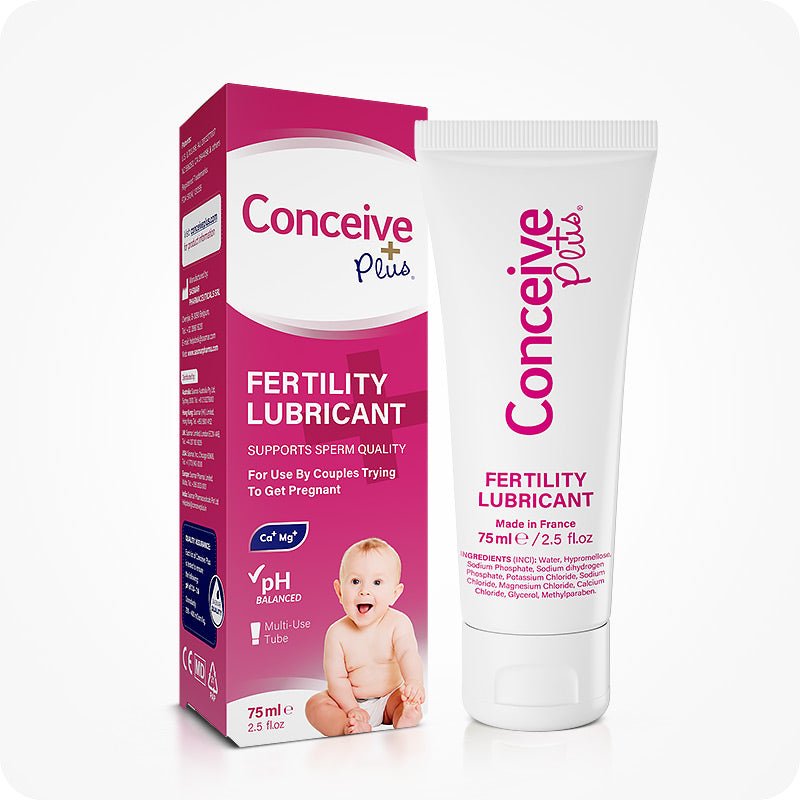
When trying to conceive after miscarriage, intercourse can be emotionally complex, and vaginal dryness during emotionally charged sex is extremely common. Conceive Plus fertility lubricant is pH and osmolality matched to fertile cervical mucus, sperm-safe, and FDA-cleared for use while trying to conceive. It provides physical comfort without compromising sperm viability — an important consideration when both emotional and physical conditions need to work together.
Trying Again: Practical Guidance
Tracking Ovulation
Your first post-miscarriage cycle may be unpredictable in length. Using ovulation predictor kits (OPKs) in this first cycle helps identify your LH surge accurately rather than relying on typical cycle-day calculations that may no longer apply. Continue OPK tracking for 2–3 cycles to re-establish your ovulatory pattern.
Managing Anxiety in Pregnancy After Loss
Pregnancy after miscarriage is an emotionally complex experience. Many women report persistent anxiety, difficulty bonding with the pregnancy, and an inability to feel joy until key milestones have passed. This is an entirely normal response to previous loss. Some strategies that help:
- Setting milestone markers ("I will allow myself to hope once I see a heartbeat at 7 weeks")
- Increasing ultrasound monitoring frequency with a supportive care provider
- Joining "pregnancy after loss" support groups
- Continuing with mental health support
Frequently Asked Questions About Miscarriage Recovery and TTC
Q: How common is miscarriage in Australia?
A: Approximately 1 in 5 known pregnancies end in miscarriage in Australia, consistent with global rates. When accounting for very early losses (chemical pregnancies), the true rate may be higher. It is estimated that 1 in 4 women will experience at least one miscarriage in their lifetime.
Q: Can a miscarriage affect my future fertility?
A: For the vast majority of women, a single uncomplicated miscarriage does not affect future fertility. The exception is Asherman's syndrome — intrauterine scarring that can occur after repeated surgical procedures on the uterus (D&C). This is rare with modern techniques but can be identified and treated.
Q: What is the risk of miscarriage in the pregnancy after a loss?
A: After one miscarriage, the risk in the next pregnancy is approximately 20% — similar to the background rate. After two miscarriages it rises to approximately 28%, and after three consecutive losses to approximately 43%. These risks are significantly modified by age, cause identification, and treatment of underlying causes.
Q: Should I test products of conception (POC) after miscarriage?
A: Testing the pregnancy tissue for chromosomal analysis (POC testing) can provide valuable information about whether the loss was due to a chromosomal abnormality (the most common cause). This is offered routinely after recurrent miscarriage and is increasingly offered after a first loss in older mothers. If a chromosomal cause is confirmed, it is typically reassuring that the next pregnancy has a high chance of proceeding normally.
Q: Can I take Conceive Plus supplements while grieving and before I'm ready to try again?
A: Yes — beginning nutritional optimisation before you feel emotionally ready to try again is an excellent approach. It addresses any nutritional deficits from the pregnancy and miscarriage, gives you a sense of agency during a helpless-feeling period, and means your body will be fully prepared when you do feel ready.
Q: My partner seems to have "moved on" faster than me. Is this normal?
A: Yes — partners grieve differently, and this disconnect is one of the most commonly reported challenges after pregnancy loss. The partner who was not pregnant may have had less physical connection to the pregnancy and may express grief in action-oriented rather than emotion-oriented ways. This is not a sign of not caring. Explicit communication and couples counselling can be transformative.
Q: How do I know if I'm emotionally ready to try again?
A: There is no universal answer. Many people find that trying again provides a sense of forward movement; others need more time to process the loss. What matters is that the decision feels authentic and chosen, rather than driven purely by urgency or avoidance of grief. Speaking with a perinatal mental health professional can help clarify this.
Q: Can acupuncture or naturopathy help after miscarriage?
A: There is limited high-quality evidence that acupuncture improves live birth rates after miscarriage. However, many women find it helpful for emotional regulation, stress reduction, and a sense of actively doing something for their body. It is generally safe to combine with evidence-based medical care and supplements.
Conclusion: Recovery Is Not Linear, But Hope Is Justified
Miscarriage is a loss that deserves to be mourned, understood, and addressed — not minimised. Physical recovery is typically swift; emotional recovery is personal and cannot be rushed. The evidence is reassuring: for most couples, the pregnancy after a miscarriage proceeds to a healthy birth, and with appropriate investigation, treatment, and optimisation, recurrent miscarriage can often be addressed.
Conceive Plus is here to support you through every stage of that journey — with fertility lubricants that make timed conception more comfortable, supplements that optimise the nutritional foundation, and a commitment to evidence-based care for couples trying to build their families.