Ovulation Tracking: The Complete Guide to Knowing Your Most Fertile Days


Ovulation Tracking: The Complete Guide to Knowing Your Most Fertile Days
Ovulation tracking is the single most powerful tool available to couples trying to conceive naturally. While conception can only occur during a narrow window each cycle — roughly 24–48 hours around ovulation when a mature egg is available — the sperm-friendly cervical fluid that signals approaching ovulation extends the fertile window to approximately 5–6 days. Learning to identify this window precisely transforms TTC from a monthly guessing game into a targeted, evidence-based strategy.
This guide covers every method of ovulation tracking available in Australia — from simple observation of fertility signs to advanced digital monitoring — along with their accuracy, cost, and how to combine methods for maximum effectiveness. Whether you have regular 28-day cycles or irregular, unpredictable ones, there is a tracking approach that works for you.
Understanding the Fertile Window
To track ovulation effectively, it helps to understand what is happening physiologically. A typical menstrual cycle is regulated by a cascade of hormones:
- Follicular phase: Rising FSH (follicle-stimulating hormone) stimulates follicle development in the ovaries. As follicles grow, they produce increasing amounts of oestrogen.
- Pre-ovulatory phase: Surging oestrogen triggers a large spike in LH (luteinising hormone) — the LH surge — which initiates the final maturation and release of the dominant follicle's egg.
- Ovulation: The egg is released approximately 12–36 hours after the LH surge peak. The egg survives for 12–24 hours.
- Luteal phase: The ruptured follicle becomes the corpus luteum, producing progesterone. If fertilisation occurs, progesterone supports the early pregnancy. If not, progesterone drops, triggering menstruation.
Sperm can survive in the female reproductive tract for up to 5 days in fertile-quality cervical mucus, which is why the fertile window begins several days before ovulation. Having intercourse in the 2–3 days leading up to ovulation (not just on the day of) produces the highest pregnancy rates per cycle.
Method 1: Basal Body Temperature (BBT) Charting
Ready to support your fertility journey? Discover Conceive Plus.
Shop Conceive Plus →Basal body temperature (BBT) is your body temperature at rest, taken first thing in the morning before any activity. After ovulation, progesterone causes a sustained temperature rise of approximately 0.2–0.5°C that persists through the luteal phase. By charting daily temperatures, you can identify this shift — confirming that ovulation has occurred.
Pros: Free (just needs a BBT thermometer), builds a detailed picture of your cycle over time, helps identify luteal phase length and potential luteal phase defect
Cons: Confirms ovulation after the fact rather than predicting it in advance; requires consistent timing and conditions (same time every morning, before getting up, ideally after 3+ hours of sleep); affected by illness, alcohol, disturbed sleep, and shift work
Best for: Understanding your cycle pattern, identifying anovulatory cycles, confirming that other predictive methods were accurate
A sustained temperature rise of at least 3 consecutive days at least 0.2°C above the previous 6 days confirms ovulation. Many couples use BBT alongside predictive methods for a complete picture.
Method 2: Cervical Mucus Observation (Creighton/Billings Method)
Cervical mucus (CM) changes in characteristic ways throughout the cycle in response to oestrogen. Learning to observe and classify mucus provides a reliable, free, and hormone-free way to identify the approach and occurrence of ovulation.
The typical mucus pattern progresses as follows:
- Menstruation: Blood present
- Early post-menstrual phase: Dry or scant, tacky, white or opaque mucus — not fertile
- Pre-ovulatory phase: Increasing mucus, becoming creamier, white, sticky — approaching fertility
- Peak fertility (approaching ovulation): Clear, stretchy, resembling raw egg white — this is fertile-quality mucus (also called EWCM: egg-white cervical mucus). This is your most fertile window.
- Post-ovulatory: Rapid return to dry or tacky after the peak day; progesterone thickens the mucus
Research on the symptothermal method (combining BBT + CM observation) shows effectiveness rates of 97–99% for family planning when used correctly — on par with hormonal methods. For TTC, it pinpoints the fertile window with high accuracy.
Pros: Free, non-invasive, hormone-free, provides real-time fertility information
Cons: Requires learning (a 1–3 cycle learning curve), affected by infections, certain medications, or lubricant use; can be confusing with irregular cycles
Method 3: LH Ovulation Predictor Kits (OPKs)
Ovulation predictor kits (OPKs) detect the LH surge in urine, providing advance notice of approximately 24–36 hours before ovulation. They are the most widely used ovulation tracking tool in Australia and are available from chemists, supermarkets, and online retailers without a prescription.
Standard OPKs show a positive result when the test line is equal to or darker than the control line. Digital OPKs provide a smiley face or "peak" reading for clarity.
Advanced digital monitors (such as the Clearblue Fertility Monitor) track both LH and oestrogen, providing 4–5 days of advance fertile window detection rather than just 24–36 hours. These are particularly useful for women with irregular cycles or those who find standard OPKs confusing.
Pros: Predicts ovulation in advance (giving you actionable timing information), widely available, easy to use
Cons: Cost (especially with irregular cycles requiring more strips), women with PCOS may have persistently elevated LH causing false positives, does not confirm that ovulation actually occurred
Best time to test: Between 10 AM and 8 PM, after holding urine for at least 2 hours without excessive fluid intake. Begin testing approximately 3–4 days before expected ovulation (use cycle length to estimate).
Method 4: Progesterone Blood Tests
A serum progesterone test taken approximately 7 days after suspected ovulation (day 21 of a 28-day cycle, or 7 DPO for other cycle lengths) can confirm that ovulation occurred and assess the quality of the luteal phase. A result above 15–30 nmol/L (3–6 ng/mL depending on the lab) indicates ovulation has likely occurred; values significantly below this range may suggest anovulation or poor luteal phase function.
In Australia, this test is available via your GP with a Medicare rebate. It is a valuable tool for women who have been TTC for several months without success and want to confirm ovulation is occurring.
Method 5: Wearable Fertility Monitors
Advanced wearable devices now offer continuous physiological monitoring for fertility prediction. Products like the Oura Ring (temperature-based ovulation detection), Tempdrop (wearable BBT sensor worn on the upper arm), and OvuSense (continuous core body temperature monitoring) use algorithms to predict and confirm ovulation with increasing accuracy.
These devices are particularly valuable for:
- Women with irregular cycles where calendar-based prediction fails
- Women working shift work or with inconsistent sleep schedules that make traditional BBT unreliable
- Those who want to reduce the daily burden of manual tracking
The accuracy of these devices varies, and they typically require 1–3 cycles of data before algorithms perform optimally. They represent a growing and increasingly evidence-supported category of fertility technology.
Method 6: Transvaginal Ultrasound Follicle Tracking
For women undergoing fertility treatment or investigations, follicle tracking via transvaginal ultrasound is the gold standard for confirming ovulation. Performed at a fertility clinic or specialist radiology centre, serial ultrasounds (typically 2–3 per cycle) monitor follicle growth and confirm follicular rupture (ovulation). A follicle of approximately 18–24 mm on ultrasound is considered mature and ready to ovulate.
This is the most accurate ovulation tracking method available but is also the most expensive and invasive. It is typically used in the context of fertility investigations or medicated cycles rather than natural cycle monitoring.
Combining Methods for Maximum Accuracy
The most accurate approach to ovulation tracking combines multiple methods to provide both predictive and confirmatory information:
- OPKs — to predict the LH surge and upcoming ovulation (predictive)
- Cervical mucus observation — to identify peak fertile-quality mucus (real-time predictive/concurrent)
- BBT charting — to confirm that ovulation occurred (confirmatory)
When OPK turns positive AND you observe clear, stretchy egg-white mucus, you are in your fertile window. Have intercourse on the day of the positive OPK, the day before, and the day after. A subsequent BBT rise in the following days confirms ovulation occurred as expected.
Ovulation Tracking with Irregular Cycles
Irregular cycles — where cycle length varies by more than 7 days between cycles — make calendar-based prediction unreliable. OPKs remain useful (start testing earlier and test daily until the surge is detected), and cervical mucus observation is particularly valuable because it tracks the actual physiological event rather than predicting it based on calendar assumptions.
Common causes of irregular cycles include:
- PCOS (polycystic ovary syndrome) — the most common cause; often associated with infrequent ovulation or anovulation
- Thyroid dysfunction — both hypothyroidism and hyperthyroidism can disrupt cycle regularity
- Hyperprolactinaemia — elevated prolactin suppresses LH and FSH
- Low body weight or high exercise loads — can suppress the hypothalamic-pituitary-ovarian axis
- Perimenopause — cycle irregularity often begins years before the final menstrual period
If your cycles are consistently irregular, see a GP for investigation before assuming normal ovulatory cycles are occurring. Not all irregular cycles are ovulatory.
The Role of Fertile-Friendly Lubricants in Timing Intercourse
One important but often overlooked aspect of ovulation tracking is ensuring that the lubricant you use during intercourse does not harm sperm. Standard lubricants — including water-based, silicone-based, and natural options like coconut oil and olive oil — have been shown to reduce sperm motility by 60–100% within 30 minutes of exposure.
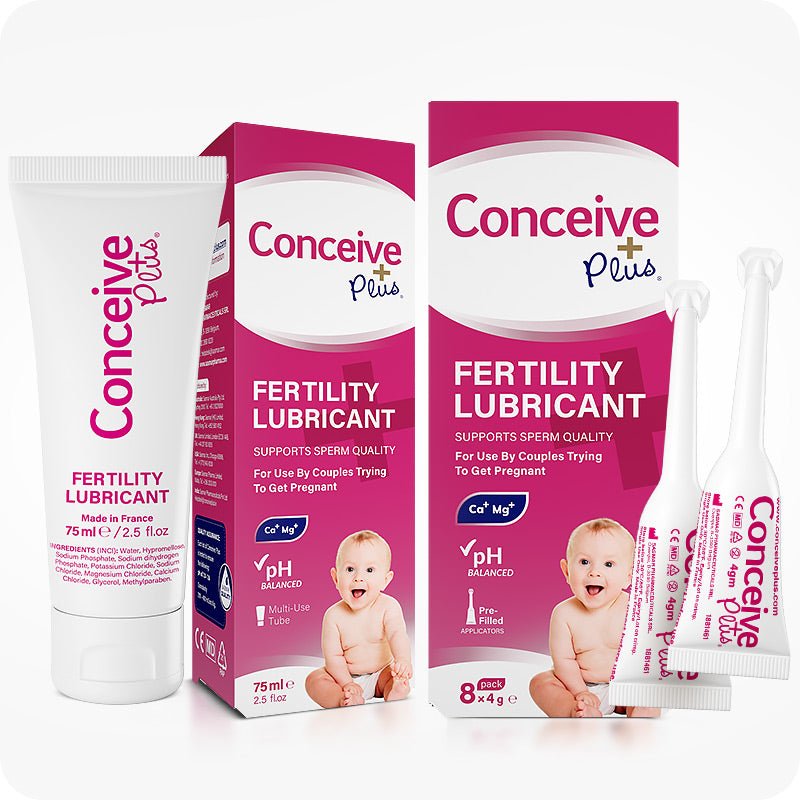
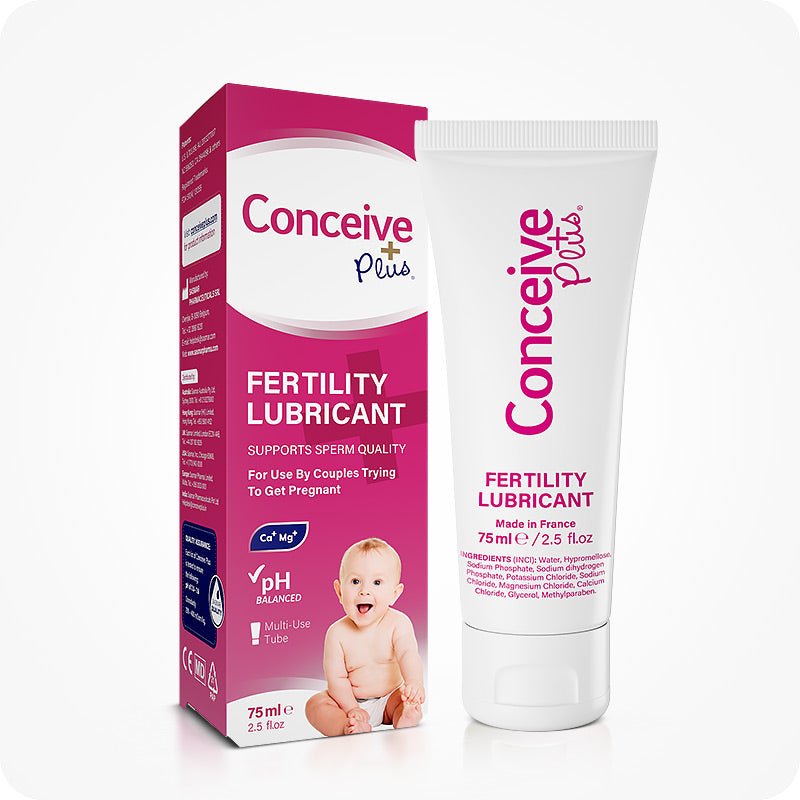
Conceive Plus Fertility Lubricant is clinically formulated to be sperm-friendly, matching the pH and osmolality of fertile-quality cervical mucus and providing additional calcium and magnesium ions that support sperm function. Using Conceive Plus when you are in your fertile window (identified through your ovulation tracking) ensures that intercourse does not inadvertently compromise the sperm's journey to the egg.
Frequently Asked Questions About Ovulation Tracking
1. How do I know if I am ovulating?
Signs of ovulation include a positive OPK, the presence of egg-white cervical mucus, a midcycle twinge or pain (mittelschmerz), increased libido, and a subsequent rise in BBT. A day 21 progesterone blood test from your GP can confirm ovulation.
2. How long does the fertile window last?
The fertile window is typically 5–6 days — the 4–5 days before ovulation (when sperm can survive in CM awaiting the egg) plus the day of ovulation (when the egg is available). The 2–3 days immediately before ovulation and the day of ovulation itself have the highest probability of conception per act of intercourse.
3. Can I get pregnant from sex before ovulation?
Yes. This is in fact the optimal timing — sperm already present in the reproductive tract when the egg is released have a higher fertilisation rate than sperm introduced after ovulation.
4. Why does my OPK never go positive?
This could mean you are not ovulating that cycle (anovulation), testing at the wrong time of day, or testing too early or too late in your cycle. Try testing twice daily (morning and evening) and extending the testing window if your cycles are irregular. If multiple cycles show no LH surge, see a GP.
5. How accurate are digital ovulation tests?
Clinically validated digital OPKs (such as Clearblue Digital) have over 99% accuracy in detecting the LH surge when used correctly. Advanced monitors tracking both LH and oestrogen have been shown to identify up to 4 additional fertile days per cycle compared to standard LH-only tests.
6. Can stress affect ovulation timing?
Yes. Significant physical or psychological stress can delay or suppress ovulation by affecting GnRH and LH release. This is one reason cycles can be irregular during high-stress periods.
7. Is it possible to ovulate twice in one cycle?
Only within a short window of approximately 24 hours. Multiple ovulations that produce fraternal twins can occur but are rare. It is not possible to ovulate, then ovulate again several days later — the hormonal shift after ovulation prevents additional ovulations.
8. Does the app cycle tracking method work?
Cycle tracking apps that use only historical cycle data (calendar method) can be useful for women with very regular cycles, but have limited value for women with irregular cycles. Apps that integrate OPK results, BBT, and cervical mucus data provide much more reliable fertile window predictions.
9. How soon after a positive OPK should I have intercourse?
On the same day as the positive OPK and the day after. Also try to have intercourse the day before the expected surge (based on your typical cycle pattern). Ovulation typically occurs 24–36 hours after the LH surge peak.
10. Should I track ovulation every cycle, or just when I first start TTC?
Continuing to track ovulation each cycle while TTC provides valuable information — it helps identify patterns, catches cycles where ovulation is delayed, and ensures you are not missing your fertile window. Continue until you achieve a confirmed pregnancy.
Making Ovulation Tracking Work for You
Ovulation tracking is not about obsession — it is about knowledge. Understanding your unique cycle, knowing when your fertile window opens and closes, and timing intercourse accordingly transforms TTC from a monthly hope into a monthly strategy. Combined with a supportive lubricant like Conceive Plus and targeted fertility supplementation for both partners, ovulation tracking gives you the best possible chance of conceiving each cycle.
Australia has excellent access to OPKs, fertility monitors, and supportive healthcare providers. Use the tools available, trust the process, and remember that most healthy couples conceive within 12 months of actively trying with well-timed intercourse.
Start your fertility journey with Conceive Plus today.
Shop Conceive Plus →