How to Track Ovulation: The Complete Australian Guide for Couples Trying to Conceive


How to Track Ovulation: The Complete Australian Guide for Couples Trying to Conceive
Understanding your ovulation cycle is one of the most powerful things you can do when trying to conceive. Research consistently shows that couples who time intercourse around the fertile window have significantly higher monthly pregnancy rates than those who do not track ovulation at all. Yet many Australian couples spend months trying to conceive without a clear picture of when ovulation is actually occurring—or whether it is happening at all.
This comprehensive guide covers every reliable method for tracking ovulation, how to interpret the signs, which tools are worth using, and how Conceive Plus can support your fertile window when you are ready to try.
Why Ovulation Tracking Matters More Than You Think
Conception is only possible during a short window each cycle. Human eggs survive for approximately 12–24 hours after release, while sperm can survive in fertile cervical mucus for 3–5 days. This gives you a combined fertile window of roughly 6 days per cycle—the five days before ovulation plus ovulation day itself.
Miss this window—even by a day or two—and you will need to wait until the next cycle. For the average couple, correctly identifying the fertile window each month can reduce the time to conception from a year or more (random timing) to three to six cycles (timed intercourse).
This is the statistical case for tracking ovulation. For individuals with irregular cycles—common with PCOS, thyroid issues, or perimenopausal changes—tracking is even more critical, as ovulation may not occur predictably and may even be absent in some cycles.
Method 1: Ovulation Predictor Kits (OPKs)
Ready to give your fertility the support it deserves?
Ovulation predictor kits detect the luteinising hormone (LH) surge that triggers ovulation approximately 24–36 hours before an egg is released. They are the most widely used at-home ovulation tracking method and are available at Australian pharmacies and supermarkets.
How to use OPKs:
- Begin testing a few days before your predicted ovulation (for a 28-day cycle, start around day 10–11)
- Test at the same time each day—afternoon (between 12pm and 4pm) gives the most accurate LH reading
- Avoid testing first thing in the morning—the LH surge is often not yet detectable in first morning urine
- Reduce fluid intake for 2 hours before testing to concentrate the urine sample
- A positive result (test line equal to or darker than the control line) indicates an LH surge—ovulation is expected within 24–36 hours
Limitations of OPKs:
- Women with PCOS often have elevated baseline LH levels, causing false positives
- Some women have a very brief LH surge that standard once-daily testing can miss
- An LH surge confirms that ovulation is expected—it does not confirm that ovulation actually occurred
- Digital OPKs are more user-friendly but more expensive than strip tests
Method 2: Basal Body Temperature (BBT) Charting
Basal body temperature is your lowest resting temperature, measured immediately upon waking before any movement, eating, or drinking. After ovulation, progesterone causes a slight but measurable temperature rise of 0.2–0.5°C that persists until menstruation (or throughout pregnancy).
How to use BBT charting:
- Use a basal thermometer (accurate to 0.01°C) rather than a standard clinical thermometer
- Take your temperature at the same time every morning, before getting out of bed
- Record the reading on a chart or app
- After 2–3 cycles, a pattern emerges showing the pre- and post-ovulation temperature phases
Key insight: BBT charting is retrospective. The temperature rise confirms that ovulation has already occurred—it does not predict it in advance. Use BBT charting alongside OPKs: OPKs tell you when ovulation is coming; BBT confirms it happened.
What disrupts BBT readings: Alcohol, illness, disturbed sleep, irregular wake times, and travel across time zones can all affect temperature readings. Consistency is critical for reliable charting.
Method 3: Cervical Mucus Monitoring
Cervical mucus (CM) changes predictably throughout the menstrual cycle in response to oestrogen and progesterone. Learning to observe and interpret these changes is a powerful, cost-free ovulation tracking method.
Typical CM pattern:
- Post-menstruation: Dry or very minimal discharge
- Early follicular phase: Sticky, thick, white or yellow—inhospitable to sperm
- Approaching ovulation: Creamy, lotion-like—slightly more sperm-friendly
- Fertile window (peak fertility): Clear, stretchy, raw egg-white consistency (EWCM)—sperm can survive for days in this mucus
- Post-ovulation: Returns to sticky or dry
The egg-white cervical mucus (EWCM) phase is your clearest natural signal that you are at or very near ovulation. Time intercourse during the EWCM phase for the highest probability of conception.
Note: Lubricant use can mask cervical mucus observations. If you are using Conceive Plus fertility lubricant during the fertile window, continue CM monitoring at the start of each day before applying any product.
Method 4: Cycle Tracking Apps
Fertility apps like Clue, Ovia, Flo, Kindara, and Natural Cycles use algorithmic predictions of ovulation based on cycle length data. More sophisticated apps (Natural Cycles, Tempdrop) integrate BBT data for more personalised predictions.
Limitations: Algorithm-based predictions assume consistent cycles. For women with irregular cycles—a very common scenario—app predictions can be substantially off. Use apps as a starting framework, not as a standalone ovulation confirmation tool.
Natural Cycles is the most rigorously validated digital fertility method, with TGA clearance in Australia, and combines BBT data with algorithmic analysis for both contraception and conception planning.
Method 5: Fertility Monitors
Advanced home fertility monitors (such as the Clearblue Advanced Fertility Monitor) track multiple hormones—oestrogen and LH, and in some models progesterone—to provide a more complete picture of the fertile window than standard LH-only OPKs.
These monitors can identify the "high fertility" days in the early fertile window (before the LH surge) that standard OPKs miss. They are more expensive upfront but reduce month-to-month test strip costs compared to using multiple daily OPKs.
For women with irregular cycles, a progesterone-detecting monitor (like the Mira Max) can also confirm whether ovulation actually occurred—valuable data that helps identify anovulatory cycles.
Method 6: Ultrasound Follicle Tracking
For couples who have been trying for 12+ months (6+ months over 35), gynaecological ultrasound scanning can directly monitor follicular development and confirm ovulation. A transvaginal scan typically shows dominant follicle growth in the days before ovulation and the characteristic "collapse" of the follicle after egg release.
This method is managed through your GP or a fertility specialist, and is often the first step when at-home methods have not been conclusive or when ovulatory dysfunction is suspected.
Combining Methods for Maximum Accuracy
No single ovulation tracking method is perfect. The most reliable approach combines two or three complementary methods:
- OPKs for the advance LH surge detection
- Cervical mucus monitoring for real-time fertile window confirmation
- BBT charting for post-ovulation confirmation and cycle pattern recognition over time
This triangulation approach gives you advance notice of approaching ovulation (OPK), confirmation of peak fertility (EWCM), and retrospective verification (BBT rise)—creating a rich picture of your reproductive cycle that improves with each month of data.
Using Conceive Plus During Your Fertile Window
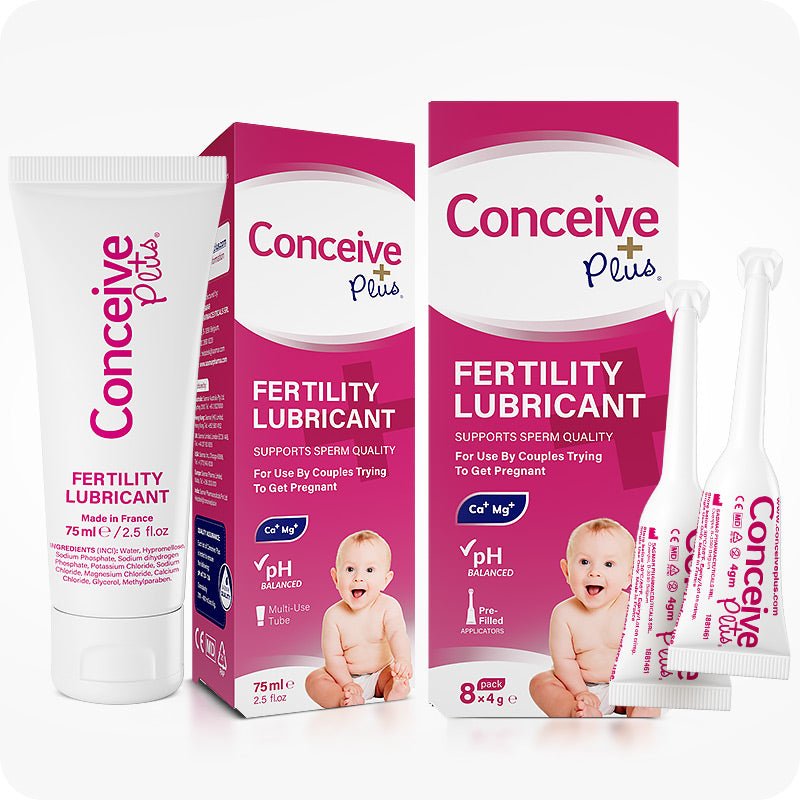
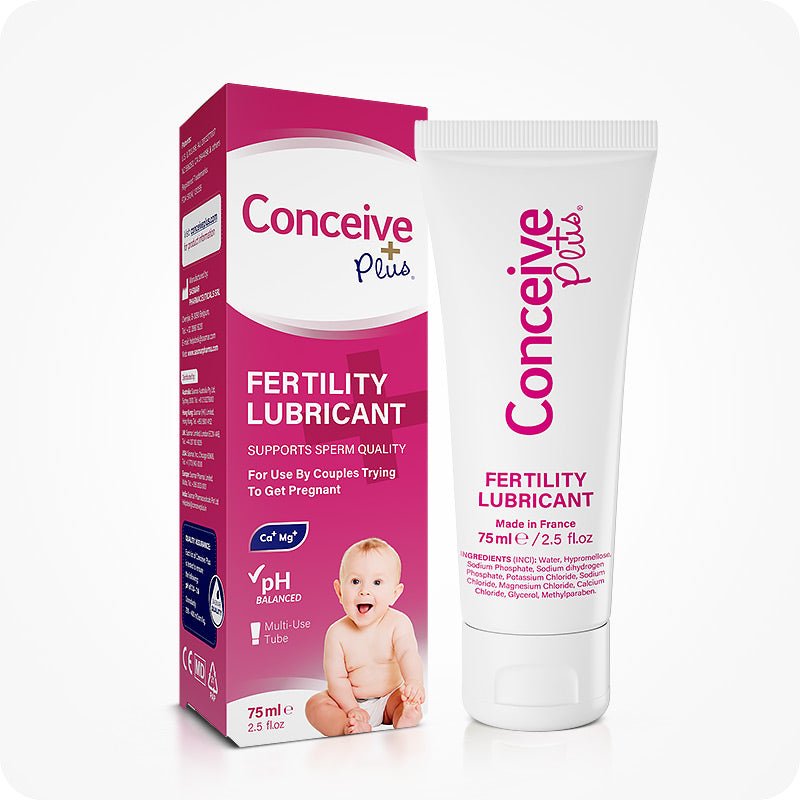
Once you know when your fertile window falls, Conceive Plus fertility lubricant can play a meaningful role in supporting conception. Many women experience reduced cervical mucus quantity or quality—particularly as they age, following hormonal birth control use, or when using certain fertility medications. In these cases, Conceive Plus provides a physiologically matched lubricant environment that replicates fertile-quality cervical mucus.
Conceive Plus is matched to cervical mucus in pH (7.2–8.2) and osmolality, contains calcium and magnesium ions that support sperm capacitation, and is free from ingredients toxic to sperm. Use it during fertile window intercourse to support sperm function—particularly if you are not producing abundant EWCM.
Special Considerations for Australian Women
PCOS and Ovulation Tracking
PCOS affects approximately 12–18% of Australian women of reproductive age and is characterised by irregular or absent ovulation. Standard OPKs are often unreliable with PCOS due to chronically elevated LH. Better approaches for PCOS: cervical mucus monitoring, BBT charting, advanced hormone monitors (Mira), or ultrasound follicle tracking.
Age and Ovulation Changes
From the late 30s onward, follicular reserves decline and the fertile window may become shorter. Some cycles become anovulatory. BBT charting and progesterone-detecting monitors become increasingly valuable for confirming whether ovulation is occurring.
Postpartum Ovulation Return
After giving birth, ovulation can return as early as 3–4 weeks in non-breastfeeding women, or be suppressed for months in exclusively breastfeeding women. Do not rely on the absence of a period as confirmation you are not ovulating—tracking is important if you are spacing pregnancies.
Frequently Asked Questions: Ovulation Tracking
Q: When does ovulation occur in a 28-day cycle?
Typically around day 14, but this varies. The luteal phase (post-ovulation) is relatively constant at 12–16 days; it is the follicular phase length that varies. If your cycle is longer than 28 days, ovulation likely occurs later than day 14.
Q: Can stress delay ovulation?
Yes. Physical or emotional stress can suppress or delay ovulation by disrupting the hormonal signals that drive follicular development. BBT charting during stressful periods often shows delayed ovulation or, in severe cases, an anovulatory cycle.
Q: Can I have a period without ovulating?
Yes. An anovulatory bleed can occur and is often indistinguishable from a normal period. If you are not getting a clear post-ovulation temperature rise on BBT charts over multiple cycles, discuss this with your GP or a fertility specialist.
Q: Is it possible to ovulate twice in one cycle?
Superovulation—releasing two eggs in one cycle—does occur and is responsible for most fraternal twins conceived naturally. However, the two eggs are released within a very short window (usually within 24 hours of each other), so tracking multiple releases within a cycle is not practically useful. You cannot ovulate in week 1 and week 3 of the same cycle.
Q: How long after a positive OPK is the best time to have intercourse?
Aim to have intercourse on the day of and the day after a positive OPK. Many fertility specialists recommend intercourse every 1–2 days throughout the fertile window (beginning from the high fertility days on advanced monitors, or from when EWCM appears) rather than saving exclusively for peak day.
Q: What if I never get a positive OPK?
Possible causes include: testing too early or too late in your cycle, a very brief LH surge (test more frequently), irregular cycles (ovulation day varies), or a genuine ovulatory problem. If you have never detected an LH surge over multiple cycles of diligent testing, discuss this with your GP.
Q: Should I use OPKs after coming off the pill?
Yes, if you are trying to conceive. The pill may suppress ovulation for 1–3 months after stopping (or sometimes longer). OPKs help confirm when your natural ovulation has resumed. Until you see a clear LH surge and corresponding BBT rise, your cycle may still be re-establishing.
Summary
Tracking ovulation is one of the most evidence-based steps you can take to improve your chances of conceiving. By combining OPKs, cervical mucus monitoring, and BBT charting, you can reliably identify your fertile window each cycle and time intercourse for maximum effect. When combined with a fertility-safe lubricant like Conceive Plus, you create the optimal physiological environment for conception—protecting sperm function during the window that matters most.
Visit conceiveplus.com.au to explore Conceive Plus fertility lubricants and supplements designed to support your TTC journey at every stage.
Trusted by hundreds of thousands of couples worldwide.