Ovulation Tracking in Australia: A Complete Guide to Knowing When You're Most Fertile


Ovulation Tracking in Australia: A Complete Guide to Knowing When You're Most Fertile
Understanding when you ovulate is the single most powerful thing you can do to increase your chances of conceiving each month. With the wide range of ovulation tracking methods available — from basal body temperature thermometers to AI-powered fertility apps and clinical hormone strips — knowing where to start can itself feel overwhelming. This guide is written specifically for Australian women trying to conceive.
The Fertile Window: Understanding Your Biology
An egg is viable for approximately 12–24 hours after ovulation. Sperm can survive in fertile cervical mucus for up to 5 days. This creates a potential fertile window of approximately 6 days each cycle — the 5 days before ovulation plus the day of ovulation itself.
The probability of conception across this window (Wilcox et al., NEJM):
- 5 days before ovulation: ~5% per cycle
- 2 days before ovulation: ~28% per cycle
- Day of ovulation: ~33% per cycle
- Day after ovulation: Rapidly declining to near-zero
The goal of ovulation tracking is to identify this window in advance — ideally with 24–48 hours of notice — to maximise the number of opportunities for sperm to be present when the egg is released.
Basal Body Temperature (BBT) Tracking
Ready to take action? Conceive Plus has supported over 2 million couples worldwide on their fertility journey. Shop the full Conceive Plus range →
After ovulation, progesterone levels rise and cause a small but detectable increase in resting body temperature — typically 0.2–0.5°C. By charting your temperature every morning before getting out of bed, you can identify this thermal shift. BBT is a retrospective indicator — it confirms ovulation occurred after the fact. Over multiple cycles, it helps predict when ovulation typically occurs in your personal cycle pattern.
Australian note: Shift workers, frequent travellers between time zones, and women with variable sleep schedules may find BBT less reliable. Illness and alcohol also affect readings.
Ovulation Predictor Kits (OPKs): The LH Surge
OPKs detect the surge in luteinising hormone (LH) that triggers ovulation approximately 24–36 hours later — giving meaningful advance warning. Available at Chemist Warehouse, Priceline, and major supermarkets nationwide. Digital OPKs eliminate the line-comparison ambiguity of standard tests. Advanced OPKs (Clearblue Advanced) identify both "high" (oestrogen rise) and "peak" (LH surge) fertility days.
PCOS note: Women with PCOS often have chronically elevated LH levels, which can cause false positives on standard OPKs. Discuss with your GP if you're getting multiple positives across your cycle without a clear peak.
Cervical Mucus Monitoring
Cervical mucus changes throughout the cycle — becoming increasingly abundant, clear, and stretchy as ovulation approaches. "Peak" mucus — resembling raw egg white — typically occurs within 1–2 days of ovulation and is the most reliable real-time fertility signal available without any equipment.
Check mucus daily by observing toilet paper or internal sampling. Note quantity, colour, and elasticity. The transition from dry/tacky to wet/stretchy signals approaching ovulation.
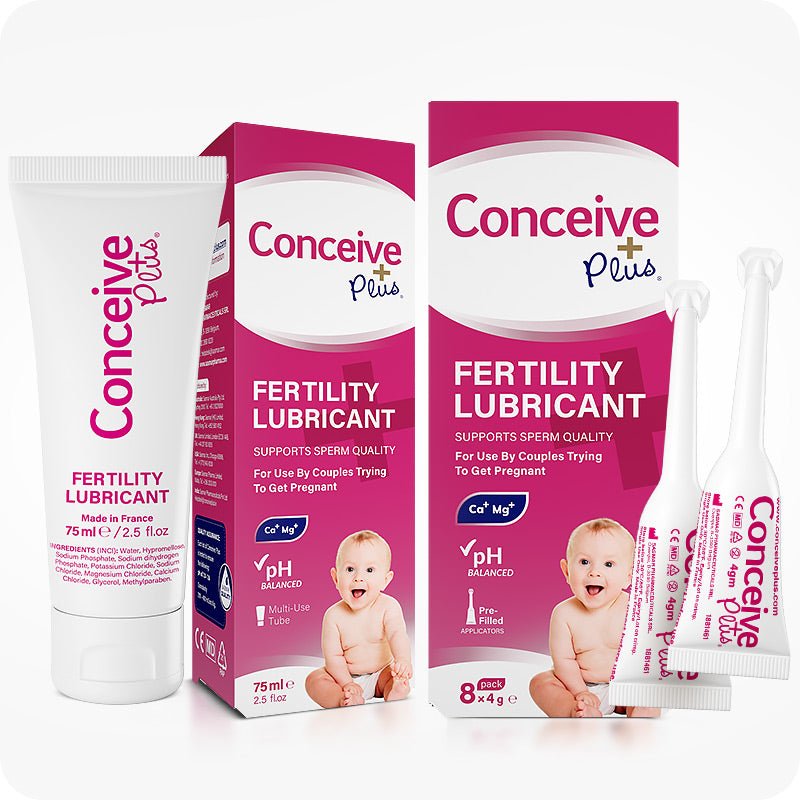
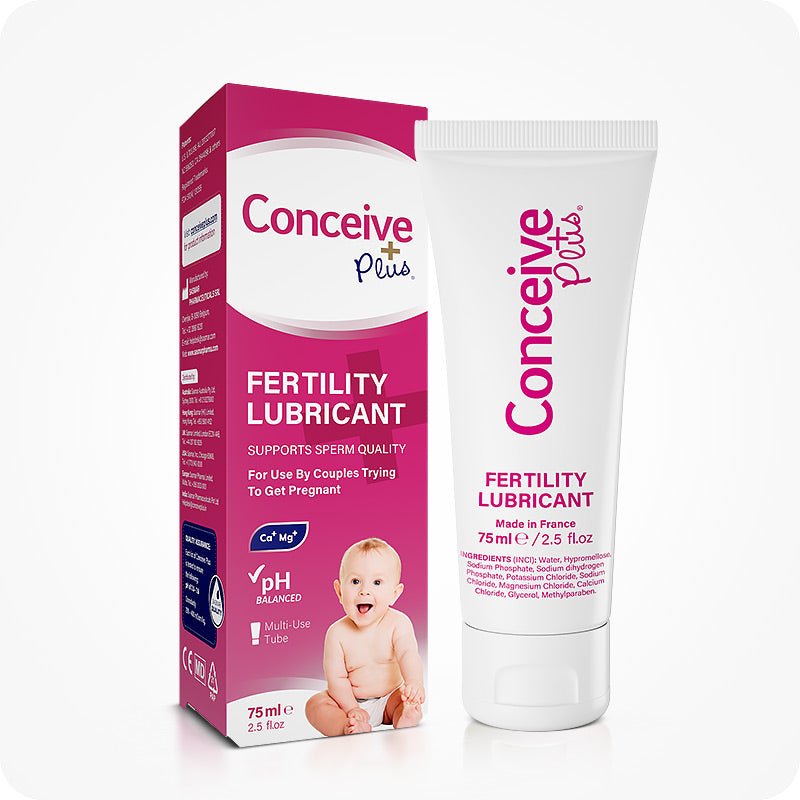
Why lubricant choice matters here: When cervical mucus is insufficient — from antihistamine use, some medications, or individual variation — most lubricants destroy sperm. Conceive Plus fertility lubricant is formulated to mimic fertile cervical mucus in pH, osmolality, and ion content — the recommended choice for Australian women who need additional moisture during the fertile window. Available at conceiveplus.com.au.
Fertility Apps and Technology in 2026
Fertility apps range from simple cycle trackers to sophisticated AI models incorporating multiple data streams. Algorithm-only apps work reasonably well for very regular cycles but become unreliable with variability. Connected device apps (Natural Cycles — TGA-registered in Australia; Ava; Tempdrop) integrate with physical sensors for more reliable predictions.
Best approach for Australian TTC users: Combine an app for pattern tracking, OPK testing for advance LH surge warning, and cervical mucus monitoring as a real-time fertility signal. No single method alone is as accurate as a combined approach.
Ovulation Tracking with Irregular Cycles: PCOS and Beyond
PCOS affects approximately 1 in 8 Australian women of reproductive age. For women with irregular cycles:
- Start OPK testing from day 8 of your cycle and continue until positive
- Place greater emphasis on cervical mucus as a real-time indicator
- Consider advanced OPKs detecting both oestrogen rise and LH surge
- Ask your GP about a day-21 progesterone test to confirm you're ovulating
RANZCOG guidelines recommend GP assessment after 12 months trying to conceive (under 35) or 6 months (over 35 or with known risk factors).
Supporting Fertile Health: Supplements for Australian Women TTC
Tracking ovulation identifies when to try — optimising fertility means ensuring the egg released is of the best possible quality. Key supplements for Australian women:
- Methylfolate (active folate): 400–800 mcg daily — NHMRC recommends starting at least one month before trying to conceive
- Iodine: 150 mcg daily — NHMRC recommendation for women planning pregnancy
- CoQ10: Particularly important for women over 35 — mitochondrial support for egg quality
- Vitamin D: Common deficiency even in sunny Australia (indoor lifestyles, sunscreen use) — aim for 50–100 nmol/L serum level
- Omega-3 (DHA+EPA): Anti-inflammatory support for egg quality and early pregnancy
Conceive Plus Women's Fertility Support provides a comprehensive fertility supplement for Australian women trying to conceive. Shop at conceiveplus.com.au →
Frequently Asked Questions: Ovulation Tracking Australia
When should I start OPK testing?
For an average 28-day cycle, start from day 10. For shorter or irregular cycles, start from day 8. Test daily (or twice daily around expected ovulation) until positive, then confirm with cervical mucus observation.
Can I ovulate without a positive OPK?
It's possible to miss the LH surge with once-daily testing if the surge is brief. Combine OPK with cervical mucus and BBT tracking to reduce the chance of missing your fertile window.
Is Conceive Plus lubricant safe for all Australian women?
Yes. Conceive Plus is TGA-compliant and formulated for safety during conception attempts. Its pH, osmolality, and ion content are designed to be compatible with sperm function. Suitable for most women including those with PCOS and endometriosis.
Does stress affect ovulation timing?
Yes — significant stress can suppress or delay ovulation by affecting GnRH pulsatility. This is why illness, travel, or major life events can cause cycles to be longer. BBT tracking reveals these variations over multiple cycles.
Can I use any lubricant during my fertile window?
No. Most lubricants — including popular Australian brands, coconut oil, and saliva — are significantly harmful to sperm, reducing motility by 60–100% within 30 minutes. Choose Conceive Plus specifically formulated for conception.
What does a negative OPK close to expected ovulation mean?
Ovulation hasn't happened yet — not that it won't. Continue testing daily. If you test through to day 18 without a positive on a regular cycle, discuss with your GP — it may be worth investigating ovulatory function.
How accurate are fertility apps for predicting ovulation?
Algorithm-only apps have moderate accuracy for regular cycles and significantly less for irregular ones. Apps connected to physical sensors (BBT, OPK data) are more accurate. No app replaces the combination of OPK and cervical mucus observation for real-time confirmation.
When should I seek medical help with ovulation issues?
If tracking reveals no apparent LH surge or BBT shift over multiple cycles, see your GP regardless of how long you've been trying. Absent or severely irregular ovulation is a clinical indication for evaluation.
Conclusion: Track, Optimise, and Try
Understanding your ovulation is the most powerful, actionable step you can take when trying to conceive. A combined approach — cycle app for pattern tracking, OPKs for advance LH surge warning, and cervical mucus monitoring as real-time signal — gives Australian women the most accurate picture of their fertile window.
Pair this with optimised fertility supplementation and Conceive Plus sperm-friendly lubricant for when you need it, and you've built a comprehensive fertility strategy. Explore the full Conceive Plus range at conceiveplus.com.au →
Start your Conceive Plus journey today. Join millions of couples who have trusted Conceive Plus to support their fertility naturally. Explore all Conceive Plus products →