Ovulation Tracking: The Complete Guide to Identifying Your Fertile Window


Ovulation Tracking: The Complete Guide to Identifying Your Fertile Window
Understanding when you ovulate is one of the most powerful tools available to any woman trying to conceive. Despite this, many couples spend months—sometimes years—timing intercourse incorrectly, missing the fertile window entirely. Ovulation tracking transforms guesswork into precision, and precision dramatically improves conception odds.
The fertile window is surprisingly narrow: sperm can survive in the female reproductive tract for up to 5 days, but the egg is only viable for 12–24 hours after ovulation. This means the optimal conception window spans about 6 days—the 5 days before ovulation and the day of ovulation itself. Miss it consistently, and months can pass without a genuine attempt at conception.
This guide covers every method of ovulation tracking in detail—from basal body temperature charting to advanced hormone monitors—helping you identify your most reliable approach and maximise your fertile days.
Why Ovulation Tracking Matters More Than You Think
The mathematics of conception are humbling. Even for a healthy couple in their mid-20s with no fertility challenges, the probability of conception in any single well-timed cycle is only 20–30%. By the time a woman reaches 35, this drops to 12–15% per cycle. Poorly timed intercourse—even by a single day—can reduce these already-modest odds to near zero.
Research published in the New England Journal of Medicine demonstrated that women who correctly identified and targeted their fertile window had conception rates 3–4 times higher than those timing intercourse based on calendar alone. Ovulation tracking is not optional for couples serious about conception—it's foundational.
The Menstrual Cycle: What's Actually Happening
Support Your Fertility Journey with Conceive Plus
Pair your ovulation tracking with Australia's most trusted fertility lubricant — sperm-safe, clinically formulated, and ready for your fertile window.
Shop Conceive Plus AU →To track ovulation effectively, you need to understand the hormonal mechanics driving your cycle:
Follicular Phase (Day 1–Ovulation)
Rising FSH (follicle-stimulating hormone) stimulates follicle development in the ovaries. As the dominant follicle grows, it produces increasing amounts of estrogen. This rising estrogen causes the uterine lining to thicken and triggers changes in cervical mucus from thick and cloudy to thin and stretchy.
The LH Surge
When estrogen reaches a threshold, it triggers a surge of LH (luteinising hormone) from the pituitary gland. This LH surge initiates the final maturation of the dominant follicle and triggers ovulation—release of the egg—approximately 24–36 hours later.
Ovulation
The dominant follicle ruptures and releases a mature oocyte. The egg enters the fallopian tube, where fertilisation can occur if sperm are present. The egg remains viable for only 12–24 hours.
Luteal Phase (Ovulation to Period)
The ruptured follicle becomes the corpus luteum, which produces progesterone. Progesterone maintains the uterine lining for potential implantation. If fertilisation doesn't occur, the corpus luteum breaks down, progesterone drops, and menstruation begins. The luteal phase is typically 12–16 days and remarkably consistent within individuals.
Method 1: Basal Body Temperature (BBT) Charting
Basal body temperature—your body temperature at complete rest—rises 0.2–0.5°C immediately after ovulation due to progesterone. This thermal shift is detectable with a sensitive digital thermometer and provides retrospective confirmation of ovulation.
How to Chart BBT
- Take your temperature every morning before getting out of bed, speaking, or drinking—even minimal activity raises BBT
- Use a dedicated BBT thermometer accurate to two decimal places
- Take the reading at the same time each morning (within 30 minutes)
- Record results in an app (Fertility Friend, Ovia, Natural Cycles) or on paper
- Look for the thermal shift: a sustained rise above your pre-ovulation baseline for 3+ consecutive days confirms ovulation has occurred
BBT Limitations
BBT tells you ovulation has already happened, not that it's about to. This makes it predictive only when used over multiple cycles to identify your pattern. Irregular sleep, illness, alcohol, and travel all disrupt readings. BBT charting is most valuable as a cross-reference with other methods rather than as a standalone tool.
Method 2: Ovulation Predictor Kits (OPKs)
OPKs detect the LH surge in urine, providing 24–36 hours' advance warning of ovulation. They're the most widely used ovulation tracking method and, when used correctly, are highly accurate.
Standard LH Strips
Inexpensive test strips compare the LH test line to a reference line. A positive result (test line as dark or darker than reference) indicates the LH surge has begun. Test once or twice daily starting 3–4 days before your expected ovulation date. The key mistake most women make is testing too infrequently and missing the surge peak.
Digital OPKs with Smiley Faces
Digital displays remove interpretation ambiguity. Advanced digital OPKs (Clearblue Advanced) also detect the estrogen rise that precedes the LH surge, providing an additional 1–2 days of high fertility identification before the LH peak.
Smart OPK Readers
Devices like the Inito fertility monitor combine LH with estrogen, FSH, and PdG (a progesterone metabolite) testing to give the most complete picture of the cycle, including ovulation confirmation.
Method 3: Cervical Mucus Observation
Cervical mucus changes in characteristic ways throughout the cycle in response to estrogen and progesterone. Learning to observe and interpret these changes gives real-time fertility information at zero cost.
The Mucus Pattern
- Post-period: Dry or minimal mucus
- Pre-ovulatory: Increasing discharge, becoming white or cream, sticky in texture
- Peak fertility: Clear, slippery, stretchy mucus resembling raw egg white (often called EWCM — egg white cervical mucus). This mucus forms channels that guide sperm through the cervix.
- Post-ovulation: Mucus becomes thick, cloudy, and sticky again under progesterone's influence
EWCM is the most reliable natural indicator of peak fertility. Research shows that the presence of EWCM correlates strongly with ovulation timing confirmed by ultrasound. Many fertility specialists consider cervical mucus observation the most biologically direct fertility indicator available without equipment.
Cervical Mucus and Lubricant
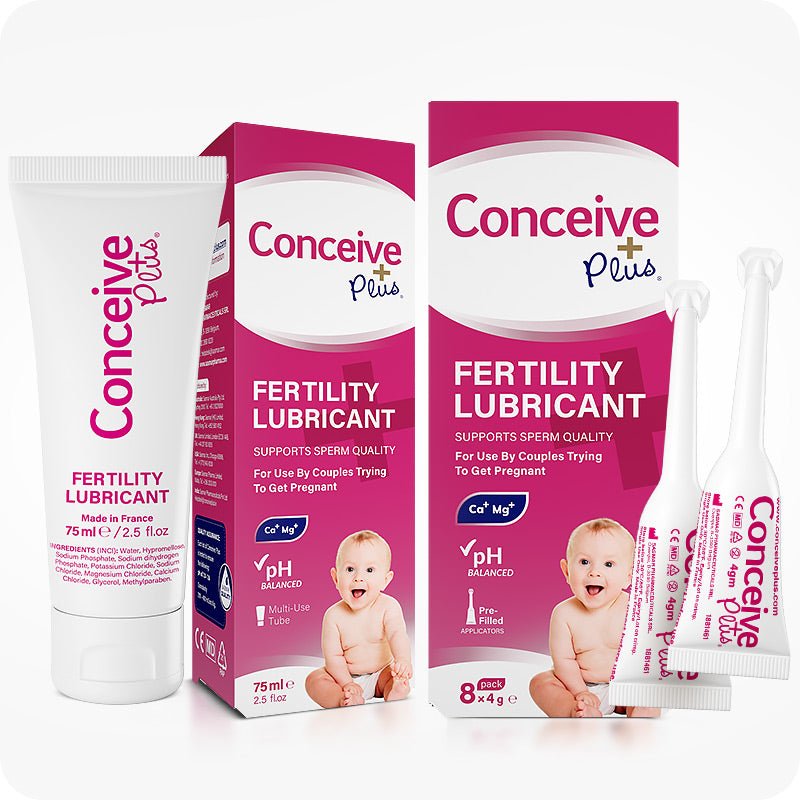
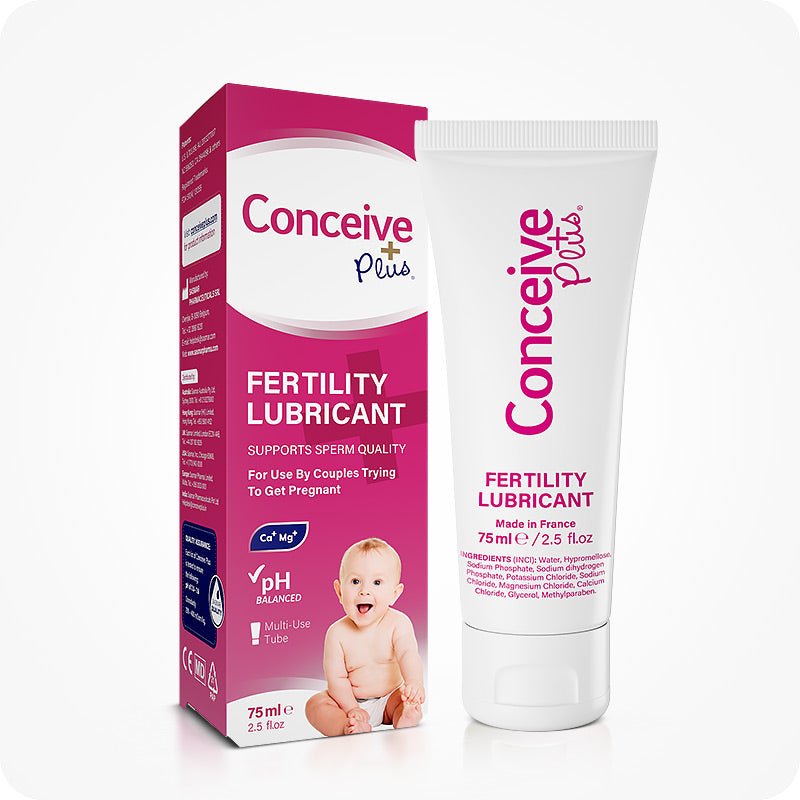
Important note: standard lubricants disrupt cervical mucus observation and can physically obstruct the cervical mucus channels that sperm rely on. If you use lubricant during the fertile window, use only a mucus-compatible, sperm-safe option such as Conceive Plus, which mimics the properties of fertile cervical mucus rather than replacing it with a hostile medium.
Method 4: Fertility Monitors
Dedicated fertility monitors provide the most comprehensive hormone tracking available for home use. They combine multiple hormone measurements to identify the full fertile window with greater accuracy than single-parameter methods.
Clearblue Connected Fertility Monitor
Tracks LH and estrogen across the cycle. Identifies up to 6 fertile days per cycle. Data integrates with a smartphone app for pattern recognition over multiple cycles.
Mira Fertility Monitor
Quantitative LH and estrogen readings (rather than positive/negative) allow you to see the actual hormone curve, identify your personal peak, and compare cycles. Particularly useful for women with irregular cycles or PCOS where LH patterns may be atypical.
Wearable Temperature Tracking (Oura Ring, Tempdrop)
Wearable devices continuously track temperature at rest, eliminating the timing and consistency challenges of manual BBT charting. Combined with OPKs, these provide highly reliable cycle data. Natural Cycles has regulatory clearance as a contraceptive app based on wearable temperature data—though for conception purposes, the goal is to identify and target fertile days, not avoid them.
Method 5: Ultrasound Follicle Monitoring
Transvaginal ultrasound is the gold standard for ovulation tracking. A sonographer can directly visualise follicle development and identify the dominant follicle as it approaches pre-ovulatory size (18–24mm). Serial scans can pinpoint ovulation timing to within hours.
Follicle monitoring is typically offered through fertility clinics and is standard practice in IUI and IVF protocols. For couples trying naturally who have struggled to identify their fertile window through home methods, a single monitored cycle can be tremendously informative about individual cycle dynamics.
Special Situations: Ovulation Tracking with PCOS
Polycystic ovary syndrome (PCOS) complicates ovulation tracking considerably. Women with PCOS may have elevated baseline LH levels (making OPKs difficult to interpret), irregular or absent ovulation, and highly variable cycle lengths.
For women with PCOS:
- Quantitative OPKs (like Mira) are preferable to standard strips, as they show the actual LH value and curve rather than a positive/negative result
- BBT charting can confirm ovulation occurred (thermal shift) but can't predict timing in irregular cycles
- Cervical mucus observation remains valid but patterns may be less consistent
- Inositol supplementation (myo-inositol and d-chiro-inositol) has the strongest evidence base for restoring regular ovulation in PCOS
- Fertility clinic support is particularly valuable for PCOS patients to confirm ovulation and assess whether ovulation induction medication is appropriate
Combining Methods for Maximum Accuracy
No single method is perfect. The most effective approach combines at least two:
- OPK + BBT: OPK provides advance warning; BBT confirms ovulation occurred retrospectively, helping calibrate timing over multiple cycles
- OPK + Cervical Mucus: LH surge plus EWCM confirmation gives high confidence in peak fertility timing
- Fertility Monitor + BBT: Comprehensive hormone data plus temperature confirmation—the gold standard for home tracking
Tracking across multiple cycles allows you to identify your individual pattern. Ovulation in a 28-day cycle does not always occur on day 14—this is a persistent myth. Many women ovulate earlier (day 10–12) or later (day 16–20), and cycle length alone is an unreliable predictor of ovulation timing.
Maximising Your Fertile Window
Once you've identified your fertile window, optimise intercourse timing:
- Begin intercourse 2–3 days before expected ovulation (ideally when OPK shows high fertility or EWCM appears)
- Continue daily or every other day through ovulation
- The highest-probability day is the day of the LH surge—aim to have intercourse within 24 hours of the positive OPK
- Use Conceive Plus lubricant to support comfort and sperm function without disrupting the vaginal environment you've worked to optimise
Frequently Asked Questions: Ovulation Tracking
Q1: How long does it take to get pregnant once you start tracking ovulation?
Most couples with no underlying fertility issues who accurately identify and target their fertile window conceive within 3–6 cycles. This compares to 6–12+ months for couples timing intercourse without tracking.
Q2: Can I ovulate without getting a positive OPK?
Rarely, but yes—particularly if you test infrequently and miss the LH surge peak. The surge can last 12–24 hours; testing twice daily during the expected window reduces missed peaks substantially.
Q3: What if my LH surge lasts several days?
Women with PCOS often have persistently elevated LH, making standard OPKs difficult to interpret. A quantitative OPK (like Mira) that tracks the LH curve rather than a threshold crossing is more useful in these cases.
Q4: Does stress delay ovulation?
Yes. Significant physiological or psychological stress can delay or even suppress ovulation by disrupting the hypothalamic-pituitary-ovarian axis. This is why cycle length can vary during stressful periods—the follicular phase lengthens, but the luteal phase remains relatively consistent.
Q5: Should I use lubricant while tracking ovulation?
If you use lubricant, choose Conceive Plus specifically. Standard lubricants interfere with cervical mucus assessment and can harm sperm. Conceive Plus mimics the fertile mucus environment and won't compromise your tracking data or sperm function.
Q6: How many days does my fertile window actually last?
The fertile window spans approximately 6 days: the 5 days before ovulation and the day of ovulation itself. The 2–3 days immediately preceding ovulation and the day of ovulation represent the highest probability window.
Q7: Can I ovulate twice in one cycle?
Releasing two eggs in close succession (within 24 hours) is possible and is the mechanism behind fraternal twins. However, a second ovulation days or weeks after the first in a single cycle is not possible—progesterone from the corpus luteum prevents this.
Q8: Is it normal to ovulate late?
Normal cycles range from 21–35 days, and ovulation can occur anytime in the follicular phase. Late ovulation (after day 20) is more common in women with longer cycles and is still compatible with healthy fertility, as long as the luteal phase is adequate (≥10 days).
Conclusion: Knowledge Is Conception's Greatest Tool
Ovulation tracking transforms fertility from a passive waiting game into an active, informed process. Whether you choose OPKs, BBT charting, cervical mucus observation, or a sophisticated fertility monitor, the core principle is the same: identify your fertile window and target it with intention.
Pair your tracking with Conceive Plus lubricant—the only fertility lubricant with calcium and magnesium ions that mimics the fertile cervical mucus environment—and you're giving every conception attempt the best possible foundation.
Your fertility window is precious. Track it. Target it. And give every cycle the best possible chance.
Support Your Fertility Journey with Conceive Plus
Pair your ovulation tracking with Australia's most trusted fertility lubricant — sperm-safe, clinically formulated, and ready for your fertile window.
Shop Conceive Plus AU →