Ovulation Tracking: A Complete Guide to Knowing Your Fertile Window


Ovulation Tracking: A Complete Guide to Knowing Your Fertile Window
Understanding when you ovulate is arguably the single most powerful thing you can do to improve your chances of conceiving. Ovulation tracking removes the guesswork from timing intercourse, helps identify whether you're ovulating at all, and provides valuable information for any fertility specialist you may consult. Whether you're just starting out or have been trying for some time, this guide walks you through every method—from simple body awareness to sophisticated testing—so you can identify your fertile window with confidence.
Timing matters enormously because the egg is only viable for 12–24 hours after ovulation. However, sperm can survive in the female reproductive tract for up to 5 days under the right conditions. This creates a fertile window of approximately 6 days: the 5 days before ovulation and the day of ovulation itself.
Understanding the Menstrual Cycle and When Ovulation Occurs
Ovulation doesn't happen at the same point in every cycle, and the common assumption that everyone ovulates on Day 14 applies only to women with a textbook 28-day cycle. In reality, menstrual cycles vary from 21 to 35 days, and ovulation timing varies accordingly.
What is consistent—regardless of cycle length—is the relationship between ovulation and the next period. The luteal phase (the time between ovulation and menstruation) is remarkably consistent at 12–14 days for most women. This means:
- 28-day cycle → ovulation approximately Day 14
- 30-day cycle → ovulation approximately Day 16
- 26-day cycle → ovulation approximately Day 12
- 35-day cycle → ovulation approximately Day 21
Working backwards from your expected period date by 14 days gives a rough estimate of ovulation. But for accurate tracking, you need more than calendar maths—you need to observe your body's signals or use testing methods.
Method 1: Basal Body Temperature (BBT) Tracking
Ready to support your fertility naturally? Conceive Plus is trusted by thousands of couples trying to conceive.
Shop Conceive Plus Fertility Supplements →Your basal body temperature is your body's resting temperature, taken first thing in the morning before any activity. After ovulation, progesterone causes a sustained temperature rise of 0.2–0.5°C that persists until menstruation. This thermal shift confirms that ovulation has occurred.
How to use BBT tracking:
- Take your temperature at the same time each morning before getting out of bed, eating, or drinking
- Use a basal body thermometer (accurate to 0.1°C) or a smart thermometer with an app
- Log readings for at least 2–3 cycles to identify your typical pattern
- Look for a sustained rise of at least 0.2°C compared to the previous 6 days
- Your most fertile days are the 2–3 days before the temperature rise
Limitations: BBT tracking is retrospective—the temperature rise happens after ovulation, not before. This means you're confirming ovulation has occurred rather than predicting it. For timing intercourse, BBT data from previous cycles helps you predict future fertile windows, but same-cycle BBT tracking alone will often be too late to catch the best timing.
Method 2: Cervical Mucus Monitoring
Cervical mucus undergoes distinctive changes throughout the cycle in response to oestrogen and progesterone. Learning to read these changes gives you real-time information about where you are in your cycle.
Typical progression through the cycle:
- Immediately after menstruation: Little to no mucus ("dry" days)
- Early follicular phase: Sticky, tacky mucus—often white or yellow, holds shape
- Approaching ovulation: Increasing quantity; becomes creamy, lotion-like
- Peak fertility (1–2 days before and during ovulation): Clear, stretchy, slippery—resembling raw egg whites. May stretch 3–5 cm between fingers without breaking. This is peak-quality fertile mucus.
- After ovulation: Returns to sticky, dense, or absent
Peak-quality cervical mucus—sometimes called "egg white cervical mucus" (EWCM)—signals the approach of ovulation and creates a sperm-friendly environment. Sperm can survive in this mucus for up to 5 days. On days when mucus is dry or sticky, sperm survival is significantly reduced.
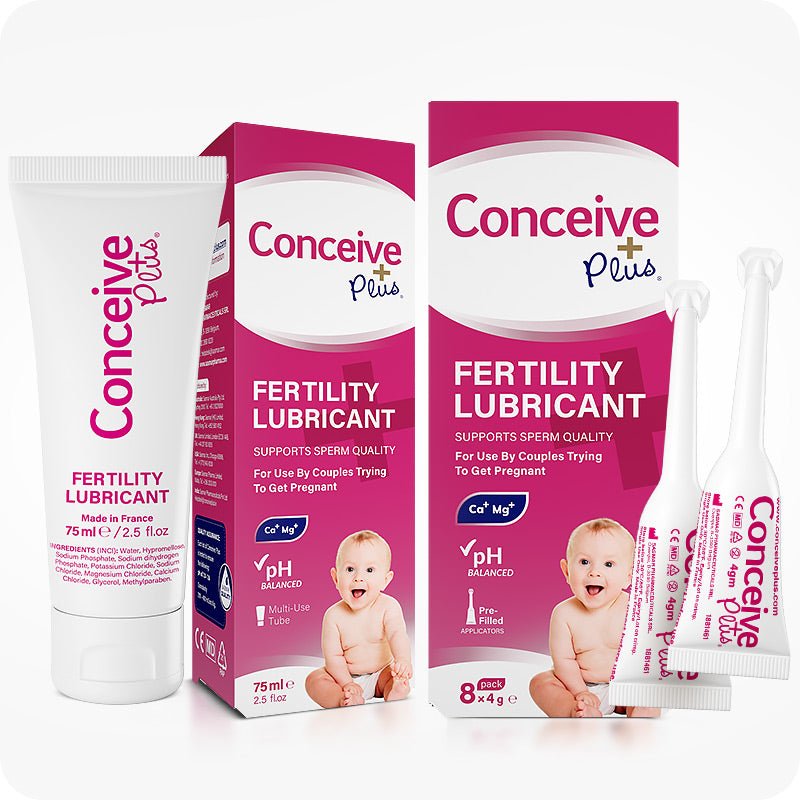
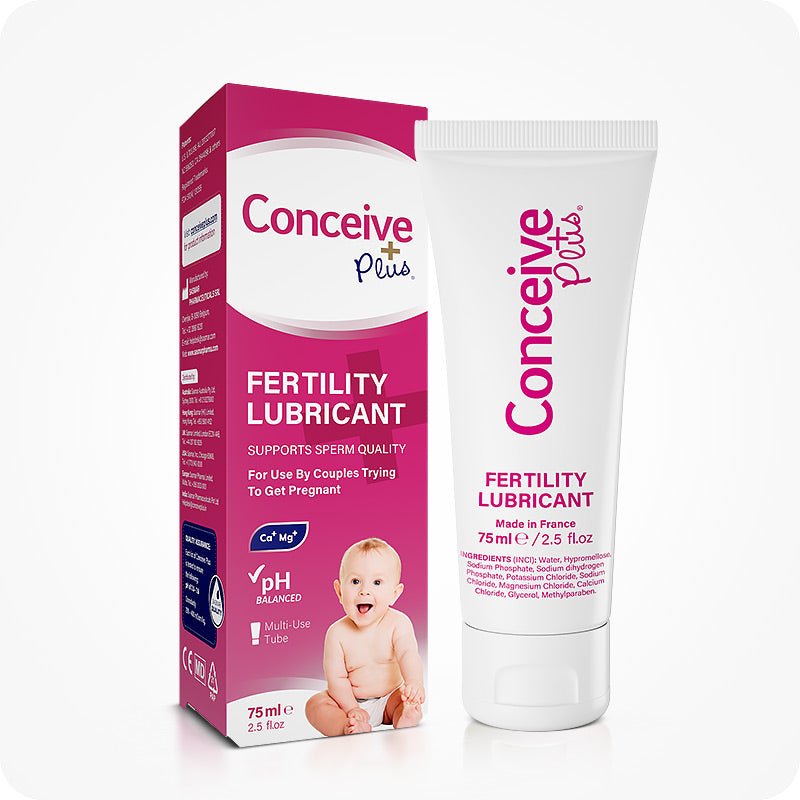
Note on lubricants: If you use a vaginal lubricant, it's important to choose one that is sperm-friendly. Many commercial lubricants—including KY Jelly and some other brands—are hyperosmotic and can significantly impair sperm motility. Conceive Plus lubricant is formulated at a pH and osmolality compatible with sperm survival, and contains calcium and magnesium ions that support sperm function.
Method 3: Ovulation Predictor Kits (OPKs)
Ovulation predictor kits detect the LH (luteinising hormone) surge that occurs 24–36 hours before ovulation. This is the most actionable signal—predicting ovulation in advance, giving you time to plan intercourse during the fertile window.
Types of OPKs available in Australia:
- Standard LH strip tests: Measure LH concentration; a positive result (test line as dark or darker than control) indicates LH surge. Budget-friendly and widely available.
- Digital OPKs: Display a smiley face or clear readout rather than requiring interpretation of line darkness. Examples include Clearblue Digital and First Response Digital.
- Advanced digital monitors: Clearblue Advanced Ovulation Test and similar products track both oestrogen (estrone-3-glucuronide) and LH, identifying up to 4 fertile days instead of 2. More expensive but more informative.
- Inito Fertility Monitor: A newer device that measures LH, oestrogen, FSH, and progesterone from a single urine sample, providing a full hormonal picture of the cycle.
How to use OPKs effectively:
- Begin testing several days before your expected ovulation (cycle length minus 17 days is a common starting point)
- Test at the same time each day—mid-morning to early afternoon tends to give the clearest results
- Reduce fluid intake 2 hours before testing (diluting urine lowers hormone concentrations)
- Have intercourse on the day of a positive OPK and the following day
Limitation: OPKs confirm an LH surge, not ovulation itself. Some women—particularly those with PCOS—may have multiple LH surges that don't result in ovulation. An advanced monitor that also tracks progesterone can confirm that ovulation actually occurred.
🇦🇺 Optimise Your Fertile Window with Conceive Plus
Conceive Plus offers ovulation support supplements and sperm-friendly lubricant to help you make the most of every fertile window. Trusted by couples across Australia.
Method 4: Fertility Apps and Cycle Tracking Software
Fertility tracking apps like Clue, Flo, Natural Cycles, and Ovia have made cycle monitoring more accessible. Used alone, apps that rely purely on calendar calculations (algorithm-based) are less accurate than methods that incorporate physiological data. However, apps that integrate BBT data, OPK results, and cervical mucus observations significantly improve accuracy.
Natural Cycles is a CE-marked and TGA-registered fertility app that uses BBT and an algorithm to predict fertile and non-fertile days. It has been validated in clinical studies as a form of contraception with effectiveness comparable to hormonal methods when used correctly—and can be used in "plan" mode for those trying to conceive.
Wearable technology is also evolving rapidly. Devices like the Ava bracelet (measures skin temperature, pulse rate, breathing rate, and other physiological signals) or the Oura ring (tracks temperature variability and sleep) can provide passive tracking data that improves fertile window prediction without the need for daily oral temperature taking.
Method 5: Hormonal Blood Tests (Clinical Ovulation Confirmation)
For women who are uncertain whether they're ovulating—particularly those with irregular cycles, PCOS, or previous fertility challenges—blood tests provide definitive information. A mid-luteal progesterone test (typically taken on Day 21 of a 28-day cycle, or 7 days after suspected ovulation) measures serum progesterone. A level above 30 nmol/L strongly indicates that ovulation has occurred.
Additional hormonal blood tests relevant to ovulation tracking:
- Day 2–5 FSH and LH: Elevated FSH suggests diminished ovarian reserve; abnormal LH:FSH ratio may indicate PCOS
- Oestradiol (Day 2–5): Baseline ovarian function
- AMH (Anti-Müllerian Hormone): A marker of ovarian reserve; not dependent on cycle timing
- Thyroid function (TSH): Thyroid disorders are a common, treatable cause of irregular ovulation
- Prolactin: Elevated prolactin can suppress ovulation
If your GP suspects you may not be ovulating regularly, a referral to a gynaecologist or fertility specialist is appropriate. Conditions like PCOS, thyroid disease, hyperprolactinaemia, and premature ovarian insufficiency (POI) are all diagnosable and often treatable.
Irregular Cycles and Anovulation: When Tracking Is More Complex
Women with irregular cycles—those varying by more than 7 days from cycle to cycle—face greater challenges with ovulation tracking because predictions based on average cycle length are less reliable. Signs that may indicate irregular or absent ovulation include:
- Cycles shorter than 21 days or longer than 35 days
- No BBT rise despite careful tracking over 2+ cycles
- Never observing fertile-quality cervical mucus
- Negative OPKs across the entire cycle
- Abnormal weight changes (over or underweight)
- Excessive exercise
- Symptoms consistent with PCOS (irregular periods, excess hair growth, acne)
If you suspect you may not be ovulating consistently, seeing your GP or a gynaecologist should take priority over continuing to track at home. Effective ovulation induction medications (like letrozole or clomiphene) are available and highly effective when anovulation is the cause of infertility.
Combining Methods for Maximum Accuracy
No single method is perfectly accurate for all women. The most reliable ovulation tracking strategy combines:
- OPK testing to predict the LH surge (actionable 24–36 hours in advance)
- Cervical mucus monitoring to observe the approach of peak fertility in real time
- BBT tracking to confirm ovulation occurred and refine predictions for subsequent cycles
Running all three together for a few cycles gives a comprehensive picture of your cycle that is more actionable than any single method alone. Apps that allow you to log all three data streams (like Kindara or Fertility Friend) help you spot patterns over time.
Frequently Asked Questions About Ovulation Tracking
How do I know if I'm ovulating?
The most reliable home methods are OPK testing (detects LH surge 24–36 hours before ovulation) and cervical mucus observation (egg-white quality mucus indicates peak fertility). BBT tracking confirms ovulation retrospectively. Blood progesterone testing provides medical confirmation. If you're uncertain, speak to your GP.
What are the signs of ovulation?
Common signs include: a positive OPK reading, the appearance of clear, stretchy, egg-white cervical mucus, a slight twinge of pain on one side of the lower abdomen (mittelschmerz), increased libido, and a slight drop in BBT followed by a sustained rise. Not every woman experiences all of these, and some are subtle.
How accurate are ovulation tests (OPKs)?
Standard OPKs that detect LH surge are approximately 97–99% accurate at detecting the LH surge when used correctly. However, an LH surge does not guarantee ovulation in all cases—particularly in women with PCOS who may have multiple surges. Advanced monitors that also track progesterone can confirm ovulation occurred.
Can I track ovulation with irregular periods?
Yes, but it's more challenging. Calendar-based predictions are unreliable with irregular cycles. OPK testing, extended over more of the cycle, combined with cervical mucus monitoring is the best approach. Wearable technology that tracks continuous physiological signals can also help identify ovulation patterns in women with irregular cycles.
When is the best time to have sex to get pregnant?
The most fertile days are the 2–3 days leading up to ovulation and the day of ovulation itself. Having intercourse every 1–2 days from the time you observe fertile cervical mucus or get a positive OPK reading maximises your chances. Daily intercourse is not necessary and doesn't improve success rates significantly over every-other-day.
Does stress affect ovulation?
Yes. Chronic stress can disrupt the hormonal cascade that triggers ovulation. Women under significant psychological or physical stress may experience delayed or skipped ovulation. While difficult to eliminate entirely, stress management practices are part of preconception care for good reason.
Does Conceive Plus help with ovulation?
Conceive Plus offers Ovulation Support supplements formulated with inositol, folate, and other nutrients shown to support regular ovulation—particularly for women with irregular cycles or PCOS. The brand also produces sperm-friendly lubricant to support intercourse during the fertile window.
Should I track my temperature even on irregular nights of sleep?
Temperature readings after less than 3–4 hours of uninterrupted sleep are typically discarded in BBT charting as they don't reflect true basal temperature. Most BBT apps allow you to mark readings as "unusual" so they don't distort your chart. Fever, alcohol, and illness also affect temperature readings and should be noted.
How long should I track ovulation before seeing a doctor?
If you're under 35 and have been trying to conceive for 12 months without success, see your GP. If you're over 35, seek assessment after 6 months. If you're not seeing any OPK positives, fertile mucus, or BBT rises after 3 months of careful tracking, that's worth discussing with your GP sooner—it may indicate ovulation is not occurring regularly.
What if I never get a positive OPK?
Possible explanations include: testing at the wrong time of day (test 2 hours after last drinking water; test in the morning–early afternoon), testing at incorrect cycle days (start earlier), a very short LH surge (some women surge for only a few hours), diluted urine, or—in some cases—anovulation. Switching to a more sensitive digital OPK or seeing your GP is appropriate if you consistently get no positives.
Make the Most of Your Fertile Window
Conceive Plus Ovulation Support and fertility-friendly lubricant are designed to work together—supporting the hormonal environment for ovulation and creating optimal conditions for sperm during intercourse. Available across Australia.