Ovulation Tracking in Australia: Your Complete Guide to Knowing Your Fertile Days


Ovulation Tracking in Australia: Your Complete Guide to Knowing Your Fertile Days
Understanding your ovulation cycle is one of the most powerful things you can do when trying to conceive. In Australia, fertility awareness is growing rapidly — and ovulation tracking methods have never been more accessible or accurate. This comprehensive guide covers everything you need to know about tracking your fertile window.
What Is Ovulation and Why Does It Matter for Conception?
Ovulation is the release of a mature egg from one of your ovaries. This egg is viable for fertilisation for approximately 12–24 hours after release. Combined with the fact that sperm can survive in the female reproductive tract for up to 5 days, your true "fertile window" is approximately 5–6 days per cycle — the 5 days before ovulation and the day of ovulation itself.
Timing intercourse (or insemination) within this window is essential for conception. Missing ovulation entirely — which is easy to do if you're relying on guesswork or calendar calculations — means waiting another full cycle. For couples trying to conceive, accurate ovulation tracking is the single most impactful habit to adopt.
Ovulation Tracking Methods: Comparing Your Options
Ready to Boost Your Fertility?
Join thousands of Australian couples who trust Conceive Plus to support their fertility.
Shop Conceive Plus Now →Several methods are available to Australian couples for ovulation tracking, ranging from simple observation to high-tech devices:
Ovulation Predictor Kits (OPKs)
OPKs detect the luteinising hormone (LH) surge that occurs 24–36 hours before ovulation. When your test line is as dark as or darker than the control line, ovulation is imminent. OPKs are widely available at Chemist Warehouse, Priceline, and pharmacies across Australia, as well as directly from conceiveplus.com.au.
OPKs are affordable, easy to use at home, and highly accurate for detecting the LH surge. For most women with regular cycles, OPKs are the gold standard of home ovulation tracking.
Basal Body Temperature (BBT) Charting
Your basal body temperature (the temperature of your body at complete rest) rises slightly (0.2–0.5°C) after ovulation due to progesterone. This rise confirms ovulation has occurred — but it's retrospective, not predictive. BBT charting is best used alongside OPKs: use OPKs to predict ovulation, and BBT to confirm it over time.
Cervical Mucus Monitoring
As ovulation approaches, cervical mucus changes from thick and cloudy (non-fertile) to clear, stretchy, and similar to raw egg white (fertile). This "egg white cervical mucus" (EWCM) indicates your most fertile days. Many women combine cervical mucus monitoring with OPKs for high accuracy. Some conditions, medications, or cervical factors can affect cervical mucus production.
Fertility Monitors
Advanced fertility monitors (such as the Clearblue Advanced Fertility Monitor or Natural Cycles) track multiple hormones or BBT trends to give a more complete picture of your fertility window. These are more expensive than OPKs but provide additional data points and may be particularly helpful for women with irregular cycles or PCOS.
Ultrasound Monitoring
Ultrasound follicle tracking at a fertility clinic allows precise monitoring of follicle development and confirmation of ovulation. This is typically used in medicated cycles or when simple ovulation tracking methods aren't providing clear results. Referral from your GP or gynaecologist is usually required.
Ovulation Tracking and PCOS: Special Considerations
Polycystic ovary syndrome (PCOS) affects approximately 1 in 8 Australian women of reproductive age. PCOS often causes irregular or anovulatory cycles (cycles where ovulation doesn't occur), making standard ovulation tracking more challenging.
Women with PCOS may:
- Have multiple LH surges without actual ovulation occurring
- Experience prolonged follicular phases before ovulation
- Not ovulate every cycle, or ovulate at unpredictable times
For women with PCOS trying to track ovulation:
- Use OPKs consistently but be aware that multiple surges without confirmed ovulation can occur
- Combine OPKs with BBT charting to confirm ovulation
- Consult your GP or a fertility specialist for clinical support
- Consider fertility monitoring apps that account for PCOS cycle patterns
Fertile Window Timing: When to Have Intercourse
Once you've identified your fertile window, the question becomes how often to have intercourse for the best conception odds:
- Daily intercourse during the fertile window gives the highest probability of conception per cycle
- Every other day (every 48 hours) is nearly as effective and may be less pressure on the relationship
- The 2 days before ovulation and the day of ovulation are the highest-probability days
- Having intercourse "just in case" on the day after a positive OPK is worthwhile — the egg may not be released until several hours after the LH surge is first detected
Optimising Your Fertile Window: The Role of Conceive Plus
Timing intercourse during your fertile window is about more than just the calendar. The quality of conditions during intercourse affects sperm survival and function:
- Avoid regular lubricants: Most commercial lubricants (including KY Jelly, Astroglide, and even saliva) significantly reduce sperm motility and viability
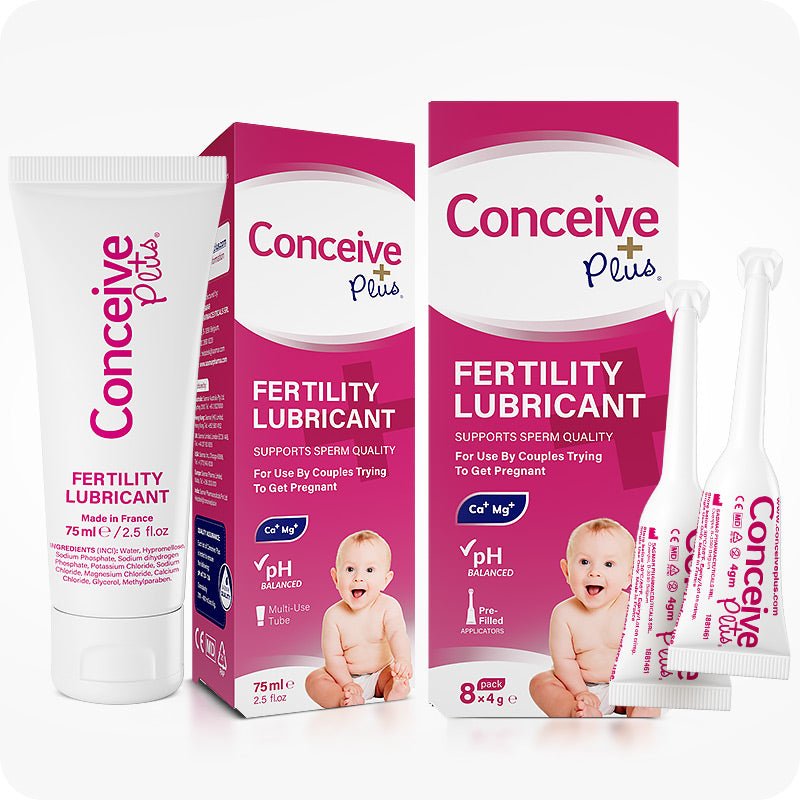
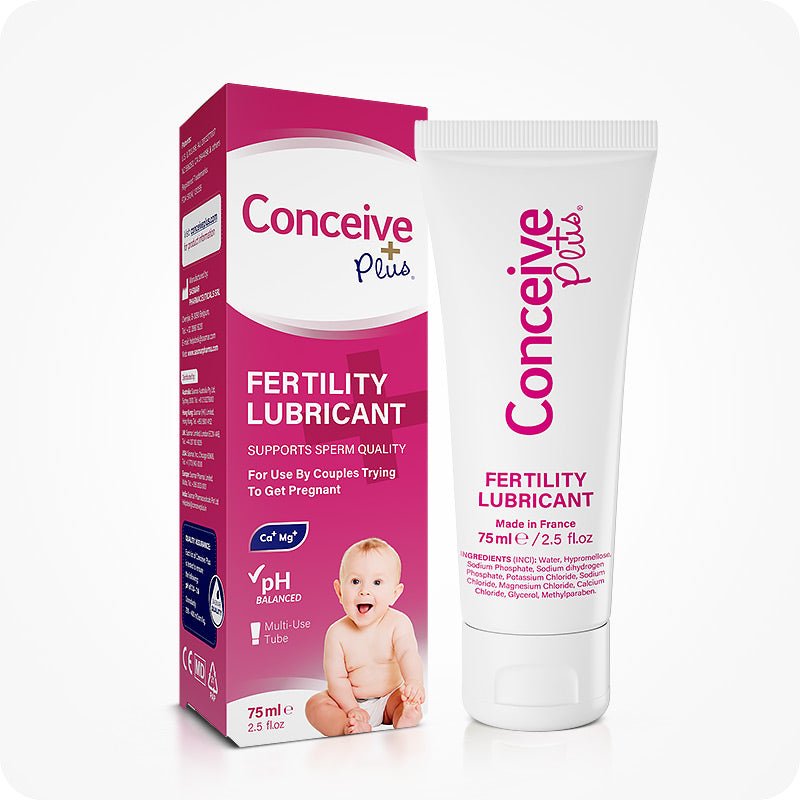
- Use Conceive Plus: When lubrication is desired or needed, Conceive Plus fertility lubricant is specifically formulated to match the pH and ionic composition of fertile cervical mucus — providing a sperm-supportive environment during intercourse
- The calcium and magnesium ions in Conceive Plus support sperm function during the critical hours after intercourse
How to Read Ovulation Predictor Kits Correctly
OPK interpretation errors are common. Here's how to get it right:
- Start testing at the right time: For a 28-day cycle, start testing on Day 10–11. For shorter or longer cycles, adjust accordingly (cycle length minus 17 days = when to start)
- Test at the same time each day: Mid-morning (10am–2pm) is generally best for detecting the LH surge, which often begins in the early morning
- Don't dilute your urine: Avoid drinking excessive fluid in the 2 hours before testing, as this dilutes hormone concentrations
- Compare test and control lines: The test line must be as dark OR darker than the control line for a positive result. Any line lighter than the control is negative
- Act promptly on a positive: Once you see a positive OPK, have intercourse that day and the next day. Ovulation typically occurs within 12–36 hours of a positive OPK
Digital vs Traditional OPKs: What's Better for Australians?
Traditional (non-digital) OPKs require line interpretation, which some find ambiguous. Digital OPKs (showing a clear smiley face or "peak" indicator) eliminate interpretation uncertainty but are more expensive. Both types detect the LH surge with high accuracy.
For most Australian couples just starting to track ovulation, traditional OPKs are an excellent, affordable starting point. If you're finding line interpretation stressful or inconsistent, digital OPKs are worth the investment.
Frequently Asked Questions
How many days before ovulation should I start having sex to maximise conception chances?
The highest-probability window is 2 days before ovulation through the day of ovulation. If you're trying to maximise chances, begin intercourse 4–5 days before predicted ovulation and continue every 1–2 days through the day after a positive OPK.
Can you ovulate more than once per cycle?
You can release multiple eggs within a 24-hour window (this is how non-identical twins occur), but you don't ovulate at two separate times in a single cycle. After ovulation, progesterone prevents further ovulation for the rest of that cycle.
Why am I getting positive OPKs but not getting pregnant?
A positive OPK confirms an LH surge, but this doesn't guarantee that ovulation actually occurred or that the egg was mature and viable. If you're regularly getting positive OPKs but not conceiving after 6–12 months, see your GP for investigation including ovulation confirmation via progesterone blood test and partner semen analysis.
Can I use Conceive Plus during the fertile window without it affecting OPK results?
Yes. Conceive Plus is applied vaginally during intercourse — it doesn't affect urine-based OPK testing, which should be done separately before intercourse.
What's a normal cycle length for ovulation tracking purposes?
Cycle lengths between 21 and 35 days are considered normal. Ovulation typically occurs approximately 14 days before the next period — not 14 days after the last period. For irregular cycles, start OPK testing earlier and test more frequently.
Does stress affect ovulation?
Yes. Significant psychological stress can suppress or delay ovulation through its effects on the hypothalamic-pituitary axis. Many women under high stress experience delayed or skipped ovulation in some cycles. Managing stress through exercise, adequate sleep, and mind-body practices can support regular ovulation.
Can my partner's sperm survive long enough for me to know when I ovulate?
Yes — this is exactly the strategy. Sperm can survive in fertile cervical mucus for up to 5 days. By having intercourse 1–2 days before your LH surge (when sperm motility and viability are highest), you can have viable sperm waiting for the egg when it's released.
Is there anything that can interfere with OPK results?
PCOS can cause false-positive OPKs due to chronically elevated LH. Certain medications including clomiphene, fertility injections, and some hormonal treatments can interfere. Some OPKs are affected by very concentrated urine. If you're on any medication, check with your pharmacist or GP.
Start Your Fertility Journey Today
Thousands of couples trust Conceive Plus to support their path to parenthood. Join them and experience the difference clinically backed fertility support can make.
Explore Conceive Plus Products →