Fertility Lubricant: What It Is, Why It Matters, and How to Choose the Best One


Fertility Lubricant: What It Is, Why It Matters, and How to Choose the Best One
When you're trying to conceive (TTC), every detail of your intimate health matters — including the lubricant you use. A fertility lubricant is not simply a comfort product; it is a clinically formulated tool designed to support sperm survival and motility during the journey from ejaculation to fertilisation. Yet many couples reach for standard lubricants without realising that most common options actively harm sperm.
This comprehensive guide explains what a fertility lubricant is, what the science says about conventional lubricants and sperm damage, what to look for in a truly sperm-safe product, and how Conceive Plus compares in the Australian market.
What Is a Fertility Lubricant?
A fertility lubricant is a personal lubricant specifically formulated to be safe for sperm. It differs from standard lubricants in several critical ways: its pH, osmolality (salt concentration), and ingredient profile are designed to mimic the natural environment of the female reproductive tract during ovulation — creating conditions in which sperm can survive and swim effectively.
Standard lubricants — including popular brands marketed for general use — are typically formulated for comfort and sensation, not for sperm health. Their chemical properties can be hostile to sperm, reducing motility (the ability to swim forward) and even causing DNA damage within minutes of contact.
The World Health Organization's laboratory manual for semen analysis specifically identifies lubricants as a potential source of sperm damage and advises against using most commercial lubricants during TTC. This recommendation highlights how significant the problem is.
How Standard Lubricants Damage Sperm
The key mechanisms by which standard lubricants harm sperm include:
pH Imbalance
During ovulation, the cervical environment has a pH of approximately 7.0–8.5, which is favourable for sperm. Standard lubricants often have a significantly lower (more acidic) pH — sometimes as low as 3.5–4.5 — matching the normal vaginal pH but not the ovulation-phase environment. Exposing sperm to this acidity dramatically reduces motility and survival time.
Osmolality
Osmolality refers to the concentration of dissolved particles in a solution. Sperm function optimally in a specific osmolality range (200–400 mOsm/kg). Many lubricants are hyperosmotic (too concentrated), causing sperm cells to dehydrate and lose motility. Hypotonic lubricants cause the opposite problem — cells swell and burst. A fertility lubricant is formulated within the sperm-compatible osmolality range.
Toxic Ingredients
Many lubricants contain preservatives, spermicidal agents (like nonoxynol-9), propylene glycol, and other chemicals that are toxic to sperm cells. Even lubricants without explicit spermicide can contain concentrations of preservatives that damage sperm within seconds of contact.
Laboratory studies have documented stark findings. A landmark study in Fertility and Sterility showed that exposure to K-Y Jelly and other popular lubricants for just 30–60 minutes reduced sperm motility by 60–100%. Mineral oil performed better but still reduced motility. The implication is clear: if you're using a standard lubricant during TTC, you may be actively reducing your conception odds each cycle.
What Makes a Fertility Lubricant Different: The Science
A clinically validated fertility lubricant must meet specific criteria:
- pH 7.0–8.5: Matching the cervical mucus environment during ovulation
- Osmolality 200–400 mOsm/kg: Compatible with sperm cell survival
- No spermicidal ingredients: Free from nonoxynol-9, chlorhexidine, benzalkonium chloride
- No parabens or toxic preservatives: Minimal preservative burden on sperm
- Non-cytotoxic: Tested to confirm it does not damage reproductive cells
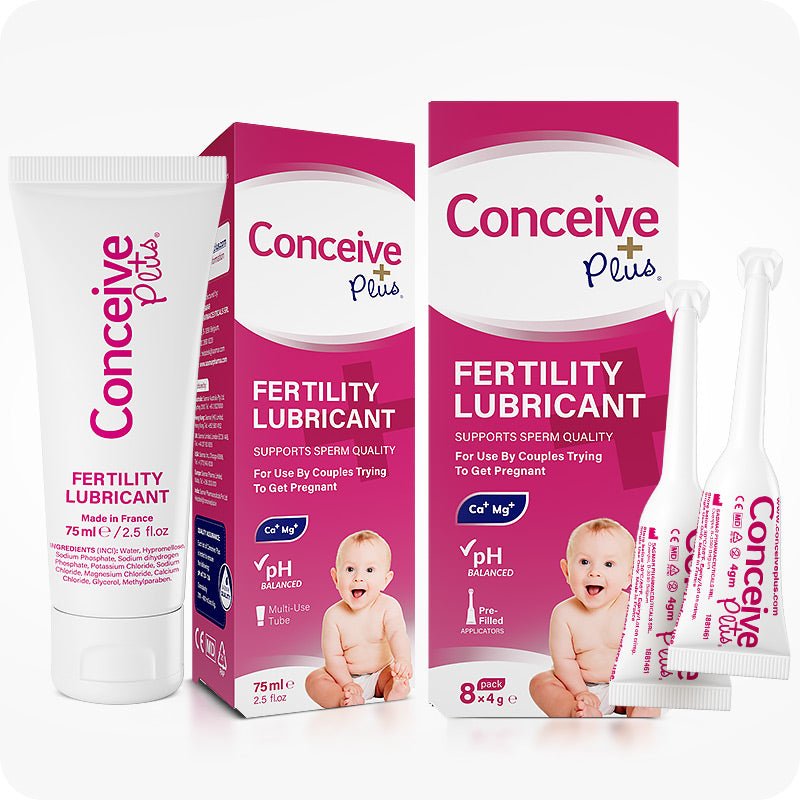
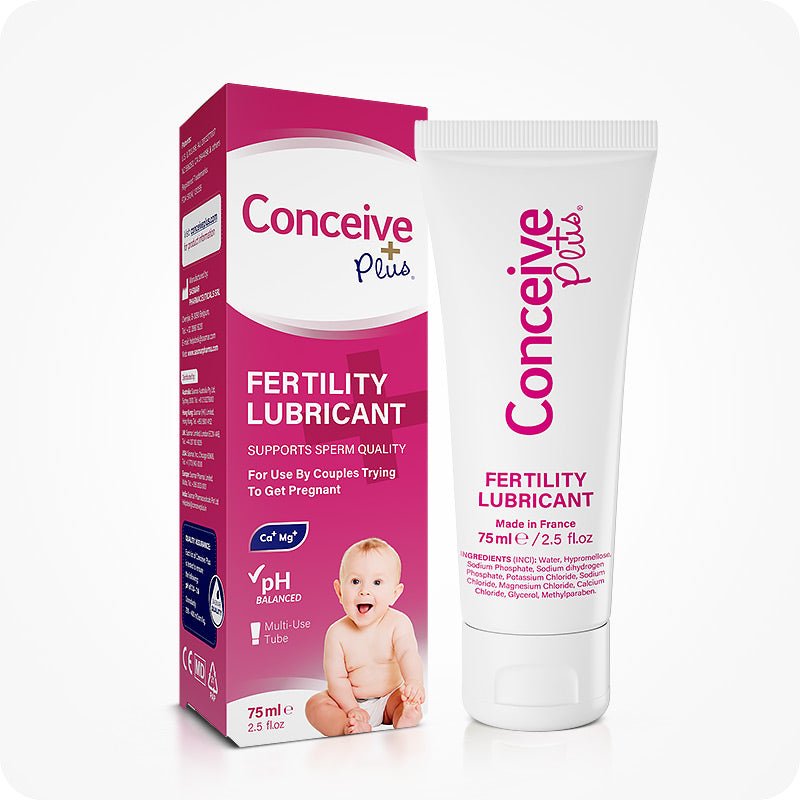
Conceive Plus is formulated to meet all of these criteria. It is also uniquely enriched with calcium and magnesium ions — minerals that naturally occur in fertile cervical mucus and play a role in supporting sperm capacitation (the final maturation step sperm undergo before fertilisation).
Conceive Plus Fertility Lubricant: What Sets It Apart in Australia
Conceive Plus is a fertility lubricant developed by fertility experts and used in clinics worldwide. Here's what distinguishes it in the Australian market:
Clinically Validated Formula
Conceive Plus has been tested in independent laboratory studies and shown not to impair sperm motility. Research demonstrates that sperm motility is maintained in Conceive Plus at levels comparable to sperm in fertile cervical mucus or culture media — the benchmark for clinical sperm survival.
Calcium and Magnesium Ions
No other fertility lubricant on the Australian market adds calcium (Ca²⁺) and magnesium (Mg²⁺) ions to its formula. These minerals are found in natural fertile cervical mucus and are involved in sperm capacitation — the process that prepares sperm for egg penetration. Conceive Plus is the only lubricant designed to actively replicate the biochemical environment of fertile CM, not just approximate its pH.
FDA-Cleared and TGA-Compliant
Conceive Plus is FDA-cleared in the United States as an assisted reproductive technology product and complies with TGA standards for the Australian market. This regulatory clearance reflects its clinical-grade formulation and safety profile.
Multiple Formats
Conceive Plus is available in multi-use tubes and convenient single-use applicators — the applicator format allows internal application close to the cervix, which is particularly helpful for couples who want to maximise lubricant placement during the fertile window.
Fertility Lubricant vs Cervical Mucus: Understanding the Relationship
Some women experience reduced cervical mucus (CM) quantity or quality when TTC — this can be due to PCOS, age-related changes, stress, antihistamine use, hormonal imbalances, or cervical scarring. Inadequate CM means sperm must travel further through a less supportive environment.
A fertility lubricant like Conceive Plus acts as a CM supplement — it provides a compatible medium for sperm to travel through when natural CM is insufficient or absent. For women with this issue, using Conceive Plus during their fertile window can meaningfully support sperm transit.
It is important to note that a fertility lubricant does not replace ovulation support or medical treatment for CM-related fertility issues. But it can bridge a gap during the conception attempt itself.
Who Should Use a Fertility Lubricant?
A fertility lubricant is appropriate for:
- Any couple TTC who uses lubricant during intercourse — to avoid the risk of using a sperm-hostile product
- Women with insufficient cervical mucus — a fertility lubricant provides a compatible medium
- Women with PCOS or endometriosis — conditions that can affect CM quality
- Women in perimenopause or with hormonal imbalances affecting vaginal moisture
- Couples undergoing IUI preparation — where lubricant use may occur in the cycle
- Any TTC couple seeking to optimise every aspect of their conception attempt
Conceive Plus is clinically formulated to support sperm motility and mimic fertile cervical mucus — available for delivery across Australia.
Shop Conceive Plus AU →
How to Use a Fertility Lubricant Effectively
Getting the most from your fertility lubricant comes down to timing, quantity, and application method:
- Time use to your fertile window: Use only when you are in your identified fertile window (around ovulation). Using lubricant outside the fertile window is fine but unnecessary.
- Apply immediately before intercourse: Do not apply lubricant hours in advance — it should be present during intercourse to support sperm transit.
- Use the right amount: Use approximately 2–3 mL (about half a tube or one applicator). More is not necessarily better — excessive lubricant can dilute natural cervical mucus.
- Internal applicators: For maximum coverage near the cervix, the single-use applicator format delivers lubricant internally, providing the best environment for cervical entry.
- Don't wash it away: Lie down for 10–20 minutes after intercourse to allow sperm to begin cervical entry without displacement.
Fertility Lubricant FAQ
Is Conceive Plus available in Australia?
Yes. Conceive Plus is available through conceiveplus.com.au with delivery across Australia, as well as through selected Australian pharmacy chains and health retailers.
Can I use a fertility lubricant with IVF?
Consult your clinic, as IVF cycles do not involve natural intercourse-based conception. For IUI cycles, some clinics permit fertility lubricant use in the days leading up to the procedure but not during the procedure itself. Always follow your clinic's specific guidance.
Are there any lubricants that are naturally sperm-safe?
Canola oil and mineral oil have shown the least sperm toxicity among non-commercial options in laboratory studies, but they carry risks: they can degrade latex condoms and may disrupt vaginal flora. They also do not provide the pH or osmolality optimisation of a purpose-formulated fertility lubricant like Conceive Plus.
Can a fertility lubricant increase my chances of getting pregnant?
A fertility lubricant is not a fertility treatment — it does not increase your natural fertility. What it does is ensure that lubricant use does not decrease your chances by harming sperm. The clinical benefit is preventing harm rather than adding a positive effect. That said, for women with inadequate cervical mucus, it may provide meaningful support.
How long should I use a fertility lubricant while TTC?
Use it for as long as you need lubricant during the fertile window of each TTC cycle. There is no maximum duration of use — it is safe for ongoing use throughout your TTC journey.
Can I use Conceive Plus if I have PCOS?
Yes. Conceive Plus is particularly helpful for women with PCOS, who may experience reduced or unusual cervical mucus. The lubricant's pH-balanced, sperm-safe formula helps compensate for CM deficiencies common in PCOS.
Is Conceive Plus safe for sensitive skin or vaginal sensitivity?
Conceive Plus is formulated without parabens and is generally well tolerated. If you have known sensitivities to lubricant ingredients, review the full ingredient list available on the packaging or website before use.
Does the applicator format make a difference?
The single-use internal applicator delivers lubricant directly near the cervix, which is the ideal placement for sperm transit support. External tube application is also effective but may not reach as far internally. Many couples find the applicator format more convenient and precise.
What is the difference between Conceive Plus and other fertility lubricants?
Conceive Plus is uniquely formulated with calcium and magnesium ions that naturally occur in fertile cervical mucus. No other fertility lubricant on the Australian market includes these ions, which may support the sperm capacitation process. Additionally, Conceive Plus has FDA clearance as an ART product — a higher regulatory standard than general lubricants.
Can my partner use lubricant if he has low sperm count?
Standard lubricants are especially important to avoid when male factor issues exist — they will further impair already-compromised sperm. A fertility lubricant like Conceive Plus is the only appropriate choice for couples where male factor fertility is a concern.
The Bottom Line on Fertility Lubricants
If you are TTC and use lubricant, the choice of product is not trivial. Standard lubricants can significantly damage sperm within seconds of contact — a fact supported by decades of reproductive research. A purpose-formulated fertility lubricant removes this risk entirely and, in the case of Conceive Plus, may actively support the reproductive environment with its unique ion formula.
For Australian couples on their TTC journey, Conceive Plus is the clinical-grade choice — the same product trusted by fertility specialists and couples worldwide.
Switch to Conceive Plus — Australia's trusted fertility lubricant, clinically formulated to support sperm on its journey.
Get Conceive Plus Australia →