Fertility Myths Debunked: Separating Science from Fiction on Your Conception Journey


The Most Common Fertility Myths That Still Persist Today
Despite the wealth of information available about fertility and conception, myths and misconceptions remain stubbornly persistent. From old wives’ tales passed down through generations to misleading advice circulating on social media, these myths can cause unnecessary stress, delay conception, and even lead couples to make choices that actually reduce their chances of pregnancy.
A survey conducted by Fertility and Sterility found that more than 50% of reproductive-age adults hold at least one significant misconception about fertility. These aren’t harmless — they can affect when people seek help, how they interpret their symptoms, and the products they choose for their journey.
In this article, we examine the most common fertility myths through the lens of current scientific evidence. Understanding what’s real and what’s fiction is one of the most empowering steps you can take on your conception journey.
Myth #1: You Get Pregnant Immediately After Stopping Birth Control
Support Your Fertility Journey with Conceive Plus Fertility Lubricant
Every step of your conception journey deserves the right support. Shop Conceive Plus Fertility Lubricant →
Support Your Fertility Journey with Conceive Plus Fertility Lubricant
Every step of your conception journey deserves the right support. Shop Conceive Plus Fertility Lubricant →
Perhaps the most pervasive myth is that fertility returns to full capacity the moment contraception is stopped. The reality is more nuanced and varies significantly depending on the type of birth control used.
For barrier methods and copper IUDs, fertility typically returns immediately. For hormonal methods, the timeline varies: the pill may require 1–3 months for cycles to regularise, the contraceptive injection (Depo-Provera) can take 6–12 months or longer for fertility to return fully, and hormonal IUDs usually see fertility return within one cycle of removal.
A 2013 study in the New England Journal of Medicine found that among former pill users, 21% conceived in the first cycle, rising to 79% by 12 months — showing that while most women do conceive within a year, the “immediately” part of this myth is inaccurate for many.
The key takeaway: be patient with your body after stopping contraception. Irregular cycles in the first few months are normal and don’t signal underlying fertility problems for most women.
Myth #2: Fertility Problems Are Always a Woman’s Issue
This myth is not only incorrect but harmful — it delays diagnosis for half of all couples experiencing infertility. The data is clear: male factor infertility contributes to approximately 40–50% of all infertility cases, either as the sole cause or combined with female factors.
According to the World Health Organization, approximately 1 in 20 men have some form of sperm abnormality. Yet many couples spend months or years with the woman undergoing tests and treatments before the man is ever evaluated. A basic semen analysis is simple, non-invasive, and relatively inexpensive — it should be one of the first diagnostic steps for any couple struggling to conceive.
Male fertility issues can be caused by low sperm count, poor motility, abnormal morphology, high DNA fragmentation, or blockages. Many of these conditions are treatable or reversible when identified early. Waiting too long to investigate male factors means lost time and unnecessary emotional and financial burden on the female partner.
Myth #3: You Should Have Sex Every Day During the Fertile Window
While the intention behind this myth is understandable, daily intercourse during the fertile window is not necessary and may actually be counterproductive for some couples. The key insight is that sperm can survive in the female reproductive tract for up to 5 days, while the egg is viable for only 12–24 hours after ovulation.
Research published in Fertility and Sterility suggests that intercourse every two days during the fertile window provides optimal pregnancy rates. Daily intercourse can sometimes reduce sperm count and motility in men with borderline semen parameters, and it often increases stress and decreases relationship satisfaction.
The most effective strategy is intercourse every 1–2 days during the 6-day fertile window ending on the day of ovulation. This ensures viable sperm are present when the egg is released without the pressure of daily performance.
Myth #4: Lying with Your Legs Up After Intercourse Improves Chances
This myth is one of the most enduring — the idea that gravity will help sperm swim upward if you remain horizontal for 20–30 minutes after intercourse. While the intention is understandable, the science doesn’t support it.
Sperm are remarkably efficient swimmers, propelled by their flagella (tails) at speeds of up to 3 millimetres per minute. Within seconds of ejaculation, millions of sperm begin their journey through the cervical canal — a process driven by active swimming, not gravity. The cervical mucus itself provides a conduit that guides sperm upward regardless of body position.
A study in the Journal of Reproductive Medicine found no significant difference in pregnancy rates between women who remained lying down for 15 minutes after intercourse versus those who got up immediately. The more important factor is the quality of the cervical mucus at the time of intercourse, which is influenced by hormonal status and the use of fertility-friendly products.
Myth #5: Fertility Lubricants Are All the Same
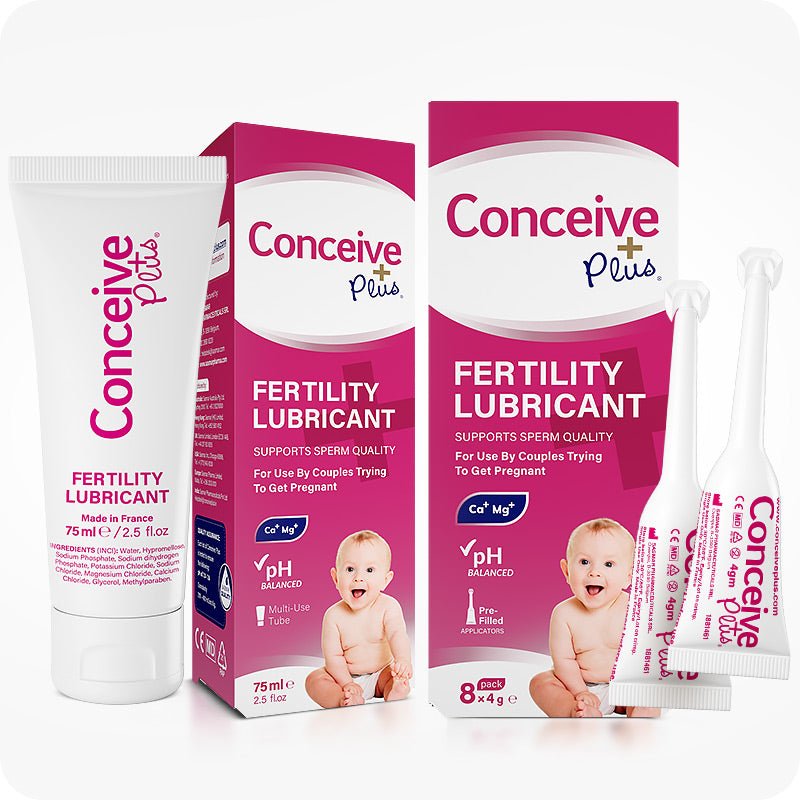
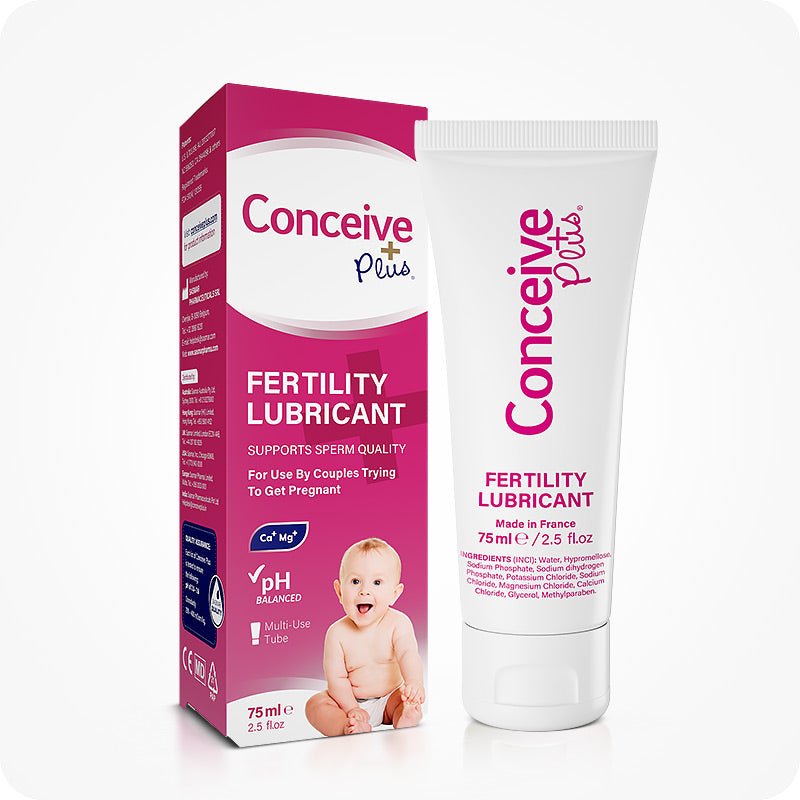
This myth can directly affect conception success. Many couples assume that any lubricant is safe to use during the fertile window, but research tells a different story. Standard commercial lubricants are designed for comfort, not fertility, and their chemical composition can be detrimental to sperm.
A landmark study published in Human Reproduction tested nine common lubricants and found that seven of them significantly impaired sperm motility, with some reducing motility by 60–100% within 30 minutes. The culprits include inappropriate pH, excessive osmolality, and chemical additives like parabens and glycerin that create a hostile environment for sperm.
Fertility-friendly lubricants, on the other hand, are specifically formulated to match the pH (7.0–7.4) and osmolality (250–350 mOsm/kg) of fertile cervical mucus. They are free from sperm-impairing chemicals and designed to support rather than hinder sperm function. Choosing a clinically tested fertility lubricant is an evidence-based decision, not a luxury.
Myth #6: You Can’t Get Pregnant if You Have Irregular Periods
Irregular cycles certainly make conception more challenging because they make ovulation timing more difficult, but they absolutely do not mean pregnancy is impossible. Many women with irregular cycles do ovulate — just less predictably than women with regular 28-day cycles.
Conditions like PCOS, thyroid disorders, and hypothalamic amenorrhea can cause irregular periods, but each has effective treatment pathways. With proper diagnosis and management, including tracking methods like basal body temperature, ovulation predictor kits, and fertility monitoring, women with irregular cycles can identify their fertile windows and conceive.
Myth #7: Age Only Matters for Women
While it’s true that female age has a more dramatic impact on fertility, male age matters too. Research from the Journal of Clinical Endocrinology & Metabolism found that men over 40 have a 23% lower chance of achieving pregnancy within 12 months compared to men under 30, even when the female partner is under 35.
Age-related changes in male fertility include decreased sperm motility, increased DNA fragmentation, and a higher incidence of genetic abnormalities in sperm. These changes contribute to longer time-to-pregnancy and an increased risk of miscarriage. For couples trying to conceive when the male partner is over 40, a semen analysis is just as important as fertility testing for the female partner.
Ready to Take the Next Step?
Trusted by thousands of couples worldwide, Conceive Plus Fertility Lubricant is designed to work with your body — not against it. Explore the full range of Conceive Plus products tailored to your unique fertility journey.
Frequently Asked Questions About Fertility Myths
Ready to Take the Next Step?
Trusted by thousands of couples worldwide, Conceive Plus Fertility Lubricant is designed to work with your body — not against it. Explore the full range of Conceive Plus products tailored to your unique fertility journey.
Q: Can stress really prevent pregnancy?
A: While stress doesn’t make conception impossible, chronic high stress can delay ovulation and reduce fertility. Managing stress is beneficial, but don’t blame yourself — most women conceive despite normal life stress.
Q: Does diet affect fertility?
A: Yes, diet plays a meaningful role. A balanced diet rich in antioxidants, healthy fats, and key nutrients supports both egg and sperm quality.
Q: Is it true that certain sexual positions improve conception chances?
A: No. All positions that result in ejaculation near the cervix are equally effective. Sperm reach the egg through active swimming, not gravity.
Q: Can I get pregnant while breastfeeding?
A: Yes, though fertility is reduced. Breastfeeding can suppress ovulation, but it is not reliable contraception.
Q: Does having an orgasm increase my chances of conception?
A: There’s no strong evidence that female orgasm directly increases pregnancy rates, though the relaxation benefits may help overall well-being.
Q: Is it true that BMI affects fertility?
A: Yes. Both very low and very high BMI are associated with reduced fertility, primarily through hormonal disruption. Maintaining a healthy BMI supports better conception outcomes.
Q: Do fertility cleanses or detoxes work?
A: There’s no scientific evidence that fertility cleanses improve conception rates. A healthy diet and lifestyle are far more effective than short-term detox programmes.
Q: Should I avoid all caffeine while trying to conceive?
A: Moderate caffeine consumption (under 200mg daily) is generally considered safe during the conception journey. Excessive intake may be associated with slightly longer time-to-pregnancy.
Q: Does a past miscarriage mean I’ll struggle to conceive again?
A: Over 85% of women who have had one miscarriage go on to have a successful pregnancy. Even after recurrent miscarriage, many women conceive successfully with appropriate medical support.
Q: Are home pregnancy tests always accurate?
A: Most are highly accurate when used correctly after a missed period, but false negatives can occur if testing too early or with dilute urine. False positives are rare with quality tests.