Fertility Myths Debunked: Separating Evidence-Based Facts from Common Misconceptions


Introduction: The Landscape of Fertility Misinformation
When you're trying to conceive, advice comes from everywhere — well-meaning family members, online forums, social media influencers, and even outdated medical recommendations. The problem is that fertility is a complex biological process, and popular "wisdom" often contradicts what the evidence actually shows. In an age of information overload, separating fact from fiction has never been more important.
A 2024 survey by FertilityEurope found that 68% of women trying to conceive reported following at least one fertility myth they later discovered was incorrect. The consequences aren't trivial: following bad advice can delay conception, cause unnecessary stress, and in some cases directly interfere with fertility.
This guide tackles the most persistent fertility myths head-on, backed by peer-reviewed research and clinical guidelines.
Myth #1: "You Can Only Get Pregnant on Day 14 of Your Cycle"
🌸 Nourish Your Fertility Journey
Conceive Plus Women's Fertility Support combines myo-inositol, CoQ10, vitamin D, and 12 more clinically studied nutrients. Discover the difference →
This is perhaps the most enduring myth in reproductive health, and it's wrong for the majority of women. The idea that ovulation always occurs on day 14 of a 28-day cycle became standard teaching decades ago, but research shows that ovulation timing varies significantly.
A landmark 2006 study published in the British Medical Journal followed 213 women and found that only 30% of women were in their fertile window on day 14 of their cycle. The vast majority had fertile windows that varied from day 6 to day 21, even among women with regular 28-day cycles.
The reality is that the fertile window — the six-day period ending on the day of ovulation — can occur at different times in different cycles. This is why ovulation tracking methods like LH test strips, cervical mucus observation, and basal body temperature charting are far more reliable than calendar-based predictions.
Myth #2: "Fertility Problems Are Usually a Woman's Issue"
This myth is both incorrect and harmful. Male factor infertility contributes to approximately 40–50% of all infertility cases, according to the WHO. In about 20% of cases, the male factor is the sole cause, and in another 20–30%, both partners contribute to fertility difficulties.
Despite these statistics, male fertility is often under-investigated. Many men are reluctant to undergo semen analysis due to stigma or misconception that fertility is "a woman's problem." This delay in testing can add months or years to the time required to identify and treat the underlying cause.
The standard first test for male fertility — semen analysis — is simple, non-invasive, and provides crucial information. Couples experiencing difficulty conceiving should ensure both partners are evaluated simultaneously from the outset.
Myth #3: "Stress Will Definitely Stop You from Getting Pregnant"
While stress does affect fertility, the relationship is more nuanced than "stress = infertility." Moderate, everyday stress does not prevent pregnancy in most women. However, chronic, severe stress — particularly when accompanied by conditions like anxiety or depression — can impact fertility through hormonal pathways.
Cortisol, the primary stress hormone, can suppress the hypothalamic-pituitary-ovarian (HPO) axis, potentially delaying or disrupting ovulation. A 2022 prospective study found that women with the highest stress levels took 29% longer to conceive than those with the lowest stress levels. However, the majority of women in both groups eventually conceived.
The takeaway: managing stress is beneficial for overall health and may modestly improve time to conception, but a normal level of daily stress is not a cause of infertility. Blaming yourself for "being too stressed" adds unnecessary guilt to an already challenging journey.
Myth #4: "Fertility Supplements Are All the Same — Just Expensive Pills"
Not all supplements are created equal. The fertility supplement market has exploded in recent years, but formulations vary dramatically in quality, ingredient selection, dosing, and scientific support. A supplement containing a "fertility blend" with undisclosed doses of a few herbs is fundamentally different from one formulated with clinically studied nutrients at evidence-based doses.
The key differentiators include: clinical evidence for each ingredient (is it backed by peer-reviewed research?), dosing (does it provide enough of each nutrient to be effective?), bioavailability (are the forms of nutrients absorbable?), and quality control (is it third-party tested for purity and potency?).
Conceive Plus products stand apart through their commitment to evidence-based formulation. Each nutrient is included at doses aligned with clinical research, and the products are manufactured in GMP-certified facilities with third-party testing.
Myth #5: "You Should Have Sex Every Day During Your Fertile Window"
While regular intercourse during the fertile window is important, daily sex is not necessary and may even be counterproductive for some couples. Sperm can survive in the female reproductive tract for up to 5 days under optimal conditions, and having intercourse every other day during the fertile window provides excellent coverage.
Research suggests that daily ejaculation may slightly reduce sperm count and motility in men with borderline sperm parameters, potentially decreasing the chances of conception rather than increasing them. For couples where male factor issues are a concern, every-other-day intercourse during the fertile window is often recommended.
The fertile window spans approximately 6 days — the 5 days before ovulation plus the day of ovulation itself. Having intercourse every 1–2 days during this window provides optimal timing without compromising sperm quality.
Myth #6: "All Lubricants Are Safe for Sperm"
This is a particularly dangerous myth because most standard personal lubricants — including popular brands — are actually toxic to sperm. Studies have shown that many commercial lubricants reduce sperm motility by 60–100% within minutes of contact, due to their osmolality (salt/sugar concentration), acidity, and chemical additives.
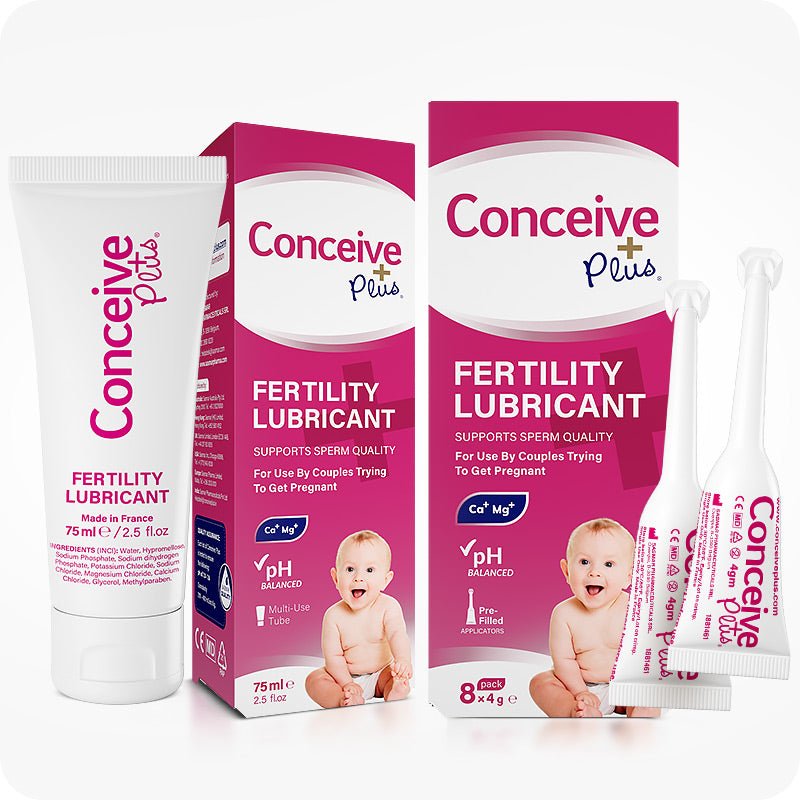
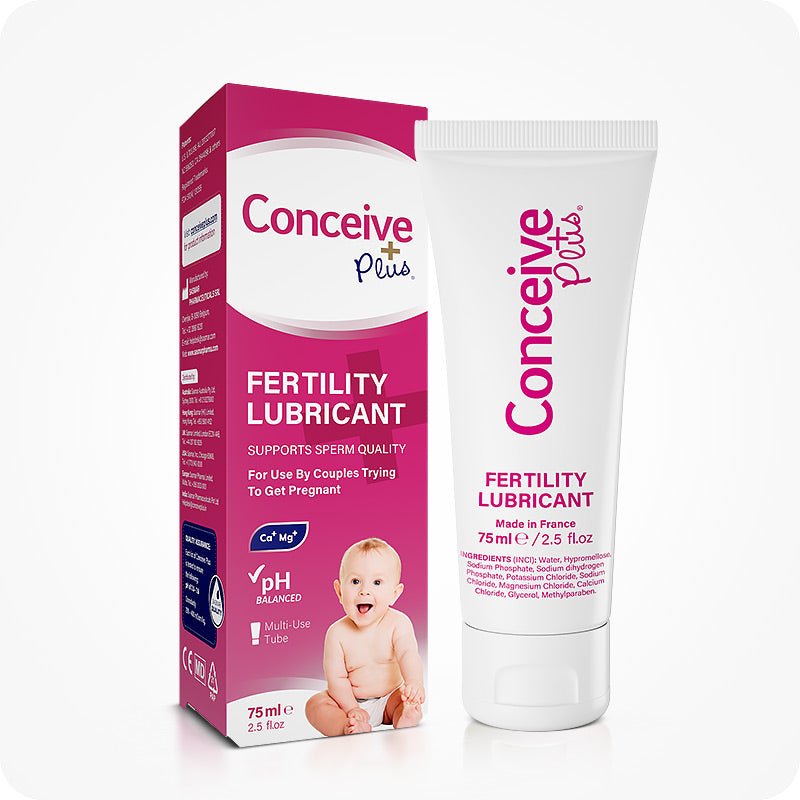
The good news is that specially formulated fertility-friendly lubricants exist. Conceive Plus Fertility Lubricant is scientifically formulated to mimic the ionic balance, pH, and protein content of fertile cervical mucus. Clinical studies have shown it is safe for sperm — maintaining motility and DNA integrity — and may actually support sperm function.
If you are trying to conceive, avoid standard lubricants and choose one specifically tested for sperm safety.
Myth #7: "If You've Had a Baby Before, You Can't Have Infertility"
Secondary infertility — the inability to conceive after previously having a child — is more common than most people realise, affecting approximately 11% of couples. The causes are diverse and include age-related decline (if years have passed since the last pregnancy), new medical conditions, changes in sperm quality, and complications from previous pregnancies.
The emotional impact of secondary infertility can be particularly challenging because couples and those around them often minimise the struggle. If you've been trying for 12 months (or 6 months if over 35) for a second or subsequent child without success, seek fertility evaluation just as you would for primary infertility.
Frequently Asked Questions
Q: Can certain sexual positions improve fertility?
A: No high-quality evidence supports any specific position being superior for conception. What matters is that sperm reaches the cervix, which occurs regardless of position.
Q: Does lying down after intercourse help?
A: Some studies suggest that remaining lying down for 15–20 minutes after intercourse may slightly increase conception rates, likely by preventing immediate leakage of semen.
Q: Can you get pregnant during your period?
A: While unlikely, it is possible — particularly for women with short cycles, as sperm can survive for up to 5 days in the reproductive tract.
Q: Does being overweight affect fertility?
A: Yes, both underweight and overweight (BMI >25) are associated with reduced fertility in both men and women. Moderate weight loss in overweight individuals can improve fertility outcomes.
Q: Can detox diets improve fertility?
A> There is no evidence that "detox" diets improve fertility. A balanced, nutrient-rich diet is more effective than any short-term cleanse.
Q: Do fertility trackers and apps work?
A: Some are more accurate than others. Apps that rely only on period dates are less reliable than those incorporating LH tests, BBT, or cervical mucus tracking.
Q: Is it true that breastfeeding prevents pregnancy?
A: Lactational amenorrhea can suppress ovulation, but it is not reliable contraception. Ovulation can return before the first postpartum period.
Q: Can medications affect fertility?
A: Yes. Certain antidepressants, blood pressure medications, NSAIDs, and steroids can affect fertility. Discuss all medications with your doctor when planning conception.
Q: Does age affect male fertility too?
A: Yes, though more gradually than female fertility. After 40, sperm quality — including motility and DNA integrity — begins to decline.
Q: Can I improve my fertility at any age?
A: Yes. While you cannot reverse chronological ageing, optimising nutrition, lifestyle, and addressing underlying conditions can improve fertility at any age.
Your Fertility, Your Journey — We're Here to Help
Every fertility journey is unique. Conceive Plus is committed to providing science-backed solutions that address the real challenges of conception.
Questions? Contact us anytime.