Fertility Lubricants: Why Your Choice Matters and How to Pick the Right One for Conception


Fertility Lubricants: Why Your Choice Matters and How to Pick the Right One for Conception
When you are trying to conceive, every detail matters - including the lubricant you use during intercourse. It is a topic few couples think about until they are deep into their fertility journey, yet the lubricant you choose can have a surprising impact on your chances of conception. Most couples use lubricant at some point, but not all lubricants are equal when it comes to sperm health.
Conventional personal lubricants are not designed with fertility in mind. Many popular brands have been shown in clinical studies to significantly impair sperm motility and even damage sperm DNA. In this guide, we explore why lubricant choice matters and how to select a fertility-friendly option that actively supports your conception goals.
How Conventional Lubricants Affect Sperm
The fundamental problem with most personal lubricants is that they were formulated for comfort, not for sperm survival. The ingredients that provide silky texture often create a hostile chemical environment. Research published in Fertility and Sterility has demonstrated that many common lubricants reduce sperm motility by 60-100 percent within 30 minutes of exposure.
A systematic study tested 14 commonly available lubricants and found that 11 significantly reduced sperm function. Problematic ingredients include glycerin, which has high osmolality that dehydrates sperm cells; parabens, which disrupt cellular function; and chlorhexidine, which is toxic to sperm. Fertility-friendly lubricants should be isotonic, matching the osmotic pressure of fertile cervical mucus.
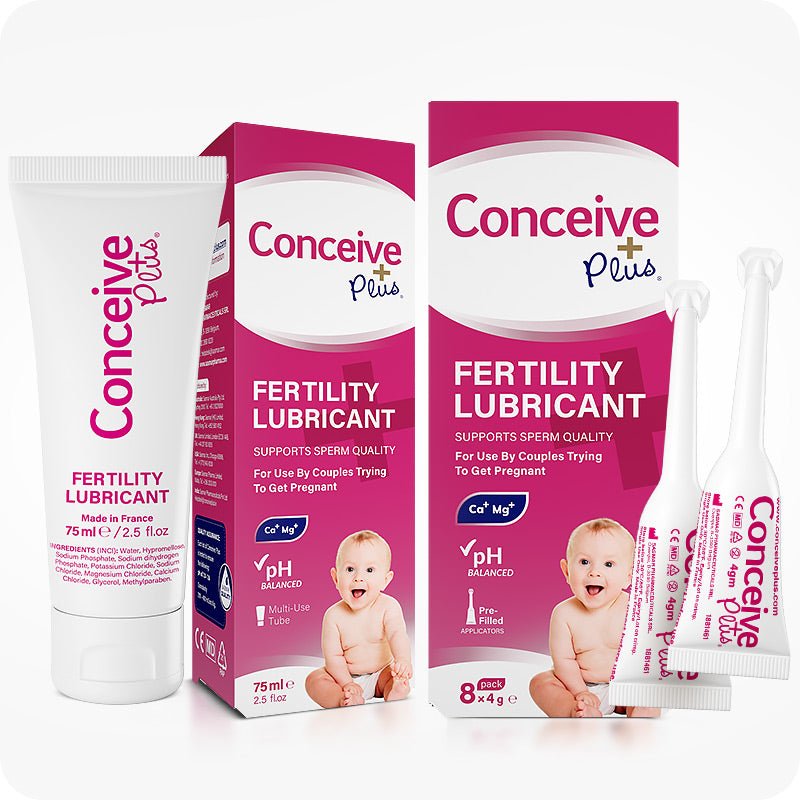
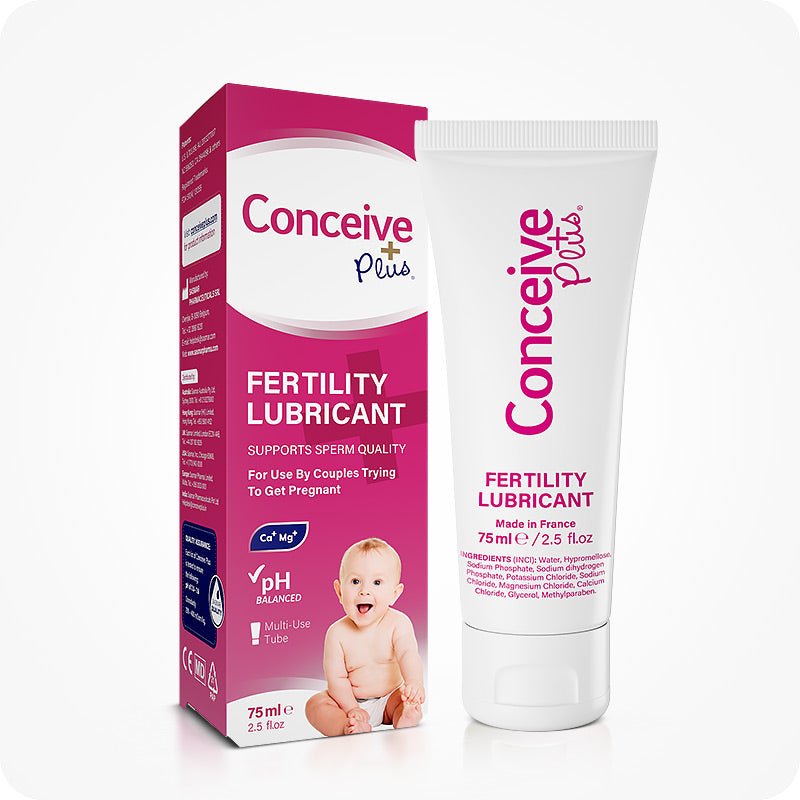
Conceive Plus Fertility Lubricant is clinically tested and proven sperm-safe. It matches the pH and osmolality of healthy fertile cervical mucus, providing the ideal environment for sperm survival and transport.
What Makes a Lubricant Truly Fertility-Friendly
A truly fertility-friendly lubricant must be isotonic, matching the osmolality of fertile cervical mucus (265-295 mOsm/kg). It must have a sperm-safe pH of 7.0 to 8.0. It must be free of spermicides like Nonoxynol-9. It should have clinical testing with peer-reviewed studies confirming sperm safety. It should be water-based with simple, fertility-safe ingredients.
Conceive Plus meets all these criteria and goes further by including calcium and magnesium ions that actively support sperm function - meaning it does not merely avoid harming sperm, it actively creates a supportive environment.
The Critical Role of Cervical Mucus in Conception
Cervical mucus plays a crucial role in fertility. During the fertile window, estrogen causes mucus to become clear, slippery, and stretchy. This fertile-quality mucus provides a nutrient-rich medium for sperm, filters abnormal cells, protects sperm from the acidic vaginal environment, and guides them toward the cervix. Some women produce less fertile mucus due to hormonal imbalances, age, or medications. In these cases, a fertility-friendly lubricant can supplement natural mucus function.
Using Lubricant Strategically
Track your cycle and use lubricant only when needed. During your fertile window, if you have adequate cervical mucus, additional lubricant may not be necessary. When you do use it, choose a proven fertility-friendly formula and use sparingly - a pea-sized amount is typically sufficient.
Common Misconceptions
Saliva has a different pH than cervical mucus and inhibits sperm motility - never use it when trying to conceive. Coconut oil can impair sperm motility and disrupt vaginal pH. Olive oil and other vegetable oils can trap sperm and prevent them from swimming freely.
Frequently Asked Questions
1. Can lubricant prevent pregnancy?
No lubricant is a contraceptive, but some contain spermicides like Nonoxynol-9 designed to prevent pregnancy. Always read labels carefully.
2. Is saliva safe as lubricant during conception?
No. Saliva inhibits sperm motility and should not be used when trying to conceive.
3. Can I use coconut oil as a fertility lubricant?
Coconut oil is not recommended. It can impair sperm motility and disrupt vaginal pH balance.
4. How much lubricant should I use?
About the size of a pea. More is not better and may dilute sperm concentration near the cervix.
5. Can lubricant cause infections?
Conventional lubricants with high osmolality can irritate tissues. Fertility-friendly lubricants are formulated to be gentle on delicate tissues.
6. Is all water-based lubricant sperm-safe?
No. Many water-based lubricants still contain harmful ingredients. Only those specifically tested for sperm safety should be used during conception attempts.
7. How is Conceive Plus different from other lubricants?
Clinically tested and proven sperm-safe. Isotonic with fertile cervical mucus. Contains calcium and magnesium ions that actively support sperm function.
8. Should I use lubricant with IUI or IVF?
No, lubricant is not needed in clinical conception settings. Fertility lubricants are for natural conception through timed intercourse.
9. Can fertility lubricant help with low cervical mucus?
Yes, it can supplement natural mucus and provide a supportive medium for sperm transport when natural production is insufficient.
10. How long has Conceive Plus been available?
Trusted by couples worldwide for over a decade and recommended by fertility specialists globally for its clinically proven formulation.
Bottom Line
The lubricant you choose matters. Conventional lubricants can significantly impair sperm function, while a proven fertility-friendly option eliminates this variable. Switching to a sperm-safe lubricant is one of the simplest yet most impactful changes you can make to your conception routine.
Conceive Plus Fertility Lubricant is clinically tested, sperm-safe, and isotonic with fertile cervical mucus. Trusted by millions of couples worldwide since 2006.