Age and Fertility: Understanding the Biological Clock and Your Options


2026-07-21 — By the Conceive Plus Team
How Age Affects Female Fertility: The Biological Clock Explained
A woman is born with all the eggs she will ever have — approximately 1–2 million at birth. By puberty, that drops to around 300,000–400,000. By age 37, only about 25,000 remain, and by age 40, roughly 5,000–10,000 remain — but more importantly, the quality of those eggs has diminished significantly.
This steady decline in both the quantity and quality of a woman eggs is the biological clock. It is not a myth — it is biological reality. The decline becomes statistically significant after age 32, accelerates after 35, and drops sharply after 40.
Age and Female Fertility: The Numbers You Need to Know
Age Does Not Define Your Journey
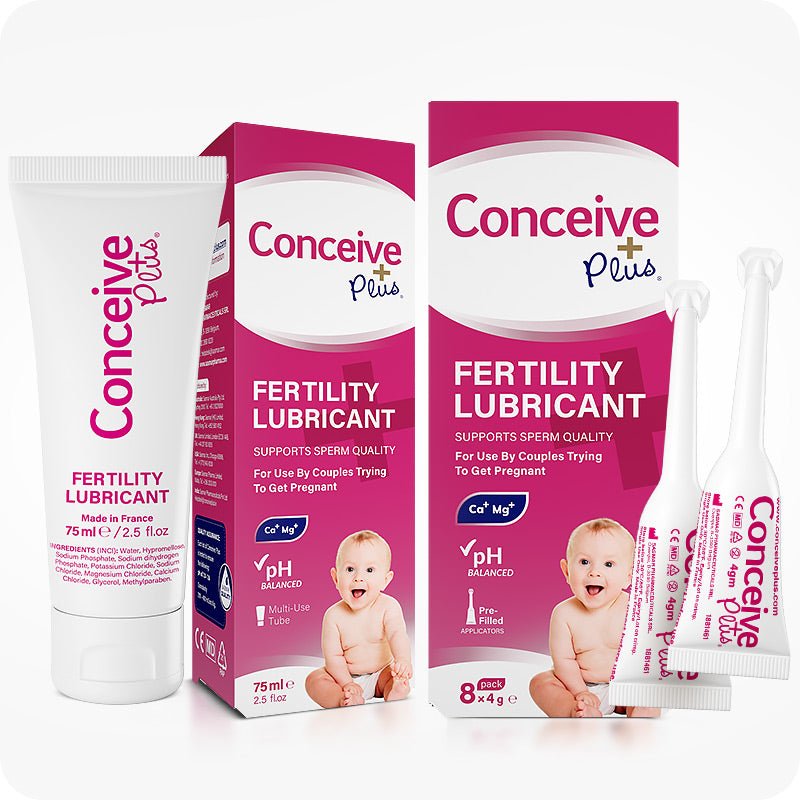
No matter where you are on your fertility journey, having the right support matters. Conceive Plus is Australia trusted fertility-friendly lubricant. Shop Conceive Plus Australia.
Chances of conceiving within one year: under 30 — approximately 85%; age 30–35 — approximately 75%; age 35–37 — approximately 60–65%; age 38–40 — approximately 40–50%; over 40 — approximately 15–25%.
Miscarriage rates also rise with age: under 35 — 10–15%; at 40 — 30–40%; at 45 — 60–80%.
Age and Male Fertility: It Affects Men Too
Male fertility also declines with age, albeit more gradually. Semen quality begins to decline after age 35–40, with decreased semen volume, reduced motility, and increased DNA fragmentation. Advanced paternal age has been linked to increased time to pregnancy, higher miscarriage risk, and increased risk of certain genetic conditions.
Preserving Your Fertility: Options for the Future
Egg freezing (oocyte cryopreservation) offers women the opportunity to preserve younger, healthier eggs for future use. The ideal age for egg freezing is under 35. For men, sperm freezing is a simple, non-invasive procedure that effectively preserves fertility indefinitely.
Ovarian Reserve Testing: Know Where You Stand
Ovarian reserve testing provides a snapshot of your remaining egg supply. Common tests include AMH (any day of cycle), Antral Follicle Count via ultrasound, and Day 3 FSH. These tests measure quantity, not quality — a woman with high AMH may still have age-related egg quality issues over 35.
Fertility Treatment Options for Older Couples
Ovulation induction with timed intercourse is often the first step. IUI can be combined with ovulation induction. IVF is the most effective treatment for age-related infertility, particularly for women over 40. Donor eggs offer the highest success rates for women over 42–43, with live birth rates of 50–60% per cycle.
Every Stage of Life Deserves the Best Support
At Conceive Plus Australia, we believe age is just one factor in your fertility journey. Explore Conceive Plus Australia.
Frequently Asked Questions About Age and Fertility
- At what age does fertility decline? Gradually around 32, accelerates after 35, drops sharply after 40.
- Can I improve egg quality at 40? You cannot change your eggs, but a healthy lifestyle optimises the environment for conception.
- Does age affect male fertility? Yes, after 35–40 with significant declines after 50.
- Best age to freeze eggs? Under 35.
- How long to conceive after 35? Longer — 60–65% conceive within one year.
- Is 40 too old? No, but more challenging — approximately 5% chance per cycle.
- Does male age affect IVF? Yes, independent of maternal age.
- What tests measure fertility? AMH, AFC, day 3 FSH for women; semen analysis for men.
- Can stress from age worrying affect fertility? Yes, chronic stress can affect ovulation.
- IVF success rates over 40? 15–20% at 40, 5–10% at 42. With donor eggs: 50–60%.