Timing Intercourse for Conception: Your Complete Guide to the Fertile Window


Timing Intercourse for Conception: Your Complete Guide to the Fertile Window
If you're trying to conceive, one of the most powerful tools in your arsenal costs nothing and requires no prescription: understanding and working with your body's natural fertile window. Despite this, surveys consistently show that a significant proportion of couples trying to conceive have misconceptions about when conception can actually occur — with many either missing their fertile window entirely or experiencing unnecessary stress from overly rigid timing approaches.
This comprehensive guide will explain the science of the fertile window, walk you through the different methods for identifying your most fertile days, and address the common questions and concerns that come up when couples are timing intercourse for conception. Whether you're just starting out on your conception journey or have been trying for a while, understanding the fertile window is foundational knowledge.
The Biology of Conception: When Can You Actually Get Pregnant?
Human fertility follows a very specific biological pattern, and the window for conception in any given cycle is much shorter than many people assume. Here's what's actually happening:
Ovulation — the release of a mature egg from the ovary — occurs once per cycle, typically around the middle of a 28-day cycle, though the timing varies significantly between women and even between cycles in the same woman. After ovulation, the egg survives for only 12–24 hours if not fertilised. This is a remarkably short window.
However, sperm can survive in the female reproductive tract for up to 5 days — and some research suggests up to 7 days under ideal conditions with fertile-quality cervical mucus present. This is what extends the theoretical fertile window to approximately 6 days: the 5 days before ovulation plus the day of ovulation itself.
Research by Dr. Allen Wilcox and colleagues at the US National Institute of Environmental Health Sciences, published in the New England Journal of Medicine, established that virtually all pregnancies result from intercourse occurring within this 6-day window. Crucially, the highest conception rates occur from intercourse 1–2 days before ovulation, not on the day of ovulation itself, because it takes sperm several hours to capacitate (become capable of fertilising an egg) and travel to the fallopian tube.
Identifying Your Fertile Window: The Key Methods
Because the timing of ovulation varies — even if your cycles are regular — accurately identifying your personal fertile window is more useful than relying on average dates. There are several evidence-based approaches, each with different levels of accuracy and complexity.
Calendar Method
The simplest approach is tracking your cycle length and estimating ovulation based on the assumption that it occurs approximately 14 days before your next period (not 14 days after your last period, which is a common misconception). If your cycles are consistently 28 days, ovulation likely occurs around day 14. If your cycles are 30 days, ovulation is more likely around day 16. If your cycles are 35 days, ovulation is around day 21.
However, the calendar method is only a rough estimate. Cycle lengths vary even in women with "regular" cycles, and the follicular phase (before ovulation) varies much more than the luteal phase (after ovulation). The calendar method is a useful starting point but should ideally be combined with physiological signs.
Basal Body Temperature (BBT) Charting
After ovulation, progesterone production causes a slight rise in basal body temperature (the temperature of your body at complete rest) of approximately 0.2°C. By taking your temperature every morning before getting out of bed and charting it over time, you can identify this post-ovulatory temperature rise.
The limitation of BBT charting is that the temperature rise occurs after ovulation has already occurred — meaning it's retrospective information. It's most useful for identifying that you are ovulating, confirming when ovulation occurred (to help predict next cycle), and over multiple cycles, identifying a pattern. It cannot reliably predict ovulation in advance, but if you've been charting for several months and notice a consistent pattern, you can begin to anticipate your fertile window.
Support Your Fertility Journey
Conceive Plus is scientifically formulated to support reproductive health for both partners. Trusted by fertility specialists worldwide.
Explore Our Products →Cervical Mucus Monitoring
As oestrogen levels rise in the lead-up to ovulation, the cervix produces increasingly fertile cervical mucus that facilitates sperm survival and migration. Learning to observe and interpret cervical mucus is one of the most accurate — and underused — fertility awareness methods.
The progression of cervical mucus through the cycle typically follows this pattern:
- Post-menstrual (dry days): Little to no mucus; the vaginal sensation is dry or non-existent
- Early follicular: Sticky, thick, cloudy mucus — sometimes described as "tacky" or like dried rubber cement; not conducive to sperm survival
- Approaching ovulation: Creamier, white or pale yellow mucus with a lotion-like consistency
- Peak fertility (the day of and day before ovulation): Clear, slippery, stretchy mucus resembling raw egg white — this "egg white cervical mucus" (EWCM) is the hallmark of peak fertility and can stretch several centimetres without breaking
- Post-ovulation: Mucus rapidly becomes thick, sticky, and opaque again as progesterone rises; a "mucus plug" forms in the cervix, blocking sperm entry
When you observe the transition from early mucus to clear, slippery EWCM, you are entering your fertile window. This is the time to prioritise intercourse.
Ovulation Predictor Kits (OPKs)
Ovulation predictor kits detect the surge in luteinizing hormone (LH) that triggers ovulation 24–36 hours before it occurs. They are widely available at Australian pharmacies without prescription and represent a significant advancement in accessible fertility awareness.
Standard OPKs use colour comparison to indicate a positive result. Advanced digital OPKs (such as Clearblue Advanced) can additionally detect the rise in oestrogen that precedes the LH surge by 1–2 days, giving you a longer advance warning (typically 4 days of "high" fertility followed by the "peak" on the day of and day after the LH surge).
Tips for using OPKs effectively:
- Begin testing a few days before you expect your fertile window based on your cycle length
- Test at the same time each day; afternoon (2pm–6pm) typically captures the LH surge most reliably
- Don't use first morning urine — it may not reflect the LH surge as accurately as afternoon urine
- Reduce fluid intake for 1–2 hours before testing to avoid diluting your urine
- A positive OPK means ovulation is expected within 24–36 hours — begin or continue intercourse immediately
How Often to Have Intercourse: The Evidence
One of the most common concerns couples have when timing intercourse is frequency: should they save up for the "optimal" day, or have sex every day? The evidence here is nuanced and somewhat counterintuitive.
For couples where sperm quality is normal, daily intercourse during the fertile window produces the highest pregnancy rates per cycle. A study published in Fertility and Sterility found pregnancy rates of approximately 37% per cycle with daily intercourse in the fertile window, compared to around 33% for every-other-day intercourse, and lower rates for less frequent intercourse.
However, for men with low sperm count or poor motility, ejaculation frequency can affect sperm concentration. In these cases, a 1–2 day abstinence period before the most fertile days may improve sperm quality — though very prolonged abstinence (more than 5–7 days) reduces motility and increases DNA fragmentation.
The practical recommendation for most couples is: have intercourse every 1–2 days throughout the fertile window (approximately days 10–15 in a 28-day cycle, or as identified by your personal tracking methods). This ensures sperm are present in the fallopian tube when ovulation occurs, without requiring perfect timing.
Cervical Mucus as Lubricant: Does It Matter?
The quality of cervical mucus during the fertile window is important not just as a fertility signal but because it actively facilitates fertilisation. EWCM (egg white cervical mucus) provides the ideal environment for sperm to survive, capacitate, and swim towards the egg. It acts as a biological filter, helping to select morphologically normal sperm.
Some women, particularly those who have used hormonal contraception for extended periods or who have certain medical conditions, may have difficulty producing sufficient fertile cervical mucus. Symptoms might include very short or absent EWCM despite positive OPKs.
If inadequate cervical mucus is a concern, certain strategies may help:
- Adequate hydration — cervical mucus production is partly dependent on overall fluid balance
- Evening primrose oil (taken in the follicular phase only, stopping at ovulation) is traditionally used to support mucus production; evidence is anecdotal but generally safe
- Avoiding antihistamines during the fertile window if possible — these can dry up mucus throughout the body, including cervical mucus
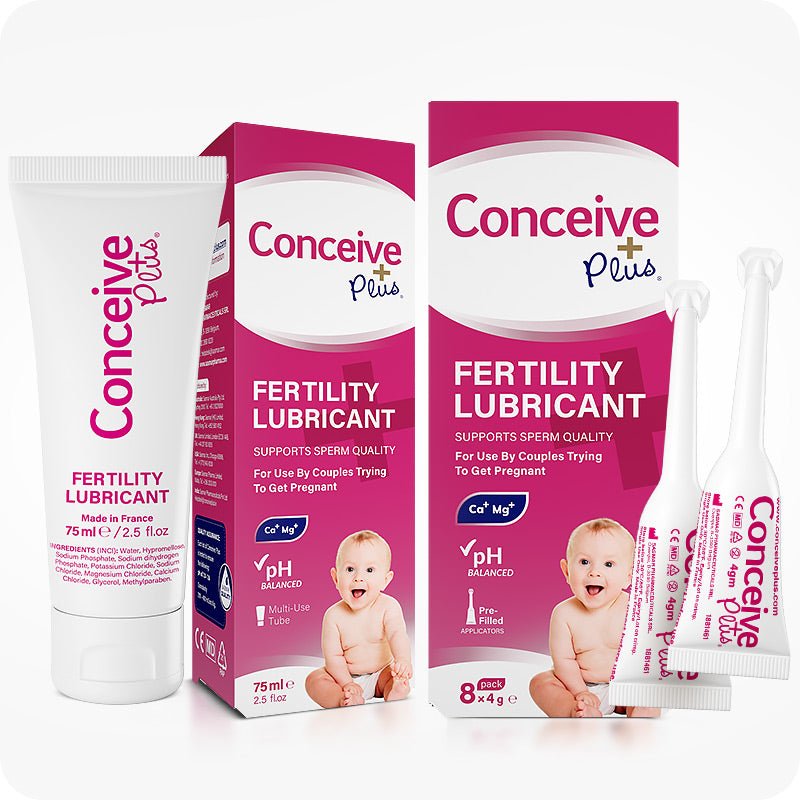
- Using a fertility-friendly lubricant if natural lubrication is insufficient — standard lubricants contain ingredients that are harmful to sperm, but specifically formulated fertility lubricants are sperm-safe
Common Mistakes Couples Make When Timing Intercourse
Despite best intentions, many couples make timing errors that reduce their chances of conception each cycle:
Waiting Until They Think Ovulation Has Occurred
Because the egg only survives 12–24 hours, waiting until you believe ovulation has already happened means you've missed the window. Conception almost always requires sperm to be present and waiting in the fallopian tube before the egg arrives. Aim for intercourse in the days leading up to ovulation, not after.
Relying Solely on Cycle Averages
Applications and online calculators that predict ovulation based on average cycle length can be significantly off for individuals with irregular cycles. A woman with a 35-day cycle is likely to ovulate around day 21, not day 14. Personal tracking is always more accurate than population averages.
Stress and Performance Anxiety
When intercourse becomes scheduled and obligatory, it can create significant anxiety and relationship tension, sometimes to the point of affecting sexual function. It's worth having honest conversations with your partner about balancing the practical aspects of timing with maintaining intimacy. Many couples benefit from not communicating exact timing to a partner, letting them know you're in your fertile window without making it feel clinical.
Using Incompatible Lubricants
A surprising number of couples don't realise that standard personal lubricants — including saliva — are harmful to sperm. Petroleum jelly, many silicone lubricants, and saliva all impair sperm motility. If lubrication is needed, use a fertility-compatible product or natural lubricant like canola oil (small studies suggest canola oil doesn't impair sperm).
Ready to Take the Next Step?
Conceive Plus products are designed with reproductive science in mind — gentle, effective, and trusted by couples worldwide.
Shop Now →When to Seek Help
Understanding and correctly timing your fertile window can significantly improve your monthly conception rates. However, it's important to know when to seek medical advice rather than continuing to try alone:
- Under 35: Seek advice after 12 months of trying with regular, correctly timed intercourse
- 35–40: Seek advice after 6 months
- Over 40: Seek advice after 3 months, or immediately if you have known fertility factors
- Any age: Seek advice immediately if you have irregular or absent periods, known ovarian issues, a history of pelvic infections or endometriosis, or if your partner has had previous fertility issues
In Australia, a GP referral to a fertility specialist is typically needed to access Medicare-subsidised fertility investigations and treatment. Your GP can initiate preliminary investigations — including hormonal blood tests and a semen analysis — before the specialist referral.
Frequently Asked Questions
What time of day is best for intercourse when trying to conceive?
There is no strong evidence that time of day significantly affects conception rates. Sperm quality does show slight natural variation throughout the day, with some studies suggesting slightly better motility in the morning, but this difference is unlikely to be clinically meaningful for most couples. The most important factor is having intercourse within the fertile window, regardless of time of day. Choose what feels natural and comfortable for you both.
Can I ovulate more than once per cycle?
Multiple ovulation — the release of more than one egg in a cycle — does occur and is the reason for fraternal (non-identical) twins. However, multiple eggs are typically released within a 24-hour window during a single ovulatory event, so they do not extend the fertile window. True "superfetation" (conception from two separate ovulations weeks apart) is extremely rare in humans. For practical purposes, you should treat ovulation as a single event per cycle.
My cycles are very irregular. How do I find my fertile window?
Irregular cycles make calendar-based methods unreliable. For women with irregular cycles, tracking physiological signs of fertility — cervical mucus and OPKs — is more useful than calendar calculations. Begin OPK testing early in your cycle (from about day 8 in a shorter cycle, earlier for longer cycles), and test daily until you get a positive result. Cervical mucus monitoring, once learned, is particularly valuable for irregular cycles because it responds to the hormonal changes that are actually occurring, not to average predictions.
Does it help to lie down after intercourse when trying to conceive?
The advice to lie down for 15–20 minutes after intercourse is commonly given, but the evidence is mixed. One study of IUI (intrauterine insemination) patients found slightly higher pregnancy rates in women who remained lying down for 15 minutes post-procedure. For natural conception, there's no clear evidence that position or lying down afterward makes a significant difference — sperm that are capable of reaching the egg typically do so quite quickly regardless of position. That said, it's unlikely to cause harm and may provide peace of mind.
Is it possible to conceive outside the 6-day fertile window?
Technically, conception from intercourse outside the 6-day fertile window is possible but extremely rare. The Wilcox study found that essentially all pregnancies resulted from intercourse within the 6-day window ending on the day of ovulation. Intercourse outside this window has a very low probability of resulting in conception because the egg survives only 12–24 hours, and sperm survival beyond 5 days in the female tract is exceptional. However, if your ovulation timing is uncertain, having intercourse throughout your cycle certainly doesn't hurt.
Can stress affect when I ovulate?
Yes. Significant psychological or physical stress can delay ovulation or, in extreme cases, suppress it entirely. The hypothalamic-pituitary-ovarian axis that controls ovulation is sensitive to cortisol (the stress hormone). Women may notice that their cycle is longer during particularly stressful periods, or that ovulation occurs later than usual. This can make predicting your fertile window using calendar methods less reliable during stressful times, reinforcing the value of real-time monitoring with OPKs and cervical mucus observation.
How accurate are smartphone apps for predicting fertile windows?
This varies enormously depending on the app and how it works. Apps that simply calculate based on average cycle length (period tracker apps) are only as accurate as the calendar method — better than nothing for regular cycles, unreliable for irregular ones. Apps that incorporate physiological data inputs (BBT, cervical mucus observations, or OPK readings) can be significantly more accurate. The Kindara, Natural Cycles (now a regulated device in Australia), and Clue apps have been more rigorously studied than many competitors. Regardless of the app, the accuracy depends on consistent, careful data entry by the user.
Does the male partner's age affect the best timing approach?
Male fertility, while more age-resistant than female fertility, does decline with age — particularly after 40. Older men tend to have lower sperm motility and higher rates of sperm DNA fragmentation. For couples where the male partner is older, prioritising the 2 days immediately before ovulation (when the egg is freshest and the conditions in the reproductive tract are most favourable) may be slightly more important. Ensuring a shorter abstinence period (1–2 days) rather than longer is also generally recommended for men with sperm quality concerns.
I've been tracking and timing correctly but still haven't conceived after several months. What should I do?
If you've been accurately identifying and having intercourse during your fertile window for 6–12 months without success, it's time to seek medical advice rather than simply continuing to try. Correctly timed intercourse can only maximise the probability of conception if both partners' fertility is normal. Fertility investigations — including hormonal blood tests, an ultrasound to assess ovarian reserve and uterine anatomy, and a semen analysis — can identify underlying issues that timing alone cannot overcome.