Fertility Testing at Home: What to Test, When to Test, and What Results Mean


Fertility Testing at Home: What to Test, When to Test, and What Results Mean
The decision to start trying for a baby is one of life's most significant moments. But for many couples in Australia and around the world, the journey isn't always as straightforward as expected. When conception doesn't happen as quickly as hoped, questions arise: Is everything okay? Should we get tested? Where do we even start?
The good news is that fertility testing at home has advanced enormously. Modern at-home tests can give you meaningful information about key fertility markers — often before you've even made an appointment with your GP. This guide covers everything you need to know about what home fertility tests can measure, how to use them, and what to do with the results.
Why Consider Home Fertility Testing?
Home fertility testing offers several important advantages for couples trying to conceive:
- Privacy and convenience: Test from home, at a time that suits you, without waiting for a clinic appointment
- Early insight: Identify potential issues early so you can address them or seek specialist advice sooner
- Cycle tracking: Ongoing tests like OPKs (ovulation predictor kits) provide real-time information about your cycle every month
- Informed conversations: Arrive at your first GP appointment with data, not just concerns
- Cost-effectiveness: Basic home tests are far less expensive than clinic investigations
Important caveat: home fertility tests are screening tools, not diagnostic tests. They can identify patterns and flag potential concerns, but they cannot replace a comprehensive fertility workup by a qualified specialist. Think of them as the starting point of your information journey.
Ovulation Testing: The Most Important Home Fertility Test
Ready to Give Your Fertility Journey Every Advantage?
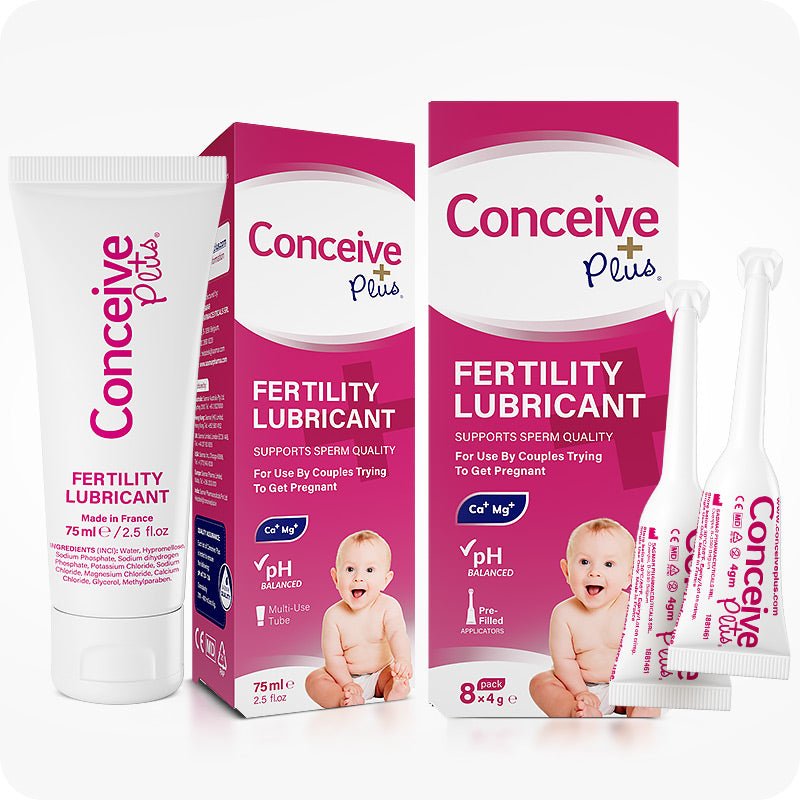
Conceive Plus is trusted by couples and fertility specialists worldwide. pH-balanced, sperm-friendly, and enriched with calcium and magnesium ions.
Shop Conceive Plus Now →The single most useful fertility test for women trying to conceive is ovulation testing. Without confirmed ovulation, pregnancy is impossible — so establishing that you're ovulating regularly is the fundamental first step.
Ovulation Predictor Kits (OPKs)
OPKs detect the LH (luteinising hormone) surge that occurs 24–36 hours before ovulation. When you get a positive OPK (the test line is as dark as or darker than the control line), ovulation is imminent. This is your fertile window.
When to test: Start testing from around day 10–11 of a 28-day cycle, or approximately 4–5 days before your expected ovulation day based on your cycle length. Test once or twice daily (morning and early afternoon are good times) to avoid missing a surge.
What positive results mean: A positive OPK means your body has produced an LH surge, indicating ovulation is likely within 12–36 hours. This is the signal to prioritise intercourse.
What negative results mean: Consistently negative OPKs when testing at the right time may indicate anovulatory cycles (cycles without ovulation). This warrants investigation with your GP or a fertility specialist.
Basal Body Temperature (BBT) Tracking
BBT tracking involves taking your resting temperature each morning before getting out of bed. After ovulation, progesterone causes a rise in BBT of approximately 0.2–0.5°C, which persists until your next period (or throughout pregnancy if conception occurred).
What it tells you: BBT tracking confirms that ovulation has occurred and helps you understand your cycle pattern — including the length of your luteal phase (time between ovulation and your next period). A luteal phase shorter than 10 days may warrant investigation.
What it doesn't tell you: BBT only confirms ovulation after the fact, so it's most useful for identifying patterns over multiple cycles rather than predicting the fertile window in real time.
At-Home Tests for Female Fertility Markers
Beyond ovulation tracking, several home tests can provide information about key female fertility markers.
FSH (Follicle Stimulating Hormone) Testing
FSH is produced by the pituitary gland and stimulates follicle development in the ovaries. Elevated FSH levels on day 3 of your cycle can indicate diminished ovarian reserve — meaning fewer eggs may be available for conception. Home FSH tests are available from pharmacies and online.
When to test: Day 3 of your menstrual cycle (day 1 being the first day of full flow).
What elevated FSH means: A high FSH level (typically above 10–12 IU/L on day 3) may suggest reduced ovarian reserve. However, home FSH tests provide a simplified positive/negative result rather than a quantitative value, so they should be followed up with a blood test at a clinic for confirmation.
AMH (Anti-Müllerian Hormone) Home Tests
AMH is produced by small antral follicles in the ovaries and is considered the best available marker of ovarian reserve — the quantity of eggs remaining. Unlike FSH, AMH can be tested at any point in the menstrual cycle. Home finger-prick blood tests for AMH are increasingly available and are sent to a laboratory for analysis.
What AMH results mean: Lower AMH levels suggest a smaller ovarian reserve, which may indicate a need to pursue conception more urgently or to discuss options with a fertility specialist. AMH declines with age and varies significantly between individuals. Normal ranges vary by age, so results always need to be interpreted in that context.
Thyroid Function
Thyroid disorders — both hypothyroidism and hyperthyroidism — can disrupt ovulation and affect fertility. Some home health testing companies offer thyroid panel tests via finger-prick blood samples sent to a lab. TSH (thyroid stimulating hormone), T3, and T4 levels can be assessed.
At-Home Tests for Male Fertility
Male factor fertility issues contribute to approximately 40–50% of all cases of couple infertility, yet male testing is often overlooked. Home male fertility tests are now readily available and represent an important step for any couple who hasn't yet investigated the male side of the equation.
Sperm Count Testing
Home sperm count tests detect whether sperm concentration exceeds a threshold (typically 15–20 million sperm per mL). These tests use technology similar to OPKs and can be performed privately at home.
What results mean: A positive result (count above threshold) is reassuring but doesn't assess sperm motility or morphology. A negative result (count below threshold) strongly suggests the need for a comprehensive semen analysis at a clinic.
Sperm Motility and Quality Tests
Some advanced home male fertility tests (like those from companies such as Yo or Trak) go beyond sperm count to assess motility — the percentage of sperm that are moving — via smartphone analysis. These provide more comprehensive information about sperm health than count-only tests.
DNA Fragmentation Tests
Sperm DNA fragmentation — damage to the genetic material carried within sperm — is an emerging area of male fertility testing. High DNA fragmentation rates can contribute to failed fertilisation, early miscarriage, and poor embryo quality even when standard sperm parameters appear normal. Some specialist labs now offer home-collection DNA fragmentation tests.
Cervical Mucus Assessment: A Free Fertility Test
Not all fertility assessment requires a kit or a lab. Monitoring your cervical mucus throughout your cycle is a free, continuous fertility assessment that provides valuable real-time information about your hormonal health and fertile window.
Fertile (egg-white) cervical mucus — clear, stretchy, and slippery — indicates peak estrogen levels and imminent ovulation. Its presence confirms that your hormonal cascade is functioning appropriately. Its absence may indicate hormonal imbalances affecting ovulation.
If you consistently notice very little or no egg-white CM during your presumed fertile window, this is worth discussing with your GP, as it may indicate:
- Lower estrogen levels
- Ovulation occurring earlier or later than expected
- Use of medications (including antihistamines or some fertility medications) that dry cervical mucus
- Dehydration
Using Conceive Plus Fertility Lubricant With Home Fertility Testing
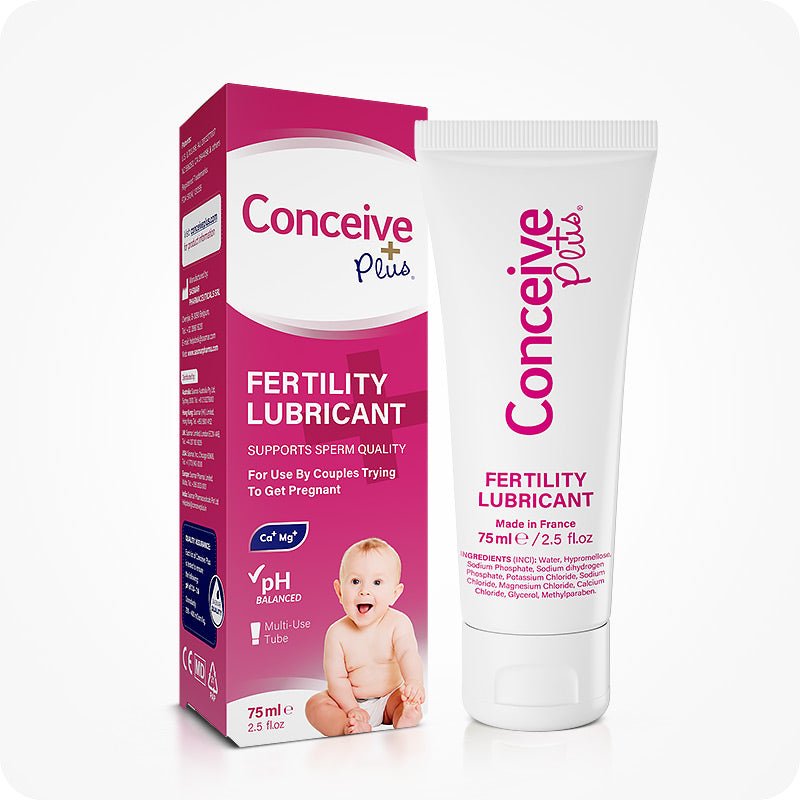
Once you've identified your fertile window through OPKs or cycle tracking, maximising the conditions for conception during those key days is essential. Conceive Plus fertility lubricant complements your testing and timing strategy by providing a sperm-friendly environment during intercourse.
Standard lubricants are acidic and can harm sperm motility, potentially negating the benefits of perfect timing. Conceive Plus is formulated to match the pH and osmolality of fertile cervical mucus, providing the optimal chemical environment for sperm to survive and travel. Its unique calcium and magnesium ion formula also supports sperm capacitation — the physiological process sperm must complete before they can fertilise an egg.
When Home Testing Isn't Enough: Knowing When to See a Specialist
Home fertility testing is valuable, but it has clear limits. The following situations warrant a consultation with a GP or fertility specialist, regardless of home test results:
- Under 35 years old and trying to conceive for more than 12 months without success
- 35 or older and trying for more than 6 months without success
- Irregular or absent periods
- Known or suspected conditions affecting fertility (PCOS, endometriosis, previous PID, male factor history)
- Two or more miscarriages
- Abnormal home test results
- Concerns about either partner's reproductive health history
Australia has excellent fertility services available through both the public and private health systems. Your GP is the appropriate first port of call and can arrange blood tests, referrals to gynaecologists, and semen analysis before any specialist fertility clinic consultation.
Building Your Home Fertility Testing Toolkit
For couples in the early stages of TTC, here's a practical home fertility testing toolkit:
- Ovulation predictor kits — start using from your first month of TTC
- BBT thermometer — a digital basal thermometer accurate to 0.01°C, used daily for cycle mapping
- Period tracking app — log all data in one place to identify patterns
- Home sperm count test — worth doing in the first 2–3 months of TTC if you haven't had a recent semen analysis
- Conceive Plus fertility lubricant — use during all fertile window intercourse
- FSH or AMH test — consider after 3–6 months if concerned about ovarian reserve, particularly over 35
Frequently Asked Questions About Home Fertility Testing
Q: How accurate are home ovulation tests?
A: Quality OPKs are approximately 97–99% accurate at detecting an LH surge when used correctly. However, women with PCOS may experience false positives due to chronically elevated LH levels, so interpret results carefully in that context.
Q: Can I test for AMH at home?
A: Yes, via finger-prick blood collection kits that are mailed to a laboratory for analysis. Results are typically available within a few days. AMH can be tested at any point in your cycle.
Q: How reliable are home sperm count tests?
A: Home sperm count tests are reasonably reliable at identifying whether sperm concentration exceeds or falls below a threshold. However, they don't assess motility or morphology — both critical factors in male fertility. A clinic semen analysis provides a much more comprehensive picture.
Q: Can home fertility tests detect PCOS or endometriosis?
A: No. PCOS and endometriosis require clinical diagnosis — blood tests (hormonal panels) and imaging (ultrasound) for PCOS, and laparoscopy for definitive endometriosis diagnosis. Home tests cannot diagnose these conditions, though irregular OPK results or absent fertile CM may suggest further investigation is warranted.
Q: When should I start using OPKs when trying to conceive?
A: Most couples should start using OPKs from their very first cycle of TTC. There's no reason to wait — having timing data from day one allows you to make the most of every cycle.
Q: Can I use home fertility tests while also using fertility treatments?
A: Some fertility medications (like Clomid or trigger shots) can affect OPK and other test results. Always consult your prescribing doctor about how to interpret home test results while on fertility treatment.
Q: What if my OPK never turns positive?
A: If you test consistently and correctly throughout your cycle (over 2–3 cycles) and never see a positive OPK, this suggests you may not be ovulating — a condition called anovulation. See your GP, as this is a treatable condition in most cases.
Q: Are fertility tracking apps reliable?
A: Apps based purely on calendar algorithms (period prediction) are less reliable, particularly for women with irregular cycles. Apps that incorporate OPK data, BBT tracking, or wearable sensor data are significantly more accurate for fertile window prediction.
Conclusion: Knowledge Is Power on Your Fertility Journey
Starting your fertility testing journey at home gives you valuable, actionable information from the very beginning of your TTC experience. By identifying your fertile window accurately with OPKs, tracking your cycle patterns with BBT, and using supporting tools like Conceive Plus fertility lubricant to optimise conditions during your fertile window, you're taking a proactive, informed approach to conception.
Home fertility testing doesn't replace professional medical advice — but it empowers you to have better conversations with your healthcare team, advocate for earlier investigation when needed, and make the most of every cycle from day one.
Start Your Journey With Conceive Plus
Join hundreds of thousands of couples worldwide who trust Conceive Plus to support their path to parenthood. Clinically endorsed, fertility-specialist recommended.
Explore All Conceive Plus Products →