Ovulation Tracking in 2026: The Complete Guide to Understanding Your Fertile Window


Ovulation Tracking in 2026: The Complete Guide to Understanding Your Fertile Window
Understanding when you ovulate is one of the most powerful tools available when you're trying to conceive. Whether you're in your first month of trying or have been on this journey for a while, accurately identifying your fertile window can significantly improve your chances of conception each cycle.
Despite its importance, ovulation tracking is surrounded by confusion. Many women rely on methods that are imprecise, mistime intercourse as a result, and spend months or even years wondering why conception hasn't happened — when the answer may simply be a matter of timing. This guide demystifies ovulation, explains every major tracking method in depth, and provides practical guidance for getting the most out of each approach.
Understanding Ovulation: What's Actually Happening in Your Cycle
Ovulation is the moment a mature egg is released from the ovary and begins its journey down the fallopian tube, where it may be fertilised by sperm. This event happens once per cycle (rarely twice, which can result in fraternal twins) and marks the beginning of the luteal phase.
A typical menstrual cycle lasts anywhere from 21 to 35 days, with ovulation occurring approximately 14 days before the next period — not necessarily 14 days after the last period, as is commonly assumed. This distinction matters enormously. If your cycle is 35 days long, you likely ovulate around day 21, not day 14. If your cycle is 24 days, ovulation may occur as early as day 10.
The fertile window spans the five days leading up to ovulation plus the day of ovulation itself — six days in total. This window exists because sperm can survive in the female reproductive tract for up to five days when cervical mucus is favourable, while the egg is viable for only 12–24 hours after release. The highest probability days for conception are the two days before ovulation and the day of ovulation itself, when research suggests conception probability peaks at around 25–35% per cycle in healthy couples under 35.
Hormones drive this entire process. In the follicular phase (the first half of the cycle), rising oestrogen levels stimulate the thickening of the uterine lining and the maturation of follicles in the ovary. A surge in luteinising hormone (LH) — triggered by a peak in oestrogen — causes the dominant follicle to release its egg, typically 24–36 hours after the LH surge begins. After ovulation, progesterone rises, shifting the cervical environment from sperm-friendly to implantation-ready.
The Calendar Method: A Starting Point, Not a Strategy
The calendar (or rhythm) method involves tracking your cycle lengths over time and using past data to predict future ovulation dates. The basic calculation is to subtract 14 from your average cycle length to estimate the day of ovulation.
This method is inexpensive and requires no tools beyond a calendar or app. However, its limitations are significant. It assumes that ovulation always occurs a fixed number of days before menstruation — which isn't true for many women, especially those with irregular cycles. Research published in the Human Reproduction Journal found that even in women with "regular" 28-day cycles, the actual day of ovulation varied by up to five days from one cycle to the next. For women with polycystic ovary syndrome (PCOS), thyroid disorders, or recent hormonal contraceptive use, the calendar method is particularly unreliable.
The calendar method is best used as a preliminary understanding tool — a way of establishing your average cycle length before adopting a more precise method. On its own, it is unlikely to provide the accuracy needed to optimise conception timing.
Basal Body Temperature (BBT) Tracking: Confirming Ovulation Has Occurred
Basal body temperature — your resting temperature taken first thing in the morning before any activity — rises slightly (0.2–0.5°C) after ovulation due to the thermogenic effect of progesterone. By tracking BBT daily and plotting the results on a chart, you can identify a biphasic pattern: lower temperatures in the follicular phase and higher temperatures in the luteal phase.
The critical limitation of BBT tracking is timing: the temperature rise occurs after ovulation, confirming that it has happened rather than predicting when it will happen. This means BBT tracking alone is most useful for understanding your cycle pattern over several months rather than guiding intercourse timing in real time.
That said, BBT tracking has genuine value. Over several cycles, your charts reveal whether you are ovulating at all (anovulatory cycles show no temperature shift), whether your luteal phase is adequate (a short luteal phase of less than 10 days may indicate a luteal phase defect), and when to expect your next period. It is best used in conjunction with another method — particularly LH testing — for real-time guidance.
Dedicated BBT thermometers are more sensitive than standard thermometers, measuring to two decimal places. Consistency is essential: temperature must be taken at the same time each morning, after at least three consecutive hours of sleep, before getting up or drinking anything. Illness, alcohol consumption, and disrupted sleep can all affect readings.
Ready to Support Your Fertility Journey?
Pairing accurate ovulation tracking with targeted nutritional support maximises your fertile window. Conceive Plus Ovulation Support provides key nutrients to support healthy ovulation, hormonal balance, and menstrual cycle regularity — helping you make the most of every cycle.
Explore Ovulation Support →LH Ovulation Predictor Kits: The Most Practical Method for Most Women
Ovulation predictor kits (OPKs) detect the LH surge in urine that precedes ovulation. Since ovulation typically occurs 24–36 hours after the LH surge peaks, a positive OPK result tells you that ovulation is imminent — giving you actionable advance notice to time intercourse.
Standard OPKs display a positive result when the test line is as dark as or darker than the control line. Digital OPKs remove the subjectivity of interpreting line intensity, displaying a clear positive or negative symbol, though they are considerably more expensive per test.
Advanced fertility monitors — such as the Clearblue Advanced Fertility Monitor or the OvuSense system — go further by tracking both LH and oestrogen, identifying a two-day "high fertility" window before the LH surge (when intercourse is also highly effective due to sperm survival) followed by a "peak fertility" indicator at the LH surge itself.
For best results with standard OPKs, begin testing a few days before your expected ovulation window (based on your average cycle length), test at the same time each day (late morning to early afternoon is often recommended, as LH surges in the morning and takes a few hours to appear in urine), and avoid excessive fluid intake in the two hours before testing to prevent dilution. Some women with PCOS may have chronically elevated LH levels that produce misleading results; in this population, monitoring progesterone or using ultrasound monitoring may be more appropriate.
Cervical Mucus Monitoring: Your Body's Built-In Fertility Signal
Cervical mucus — produced by the cervix under oestrogen's influence — changes dramatically throughout the menstrual cycle in ways that directly signal fertility. Learning to observe and interpret these changes is the foundation of the Billings Ovulation Method and the Creighton Model, and is a valuable complement to any other tracking method.
In the days following menstruation, many women experience a dry or tacky discharge phase. As oestrogen rises in the lead-up to ovulation, discharge becomes progressively more abundant, transitioning from creamy or cloudy to clear, stretchy, and slippery — often described as resembling raw egg white. This fertile-quality mucus (sometimes called "peak" mucus) creates the ideal environment for sperm: it provides a physical medium for sperm to swim through, neutralises the naturally acidic vaginal environment, and contains nutrients that nourish and protect sperm during their journey to the egg.
Research published in Fertility and Sterility found that women who correctly identified and acted on peak cervical mucus observations had pregnancy rates comparable to those using LH testing. Crucially, this method is free, requires no tools, and becomes more reliable with practice.
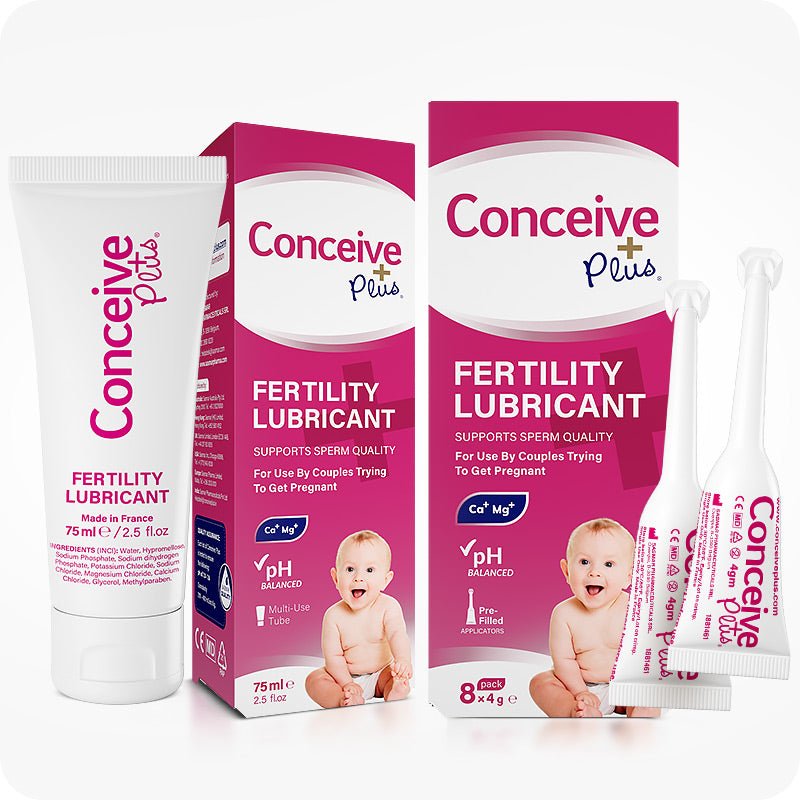
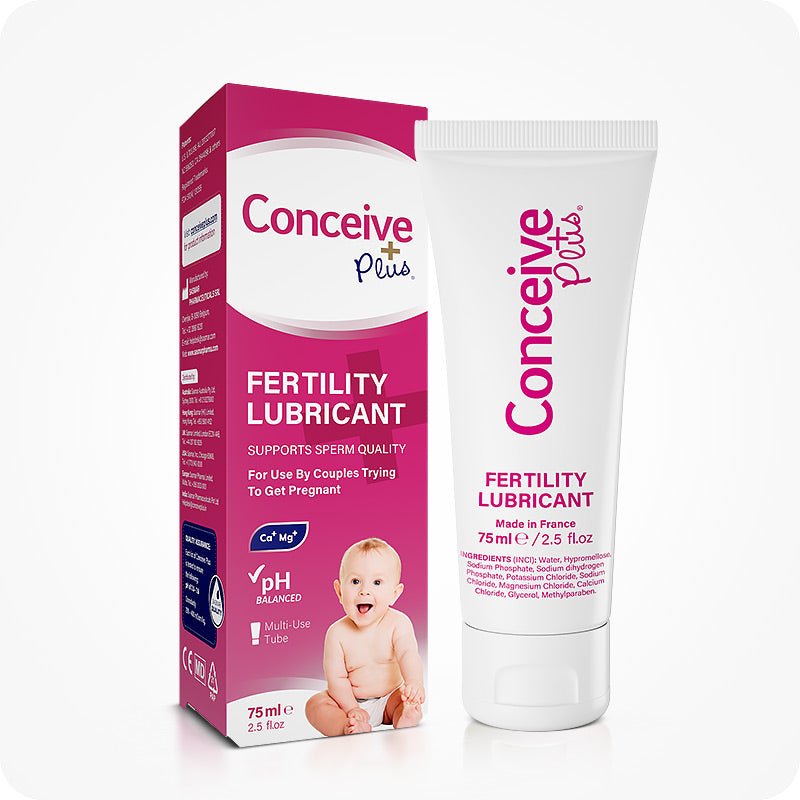
Factors that can impair cervical mucus quality include antihistamines, certain antidepressants, hormonal imbalances (particularly low oestrogen), and dehydration. Fertility-friendly lubricants — formulated to mimic fertile-quality mucus — can support the vaginal environment during intercourse without harming sperm, and are recommended for couples who experience dryness or who wish to create a more sperm-supportive environment.
Digital Fertility Trackers and Wearables: The Future of Cycle Monitoring
Over the past five years, a new generation of fertility tracking devices has emerged, using continuous physiological monitoring to predict and detect ovulation with greater precision than any single-marker method.
Wrist-based wearables such as the Tempdrop or Ava bracelet track multiple parameters simultaneously — skin temperature, heart rate, heart rate variability, respiratory rate, and sometimes galvanic skin response — using algorithms trained on large datasets to identify the hormonal shifts associated with the fertile window. Unlike traditional BBT thermometers, wrist-worn sensors can collect temperature data throughout the night, reducing the variability caused by inconsistent wake times.
Apps such as Natural Cycles (the first CE-marked and FDA-cleared fertility awareness app) and Kindara combine BBT data with cycle history to dynamically calculate daily fertility status. Natural Cycles uses a proprietary algorithm to generate "red days" (fertile, where contraception or targeted intercourse applies) and "green days," with a published typical-use failure rate for contraception of approximately 93% — comparable to the pill when used correctly.
Hormonal monitoring devices represent another frontier. The Mira Fertility Monitor measures quantitative LH and estrone-3-glucuronide (an oestrogen metabolite) levels from urine using a handheld device, providing actual hormone values rather than binary positive/negative results. This quantitative approach is particularly useful for women with PCOS or irregular cycles, where LH surge patterns may be atypical.
Ultrasound Follicle Monitoring: The Gold Standard
Transvaginal ultrasound monitoring — performed by a clinician — is the most accurate way to track follicular development and confirm ovulation. Serial scans track the growth of the dominant follicle (which grows approximately 2mm per day in the periovulatory period) and can precisely predict ovulation when the follicle reaches approximately 18–22mm. Confirmation of ovulation is achieved by observing the follicle collapse and the appearance of free fluid in the cul-de-sac.
Ultrasound monitoring is not a home method — it requires clinical visits, typically every 1–2 days during the periovulatory window. It is primarily used in medically monitored cycles (e.g., during Clomiphene or letrozole treatment, intrauterine insemination, or IVF). For women with challenging-to-detect ovulation — including those with PCOS, very short LH surges, or previous monitoring failures — clinical ultrasound monitoring can be transformative.
Supporting Ovulation Naturally: Lifestyle and Nutritional Strategies
Tracking ovulation is only one part of the equation. Supporting the quality and regularity of ovulation itself is equally important, particularly for women with irregular cycles, PCOS, or subclinical hormonal disruption.
Key strategies include: maintaining a healthy body weight (both underweight and overweight status disrupt ovulation); managing insulin resistance through a low-glycaemic diet and regular physical activity; reducing exposure to endocrine-disrupting chemicals (found in some plastics, pesticides, and personal care products); managing chronic stress through evidence-based techniques such as mindfulness-based stress reduction (MBSR); and ensuring adequate nutritional support through folate, vitamin D, myo-inositol, and antioxidants such as N-acetyl cysteine (NAC).
For women with PCOS specifically, myo-inositol supplementation has been shown in multiple randomised controlled trials to improve ovulatory frequency, reduce hyperandrogenism, and improve metabolic markers — making it one of the most evidence-supported nutritional interventions for ovulatory dysfunction.
Frequently Asked Questions About Ovulation Tracking
How do I know if I'm actually ovulating?
Signs that ovulation is occurring include a biphasic temperature shift on your BBT chart, a positive LH test followed by the typical temperature rise, peak-quality cervical mucus (clear, stretchy, egg-white consistency), and mid-cycle pelvic pain (mittelschmerz) in some women. If you are consistently unable to detect a temperature shift or positive LH despite regular testing, consult your doctor to rule out anovulation.
Can I get pregnant if I have irregular cycles?
Yes — but irregular cycles make timing more challenging and may indicate underlying conditions such as PCOS, thyroid dysfunction, or hyperprolactinaemia that benefit from evaluation. LH testing and BBT tracking can still help identify your fertile window, though you may need to test for longer. Medical support can help regulate ovulation if needed.
What is the best time of day to test for LH?
Late morning (between 10am and 2pm) is generally recommended for LH testing. The LH surge typically begins in the early morning hours and takes several hours to appear in urine in detectable levels. Testing first thing in the morning may miss a surge that began during the night.
Can stress delay ovulation?
Yes. Significant physical or psychological stress can temporarily suppress the hypothalamic-pituitary-ovarian axis, delaying or preventing ovulation. This is why cycle irregularities are common during periods of major stress, illness, dramatic weight change, or intense exercise. The key is that ovulation delay shifts the entire cycle — it doesn't shorten the luteal phase — so menstruation is also delayed accordingly.
Is it possible to ovulate twice in one cycle?
Dual ovulation (releasing two eggs in one cycle) does occur, typically within a 24-hour window during the same fertile period. This is thought to be the mechanism behind approximately 10–15% of fraternal twin pregnancies. However, a second ovulation days or weeks after the first is not considered possible once progesterone levels rise following the initial ovulation.
How accurate are digital ovulation tests?
High-quality digital OPKs are highly accurate at detecting LH surges — typically above 99% in clinical studies. The key variable is user adherence to the testing protocol (consistent timing, avoiding fluid dilution, beginning tests at the right time in the cycle). Quantitative monitors that measure actual hormone concentrations offer additional precision and are particularly useful for women with atypical LH surge patterns.
What is a normal LH surge?
A typical LH surge begins rapidly, often doubling or tripling in concentration within 24 hours, then declining within 24–48 hours after its peak. Ovulation occurs 24–36 hours after the LH surge onset. Some women experience very short surges (peaking and declining within 12 hours), which standard once-daily testing may miss. Twice-daily testing in the periovulatory window can help capture these.
What are the signs of a weak or missed ovulation?
Signs that ovulation may not be occurring normally include: absent or faint temperature shifts on BBT charts, chronically negative or weakly positive OPK results (without a clear surge), absent or very minimal fertile-quality cervical mucus, irregular cycle lengths with significant variation, and cycles shorter than 21 or longer than 35 days. These signs warrant evaluation by a GP or gynaecologist.
Does fertile-quality cervical mucus always appear before ovulation?
In most women, yes — but not always. Some women experience minimal or absent peak mucus due to low oestrogen, dehydration, antihistamine use, or cervical issues. Absence of peak mucus does not confirm absence of ovulation; LH testing provides a more reliable ovulation signal in this scenario.
Can I use ovulation tracking as contraception?
Fertility awareness methods (FAMs) can be used as contraception, but only when practised rigorously with proper training and ideally a certified method such as the Creighton Model or Billings Ovulation Method. Alone or self-taught, these methods have higher typical-use failure rates than other contraceptive options. Apps with regulatory clearance (like Natural Cycles) have published effectiveness data that can inform this decision.
Ready to Support Your Fertility Journey?
Conceive Plus Ovulation Support is formulated with myo-inositol, methylfolate, vitamin D, and key nutrients that work alongside your cycle to support regular, healthy ovulation. Designed for women who want to take a proactive, science-backed approach to their fertile health.
Explore Ovulation Support →