PCOS and Fertility in Australia: What Every Woman Needs to Know in 2026


PCOS and Fertility in Australia: What Every Woman Needs to Know in 2026
Polycystic ovary syndrome (PCOS) is the most common hormonal condition affecting women of reproductive age in Australia, diagnosed in approximately 1 in 10 women—yet it remains widely misunderstood. For the many Australian women with PCOS who want to start or grow their family, the diagnosis can feel daunting. Questions about whether they can conceive naturally, what treatment options are available, and how long it might take are entirely understandable.
The good news is that PCOS is one of the most treatable causes of infertility, and the majority of women with PCOS can and do conceive—often with lifestyle changes and relatively low-intervention treatments. This comprehensive guide covers everything you need to know about PCOS and fertility in 2026, including the latest treatment options, lifestyle strategies, and what Australian healthcare has to offer.
Understanding PCOS: Beyond the Name
Despite its name, "polycystic ovary syndrome" doesn't actually mean your ovaries are full of cysts in the traditional sense. The "cysts" referred to are actually immature follicles—small fluid-filled sacs containing eggs that haven't developed fully or been released. In a typical menstrual cycle, one dominant follicle develops and releases an egg at ovulation. In PCOS, this process is disrupted, resulting in multiple small follicles and infrequent or absent ovulation.
The underlying driver of PCOS is hormonal imbalance. Most women with PCOS have elevated levels of androgens (male hormones like testosterone), and many have insulin resistance—where the body's cells don't respond properly to insulin, leading to elevated insulin levels. This insulin excess further stimulates androgen production, creating a hormonal cycle that disrupts ovulation.
According to the 2023 International Evidence-Based Guideline for the Assessment and Management of PCOS (co-authored by Monash University's PCOS team), which is the global gold standard, PCOS is diagnosed using the Rotterdam Criteria when at least two of the following three features are present:
- Irregular or absent periods (indicating irregular or absent ovulation)
- Clinical or biochemical signs of excess androgens (acne, excess hair growth, elevated blood testosterone)
- Polycystic ovarian morphology on ultrasound (12 or more follicles per ovary and/or enlarged ovary volume)
It's worth noting that PCOS presents very differently between individuals. Some women have all three features; others have only two. The severity and predominant symptoms vary enormously.
How PCOS Affects Fertility
Supporting Your Fertility Journey
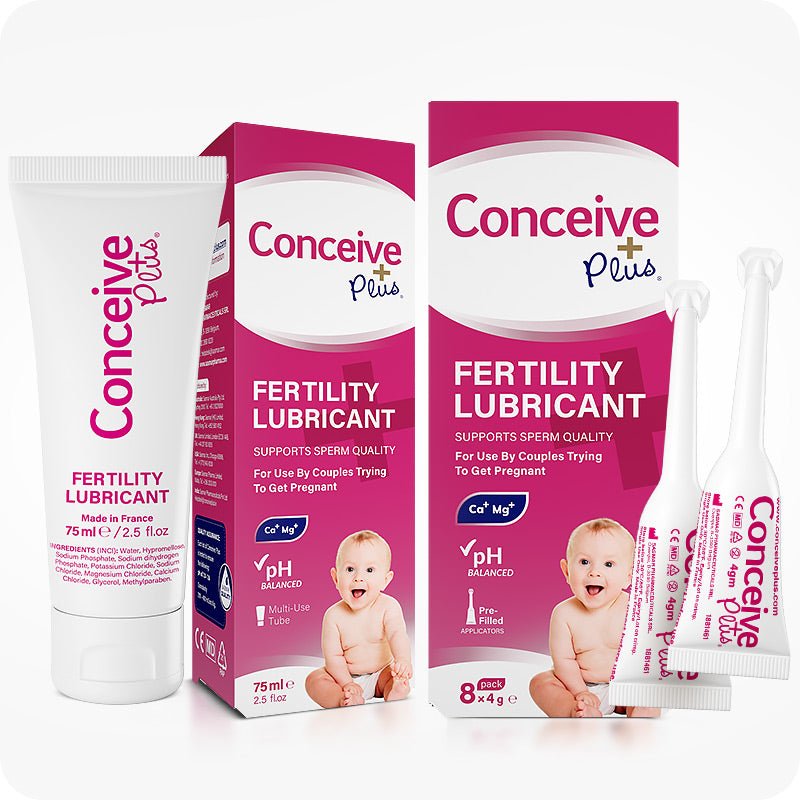
Conceive Plus Women's Fertility Support is formulated with key nutrients—including myo-inositol, CoQ10, and methylfolate—that have been specifically studied in women with PCOS to support hormonal balance, egg quality, and ovulation. Combined with our fertility-friendly lubricant that supports sperm motility, Conceive Plus offers a complete approach for women with PCOS who are working towards pregnancy.
PCOS affects fertility primarily through its impact on ovulation. Without regular ovulation, there are fewer opportunities for fertilisation—and this is why PCOS is estimated to account for around 70–80% of cases of anovulatory infertility (infertility caused by failure to ovulate).
However, it's important to understand what PCOS doesn't necessarily affect:
- Egg quality: While some research suggests PCOS may affect certain aspects of egg development, many women with PCOS have good egg quality and respond very well to ovulation induction.
- Ovarian reserve: Women with PCOS typically have more follicles than average—in fact, anti-Müllerian hormone (AMH) levels are often elevated in PCOS, indicating a large pool of eggs. This can actually be an advantage in fertility treatment.
- Implantation and pregnancy maintenance: Once conception occurs, pregnancy outcomes for most women with PCOS are similar to those without the condition, though there is a slightly increased risk of gestational diabetes and other complications that requires appropriate monitoring.
The primary fertility challenge for most women with PCOS is simply getting an egg released. Once ovulation is achieved—whether naturally or with treatment—conception rates are generally good.
Lifestyle Changes: The First and Most Powerful Step
For women with PCOS who are overweight, even modest weight loss can have dramatic effects on fertility. Research consistently shows that losing just 5–10% of body weight can restore ovulation and regular periods in many women with PCOS, improving natural conception rates significantly.
This is because weight loss reduces insulin resistance and lowers circulating androgen levels—addressing two of the core hormonal drivers of PCOS. The Monash PCOS Guideline places lifestyle intervention as the first-line treatment for overweight women with PCOS seeking pregnancy.
Key lifestyle strategies supported by evidence:
- Low-GI diet: Choosing carbohydrates that release glucose slowly (wholegrains, legumes, most vegetables) helps manage insulin resistance. A low-GI approach has been shown to improve insulin sensitivity, reduce androgens, and improve menstrual regularity in women with PCOS.
- Regular exercise: Both aerobic exercise and resistance training improve insulin sensitivity in PCOS. The Monash Guideline recommends at least 150 minutes of moderate-intensity activity per week, including resistance training at least twice weekly.
- Reduce ultra-processed foods and sugar: These spike blood glucose and insulin, exacerbating insulin resistance. Replacing processed snacks with whole foods makes a measurable difference to hormonal profiles.
- Manage stress: Chronic stress elevates cortisol, which worsens insulin resistance and can further disrupt hormonal balance. Mindfulness-based stress reduction has shown promising results in small PCOS trials.
- Limit alcohol: Alcohol affects liver function and hormone metabolism, and has no benefit for fertility. Limiting or eliminating alcohol supports hormonal balance.
Medical Treatments for PCOS-Related Infertility in Australia
When lifestyle changes alone aren't sufficient, a range of medical treatments are available in Australia. Treatment is typically stepped—starting with the least invasive and progressing if needed:
- Letrozole (first-line): The 2023 Monash PCOS Guideline updated its recommendation to make letrozole the first-line ovulation induction agent for women with PCOS seeking pregnancy, replacing the previously favoured clomiphene citrate (Clomid). Letrozole is an aromatase inhibitor that stimulates ovulation with lower rates of multiple pregnancy and may improve live birth rates. It's taken orally for 5 days in the early part of the cycle.
- Clomiphene Citrate (Clomid): While no longer first-line, Clomid remains effective and widely used. It's often the first medication trialled in many GP and specialist settings. It works by blocking oestrogen receptors, stimulating the pituitary to release more FSH and LH to drive follicle development.
- Metformin: This diabetes medication improves insulin sensitivity and can restore ovulation in some women with PCOS, particularly those with significant insulin resistance. It's often used alongside ovulation induction medication. The Monash Guideline supports its use in specific PCOS subtypes.
- Gonadotrophin injections: If oral ovulation induction doesn't work, injectable FSH can directly stimulate follicle development. These require closer monitoring to manage the risk of ovarian hyperstimulation syndrome (OHSS) and multiple pregnancy. Women with PCOS are particularly at risk of OHSS due to their large follicle pool.
- Laparoscopic Ovarian Drilling (LOD): A surgical procedure where small holes are made in the ovary to reduce androgen production. Can restore ovulation in some women unresponsive to medication. Less commonly performed now given advances in medical ovulation induction.
- IVF: Recommended when other treatments have failed or when additional factors (such as blocked tubes or male factor) are present. Women with PCOS must be monitored carefully during IVF due to the risk of OHSS. Freezing all embryos and performing a frozen embryo transfer in a subsequent cycle reduces this risk significantly.
Inositol and Nutritional Supplements for PCOS Fertility
One of the most exciting areas of PCOS fertility research in recent years has been the role of inositol, a naturally occurring sugar alcohol that improves insulin signalling. Two forms are particularly relevant:
- Myo-inositol: The most abundant form in the body. Multiple clinical trials have shown that myo-inositol supplementation (typically 2–4 grams daily) improves insulin sensitivity, restores menstrual regularity, improves egg quality, and increases ovulation rates in women with PCOS.
- D-chiro-inositol: Works synergistically with myo-inositol. The ratio naturally present in the body is 40:1 (myo:D-chiro), and supplements combining both forms in this ratio show the best results in research.
The 2023 Monash Guideline acknowledges inositol as having "emerging evidence" for improving menstrual regularity and metabolic outcomes in PCOS, though it notes more research is needed for definitive recommendations. Many reproductive endocrinologists in Australia now suggest inositol supplementation for their PCOS patients.
Other key supplements for women with PCOS trying to conceive:
- Folate/Methylfolate: Essential for all women trying to conceive. The Australian Department of Health recommends 400–500 mcg daily for at least one month before and three months after conception. Some PCOS guidelines recommend 5 mg for women with additional risk factors.
- Vitamin D: Deficiency is common in PCOS and worsens insulin resistance. Supplementation may improve hormonal profiles and insulin sensitivity. Testing and correcting deficiency is recommended.
- CoQ10: Supports egg quality and mitochondrial function, particularly important given the metabolic challenges associated with PCOS.
- Omega-3 fatty acids: Reduce inflammation (elevated in PCOS) and support hormonal balance. DHA is also critical for fetal brain development.
- NAC (N-Acetyl Cysteine): A precursor to glutathione (the body's master antioxidant) that also improves insulin sensitivity. Some research suggests NAC may improve ovulation rates and pregnancy outcomes in women with PCOS, with effects comparable to metformin in some studies.
Accessing PCOS Fertility Care in Australia
Australia has excellent reproductive medicine services, and Medicare provides some coverage for fertility investigations and treatments. Here's how to navigate the system:
- Start with your GP: A GP can arrange initial hormone testing (FSH, LH, AMH, testosterone, insulin, thyroid function), pelvic ultrasound, and semen analysis for your partner. These investigations attract Medicare rebates.
- See a gynaecologist or reproductive endocrinologist: For ovulation induction and more complex management, a referral to a specialist is the next step. Public hospital fertility services are available in major cities, though waiting lists can be long.
- Consider private fertility clinics: Australia has world-class private fertility clinics (Genea, Monash IVF, City Fertility, Virtus Health) that offer comprehensive PCOS management. Medicare rebates apply for many procedures, though out-of-pocket costs remain significant for IVF.
- Medicare Safety Net: Once you've spent a threshold amount on Medicare-eligible services, the Medicare Safety Net increases your rebates substantially. Keep track of all Medicare-eligible fertility expenses.
For women in regional or rural Australia, telehealth services have expanded significantly and can connect you with specialist fertility care without requiring travel to major cities.
Frequently Asked Questions About PCOS and Fertility in Australia
Q: Can I conceive naturally with PCOS?
A: Yes, many women with PCOS conceive naturally, particularly those who ovulate occasionally (oligoovulation rather than anovulation) or whose PCOS symptoms improve with lifestyle changes. Regular tracking of ovulation using LH predictor kits or temperature monitoring can help identify fertile windows.
Q: How long does it typically take to conceive with PCOS?
A: It varies enormously. Some women conceive quickly after addressing lifestyle factors; others require ovulation induction or IVF. Age is a significant factor, as is the severity of PCOS and the presence of other fertility factors. Seeking a specialist review after 6–12 months of trying is appropriate.
Q: Does PCOS get better or worse with age?
A: Many women find PCOS symptoms improve with age and particularly after menopause, as ovarian androgen production declines. However, the fertility window also narrows with age, so it's important not to wait too long before seeking treatment if you're trying to conceive.
Q: Is PCOS hereditary?
A: Yes, there is a clear genetic component to PCOS. Women with a mother or sister with PCOS have a significantly higher risk of being affected themselves. The specific genes involved are still being researched.
Q: Can the oral contraceptive pill (OCP) affect fertility after stopping?
A: The OCP does not cause long-term infertility—ovarian function returns after stopping, though it may take a few months. However, many women with PCOS have been on the pill for years to manage symptoms, and stopping reveals the underlying PCOS that was masked by the pill's hormonal effects.
Q: What is the best diet for PCOS fertility?
A: A low-GI, Mediterranean-style diet rich in vegetables, legumes, whole grains, lean protein, and healthy fats (olive oil, nuts, fish) is consistently associated with the best outcomes for women with PCOS. Limiting ultra-processed foods, refined carbohydrates, and added sugars is particularly important.
Q: Do I need to lose weight before trying fertility treatment for PCOS?
A: Not necessarily, but for women with a BMI over 30, weight loss significantly improves ovulation induction success rates and live birth rates, and reduces obstetric risks. Many Australian fertility clinics recommend a BMI under 35 (ideally under 30) for IVF. Your specialist will guide you on what's appropriate for your individual situation.
Q: Is PCOS linked to miscarriage?
A: Some research suggests a slightly elevated miscarriage risk in women with PCOS, though the evidence is not definitive. Optimising insulin resistance, achieving a healthy weight, and ensuring folate status is adequate are all recommended to support a healthy pregnancy after conception.
Q: What is the role of the Monash PCOS Guideline?
A: The International Evidence-Based Guideline for PCOS, developed by Monash University in Melbourne with international partners, is the world-leading clinical guideline for PCOS diagnosis and management. Australian clinicians use this guideline to inform their practice, making Australia a global leader in PCOS care standards.
Q: Can stress cause PCOS or make it worse?
A: Stress doesn't cause PCOS (which is a genetic condition), but chronic stress can worsen its symptoms by elevating cortisol, which increases insulin resistance and androgen production. Managing stress is an important component of holistic PCOS management.
Ready to Take the Next Step?
Living with PCOS and trying to conceive can feel overwhelming, but you don't have to navigate it alone. Conceive Plus Women's Fertility Support and fertility lubricant are designed to work with your body, supporting the hormonal balance and reproductive health that PCOS can challenge. Thousands of Australian women with PCOS trust Conceive Plus as part of their fertility journey.