PCOS and Getting Pregnant: What You Need to Know About Fertility With Polycystic Ovary Syndrome


Being diagnosed with polycystic ovary syndrome (PCOS) can feel overwhelming — especially if you're trying to conceive. You've probably heard it described as "one of the most common causes of female infertility," and that label alone can be frightening. But here's what the research consistently shows: most women with PCOS can and do get pregnant, often with targeted lifestyle changes and the right support.
This guide covers everything you need to know about PCOS and fertility — from what's actually happening in your body to evidence-based treatment strategies, key supplements, and when to seek specialist help. Whether you've just been diagnosed or you've been managing PCOS for years, this is your comprehensive starting point.
What Is PCOS? Understanding the Condition
Polycystic ovary syndrome is a hormonal disorder affecting roughly 10–13% of women of reproductive age globally, making it the most common endocrine disorder in this population. In Australia, it's estimated to affect around 1 in 10 women, according to Jean Hailes for Women's Health.
Despite its name, PCOS doesn't always involve cysts on the ovaries. The "cysts" visible on ultrasound are actually immature follicles — tiny sacs containing eggs that haven't developed fully or been released. The condition is defined by a cluster of features rather than one single finding.
The Rotterdam Criteria
A diagnosis of PCOS is typically made when a woman has at least two of the following three features (the Rotterdam Criteria, established in 2003 and still widely used):
- Irregular or absent ovulation — menstrual cycles longer than 35 days, or fewer than 8 cycles per year
- Clinical or biochemical signs of hyperandrogenism — elevated testosterone, excess facial or body hair (hirsutism), acne, or scalp hair thinning
- Polycystic ovarian morphology on ultrasound — 20 or more follicles per ovary, or an ovarian volume above 10 mL
At its core, PCOS is a metabolic and hormonal condition. Most women with PCOS have elevated levels of androgens (male hormones such as testosterone), disrupted insulin signalling, and an imbalance in the pituitary hormones LH (luteinising hormone) and FSH (follicle-stimulating hormone). These hormonal disruptions directly interfere with ovulation — which is why fertility is so commonly affected.
Importantly, PCOS presents on a spectrum. Some women have mild symptoms and relatively regular cycles; others experience significant hormonal disruption. Your experience of PCOS is individual, and so is your fertility journey.
How PCOS Affects Fertility and Ovulation
Inositol Support for PCOS
Myo-inositol and D-chiro-inositol are among the most researched supplements for supporting ovulation and hormonal balance in women with PCOS. Conceive Plus Ovulation Support combines both forms in the clinically studied 40:1 ratio.
Explore Ovulation Support →The most direct link between PCOS and fertility is ovulation dysfunction. You cannot conceive without ovulation, and in PCOS, ovulation is often irregular, delayed, or absent altogether.
The Hormonal Cascade
Here's what's happening at the hormonal level:
- Insulin resistance — Present in approximately 65–70% of women with PCOS regardless of body weight, insulin resistance causes the pancreas to produce more insulin. Excess insulin stimulates the ovaries to produce more androgens (testosterone), disrupting the normal hormonal environment needed for follicle maturation.
- Elevated LH:FSH ratio — In PCOS, the pituitary gland often releases more LH relative to FSH. This skewed ratio prevents follicles from fully maturing and releasing an egg, halting ovulation mid-process.
- Androgen excess — High testosterone levels directly impair follicle development. The follicles grow to a certain size but stall — producing those characteristic "polycystic" appearances on ultrasound — rather than completing maturation and ovulation.
The result is that eggs sit in the ovaries, unreleased, month after month. Without ovulation, the luteal phase doesn't occur, progesterone remains low, and the uterine lining doesn't properly prepare for implantation — even if you do eventually ovulate.
Cycle Irregularity and Its Impact on TTC
Irregular cycles make timing intercourse incredibly difficult. If you ovulate at all, you may not know when. Ovulation predictor kits (OPKs) can be misleading for women with PCOS — because elevated LH levels are common even outside a true ovulation surge, false positives occur frequently with standard LH-only kits. Apps and calendar methods are similarly unreliable when cycles vary from 25 to 70+ days.
The good news: in the majority of PCOS cases, the ovaries are structurally capable of producing mature eggs. The problem is hormonal, not anatomical — which means it is often addressable.
Diagnosing PCOS: What to Expect
If you suspect PCOS, your first step is a conversation with your GP or gynaecologist. A thorough workup typically includes:
Medical History and Physical Exam
- Detailed menstrual history (cycle length, regularity, heaviness)
- Symptoms of androgen excess (acne, hair growth patterns, scalp hair loss)
- Weight history and changes
- Family history of PCOS, diabetes, or cardiovascular disease
Blood Tests
- Reproductive hormones: FSH, LH, oestradiol, testosterone (total and free), SHBG (sex hormone-binding globulin), prolactin, thyroid function (TSH, free T4)
- Metabolic markers: Fasting glucose, fasting insulin, HbA1c, lipid panel — critical for assessing insulin resistance
- DHEAS and androstenedione — to rule out other causes of androgen excess such as adrenal disorders or tumours
- AMH (anti-Müllerian hormone) — often elevated in PCOS, reflects the higher number of small antral follicles
Pelvic Ultrasound
Transvaginal ultrasound (or transabdominal in younger women who haven't had penetrative sex) assesses ovarian morphology — follicle count, ovarian size, and overall structure. It also rules out other structural causes of cycle irregularity.
Other conditions that must be excluded before a PCOS diagnosis include thyroid disorders, hyperprolactinaemia, congenital adrenal hyperplasia, and Cushing's syndrome — your doctor will order relevant tests to rule these out.
Treatment Options When Trying to Conceive With PCOS
Treatment for PCOS-related infertility is tailored to the individual. The approach your doctor recommends will depend on your hormone profile, metabolic health, partner fertility, and how long you've been trying. Here's an overview of the main options:
First-Line: Lifestyle Intervention
For women with PCOS who are overweight or have insulin resistance, lifestyle modification is genuinely the most effective first intervention — and this isn't a polite way of saying "lose weight." The evidence is specific and meaningful: a 5–10% reduction in body weight (in those with excess weight) can restore ovulation in up to 55–90% of cases, according to studies published in Human Reproduction Update.
This occurs because weight loss improves insulin sensitivity, which lowers insulin levels, which reduces androgen production — essentially reversing the core hormonal disruption. (More on specific strategies in the lifestyle section below.)
Ovulation Induction
When lifestyle changes alone aren't sufficient, or in women of healthy weight with anovulatory PCOS, medication to induce ovulation is the next step:
- Letrozole (Femara) — now considered first-line pharmacological therapy for ovulation induction in PCOS. An aromatase inhibitor, letrozole lowers oestrogen levels, prompting the pituitary to release more FSH. A landmark 2014 NEJM study (Legro et al.) found letrozole achieved higher live birth rates than clomiphene in women with PCOS (27.5% vs 19.1%).
- Clomiphene citrate (Clomid) — a selective oestrogen receptor modulator that stimulates FSH release. Effective in many cases but associated with a higher risk of multiple pregnancy and a thinner uterine lining compared to letrozole.
- Metformin — a diabetes medication that improves insulin sensitivity. Often used in combination with letrozole or clomiphene, particularly in women with confirmed insulin resistance or type 2 diabetes risk. Some research supports its use to improve ovulation rates and reduce miscarriage risk in PCOS.
- Gonadotrophins (injectable FSH) — if oral medications fail, injections of FSH can directly stimulate follicle development. These require close ultrasound monitoring due to the risk of ovarian hyperstimulation syndrome (OHSS) and multiple pregnancy.
Surgical Options: Ovarian Drilling
Laparoscopic ovarian drilling (LOD) is a minor surgical procedure in which small punctures are made in the ovary using heat or laser. This reduces androgen-producing tissue and can restore ovulation in 50–80% of cases. It's typically considered when women haven't responded to oral medications and IVF is not yet the next step. The main advantages are a reduced multiple pregnancy risk compared to gonadotrophins and longer-lasting effects.
IVF for PCOS
In vitro fertilisation is reserved for cases where other methods have failed, or where there are additional fertility factors (e.g., male factor infertility, tubal damage). Women with PCOS can respond very well to IVF stimulation — sometimes too well, which is why careful monitoring for OHSS is essential. Freeze-all cycles (where embryos are frozen and transferred in a later cycle) are now commonly recommended for women with PCOS to reduce OHSS risk.
Lifestyle Changes That Support PCOS Fertility
Regardless of where you are in treatment, certain lifestyle factors have strong evidence for improving PCOS symptoms and fertility outcomes. These aren't optional extras — they're core to managing the condition.
Diet: Low Glycaemic Index and Anti-Inflammatory
A low glycaemic index (GI) diet is the most consistently supported dietary approach for PCOS. By choosing foods that cause a slower, more stable rise in blood glucose, you reduce insulin spikes — which directly reduces androgen stimulation in the ovaries.
Practical principles:
- Prioritise whole grains over refined carbohydrates (brown rice, oats, quinoa over white bread and pasta)
- Include plenty of non-starchy vegetables, legumes, and berries
- Favour lean proteins and healthy fats (oily fish, nuts, olive oil, avocado)
- Minimise ultra-processed foods, sugary drinks, and foods with added sugar
- Consider intermittent time-restricted eating — some small studies suggest metabolic benefits, though larger trials are needed
The Mediterranean diet pattern — rich in vegetables, olive oil, fish, legumes, and nuts — has emerging evidence for reducing inflammation and improving reproductive outcomes in PCOS.
Exercise
Regular physical activity improves insulin sensitivity and reduces androgen levels independently of weight loss. Both aerobic exercise (brisk walking, cycling, swimming) and resistance training have been shown to benefit PCOS. Current recommendations suggest a minimum of 150 minutes of moderate-intensity aerobic activity per week, with resistance training 2–3 times per week.
The key is consistency and sustainability. You don't need high-intensity exercise — moderate-intensity activity done regularly delivers measurable benefits for hormonal health.
Stress Management
Chronic stress elevates cortisol, which can worsen insulin resistance and suppress reproductive hormones. Women with PCOS often report higher rates of anxiety and depression — and stress can create a vicious cycle that further disrupts hormonal balance.
Evidence-based stress reduction approaches that benefit fertility include mindfulness meditation, yoga (particularly restorative yoga), cognitive-behavioural therapy (CBT), and regular relaxation practices. Sleep quality also matters significantly: poor sleep worsens insulin resistance and cortisol regulation.
Healthy Body Weight
For women with PCOS and excess weight, even modest weight loss — 5–10% of body weight — can meaningfully restore ovulation. This doesn't mean you need to reach a "normal" BMI before trying to conceive; the improvement in hormonal function often begins with initial weight loss.
Equally important: PCOS is not exclusively a condition of women who are overweight. Lean PCOS (diagnosed in women with a healthy BMI) is well-recognised and requires a different approach — dietary change and specific supplements are often more relevant than weight loss in this phenotype.
Supplements That Support Fertility in PCOS
Nutritional supplementation has become one of the most studied areas of PCOS management. Several supplements have a meaningful evidence base for improving hormonal balance, ovulation, and fertility outcomes in PCOS.
Myo-Inositol and D-Chiro-Inositol
Inositols are the most researched supplements for PCOS fertility, with a substantial body of evidence supporting their use. Myo-inositol (MI) and D-chiro-inositol (DCI) are naturally occurring compounds involved in insulin signalling and oocyte (egg) quality.
Key research findings:
- A 2017 meta-analysis in Gynecological Endocrinology found that myo-inositol significantly improved menstrual regularity, ovulation rates, and hormonal parameters in women with PCOS.
- The combination of MI and DCI in a 40:1 ratio — reflecting the physiological ratio found in the body — outperforms either inositol alone in several studies, improving insulin sensitivity, reducing androgens, and supporting more regular ovulation.
- A 2019 Cochrane-style review concluded that inositol supplementation may be as effective as metformin for improving metabolic parameters in PCOS, without the gastrointestinal side effects.
Inositols work by acting as insulin sensitisers at the cellular level — improving the way cells respond to insulin and reducing the cascade of hormonal disruption that drives PCOS symptoms.
Folate / Folic Acid
Folate (or folic acid in its synthetic form) is essential for anyone trying to conceive. The standard recommendation is 400–800 mcg daily for at least one month before conception and through the first trimester to reduce the risk of neural tube defects. Women with PCOS may benefit from higher doses if metformin is being used (metformin can deplete folate/B12 absorption).
Methylfolate (5-MTHF) — the active, pre-converted form — is preferred for women with MTHFR gene variants, which are more common than many realise.
Vitamin D
Vitamin D deficiency is extremely common in women with PCOS — studies suggest up to 67–85% of women with PCOS have insufficient levels. Vitamin D receptors are found in ovarian tissue, and adequate vitamin D is associated with improved insulin sensitivity and better response to ovulation induction. Australian women, despite living in a sunny climate, are frequently deficient due to sun avoidance practices.
Testing your vitamin D level (a simple blood test) and supplementing if deficient (typically 1,000–2,000 IU daily, or more under medical guidance) is a sensible step.
Magnesium
Magnesium plays a role in glucose metabolism and insulin sensitivity. Research shows magnesium levels are lower in women with PCOS and insulin resistance, and supplementation may improve insulin sensitivity and reduce androgen levels. Magnesium glycinate or citrate forms are generally well tolerated.
N-Acetyl Cysteine (NAC)
NAC is an antioxidant and precursor to glutathione. Several randomised trials have found it comparable to metformin in improving insulin sensitivity and ovulation rates in women with PCOS. A 2015 meta-analysis in Obstetrics & Gynaecology found NAC significantly improved ovulation and pregnancy rates compared to placebo in PCOS patients undergoing ovulation induction.
Omega-3 Fatty Acids
Omega-3 fats (EPA and DHA), found in oily fish and fish oil supplements, have anti-inflammatory properties that may benefit PCOS. Research suggests omega-3 supplementation can reduce triglycerides, lower androgens, and improve menstrual regularity in women with PCOS. A dose of 1,000–2,000 mg EPA+DHA daily is commonly studied.
Coenzyme Q10 (CoQ10)
CoQ10 is an antioxidant involved in cellular energy production and oocyte quality. Preliminary research suggests it may improve egg quality, particularly relevant as women age or in the context of compromised mitochondrial function — which some research suggests is impaired in PCOS.
Important: Always discuss supplements with your healthcare provider before starting, particularly if you are taking medications such as metformin or hormone therapies. Supplements support but do not replace medical care.
When to Seek Medical Help
Knowing when to escalate from self-directed management to specialist care is important. Time matters in fertility — and there's no advantage to waiting when targeted support is available.
General Guidance for Women With PCOS
For women with PCOS who are trying to conceive, the standard advice to "try for 12 months before seeking help" doesn't always apply in the same way. Because PCOS often means irregular or absent ovulation, the window for natural conception may be significantly smaller — or natural conception may not be occurring at all despite months of trying.
Consider seeking a fertility specialist referral if:
- You have confirmed PCOS and have been trying to conceive for 6+ months without success
- Your cycles are very irregular (greater than 35 days) or absent — meaning you may not be ovulating at all
- You're 35 or older (in which case, seek review after 3–6 months of trying)
- You've had previous pregnancy losses (2 or more, or 1 late loss)
- There are known additional fertility factors — male factor, previous pelvic infections, endometriosis
- Lifestyle changes over several months haven't improved cycle regularity
What a Fertility Specialist Can Offer
A reproductive endocrinologist or fertility specialist can provide:
- A full hormonal workup including anti-Müllerian hormone (ovarian reserve testing)
- Cycle monitoring via ultrasound to track follicle development
- Ovulation induction with letrozole or gonadotrophins under close supervision
- An assessment of your partner's fertility (semen analysis)
- Discussion of IUI or IVF when appropriate
In Australia, many of these services attract a Medicare rebate — speak to your GP for a referral. You do not need to feel like you've "failed" or exhausted all options before seeing a specialist; early specialist input with PCOS often saves months of unnecessary waiting.
Living With PCOS While Trying to Conceive: A Whole-Person Approach
The emotional dimension of PCOS and fertility is real and significant. Research consistently shows higher rates of anxiety, depression, and disordered eating in women with PCOS — and the pressure of trying to conceive can amplify these challenges considerably.
A few principles that support wellbeing alongside treatment:
- Build your team — a GP, gynaecologist or fertility specialist, and ideally a dietitian experienced in PCOS are all valuable. A psychologist or counsellor is also worth considering, not as a last resort but as a proactive tool.
- Track meaningfully but don't obsess — apps like Ovia, Clue, or Natural Cycles can support tracking, but given OPK unreliability in PCOS, discuss with your doctor whether cycle monitoring ultrasounds might be more useful for timing intercourse.
- Give changes time — lifestyle and supplement interventions often take 3–6 months to produce measurable changes in hormonal patterns. Short-term results are rarely dramatic; consistent action over months is where the difference is made.
- Connect with community — PCOS Australia (pcos.com.au), the Jean Hailes Foundation, and online communities of women navigating the same journey can be enormously helpful.
Frequently Asked Questions: PCOS and Fertility
Can I get pregnant naturally with PCOS?
Yes — many women with PCOS conceive naturally, particularly if cycles are irregular rather than absent. The rate depends on your specific hormonal profile, overall health, and how well symptoms are managed. Lifestyle changes, targeted supplements, and working with your healthcare provider can significantly improve natural conception chances.
How long does it take to get pregnant with PCOS?
There's no single answer. With appropriate management (lifestyle changes, ovulation induction if needed), many women conceive within 6–12 months. Without intervention, if you're not ovulating regularly, conception may not occur despite months of trying — which is why early medical assessment matters.
Does PCOS cause miscarriage?
Women with PCOS have a slightly higher risk of miscarriage than the general population, possibly due to elevated LH levels and insulin resistance. However, the majority of pregnancies in women with PCOS do not end in miscarriage. Addressing insulin resistance (via lifestyle changes and/or metformin in some cases) may help reduce this risk.
Is IVF more successful for women with PCOS?
Women with PCOS typically have high ovarian reserve (many follicles), which means they often respond well to IVF stimulation. Cumulative live birth rates with IVF for PCOS are generally good. The main concern is ovarian hyperstimulation syndrome (OHSS), which your fertility specialist will monitor carefully — freeze-all protocols significantly reduce this risk.
Does myo-inositol really help with PCOS fertility?
The evidence for myo-inositol (and the 40:1 MI:DCI combination) is among the strongest for any supplement in PCOS management. Multiple randomised trials show improvements in menstrual regularity, ovulation rates, hormonal profiles, and insulin sensitivity. It's not a guaranteed solution, but it's well-supported and generally very safe.
Can you have PCOS without cysts on your ovaries?
Yes. Despite the name, polycystic ovaries are just one of three diagnostic criteria — and you only need two of the three for a diagnosis. Some women are diagnosed based on irregular ovulation and androgen excess alone, without polycystic morphology on ultrasound.
Will PCOS affect my baby if I do get pregnant?
Pregnancies in women with PCOS are generally healthy. There is a modestly increased risk of gestational diabetes, pre-eclampsia, and preterm birth compared to the general population, which is why your pregnancy will typically be monitored more closely. Optimising metabolic health before and during pregnancy is beneficial for both mother and baby.
Do PCOS symptoms go away after having a baby?
PCOS is a lifelong condition — it doesn't "go away" after pregnancy or birth. However, symptoms can be well-managed throughout life, and many women find that periods become more regular after pregnancy. Ongoing attention to metabolic health, diet, and activity remains important.
Should I stop trying naturally and go straight to IVF with PCOS?
Not necessarily. IVF is not the first-line approach for PCOS-related infertility. Most guidelines recommend starting with lifestyle optimisation and then ovulation induction medications (letrozole or clomiphene) before considering IVF. IVF is typically considered after these approaches have not succeeded, or when additional fertility factors are present.
How do I know if I'm ovulating with PCOS?
Standard OPK strips can give false positives in PCOS due to elevated baseline LH. More reliable options include: progesterone blood tests (typically measured 7 days after expected ovulation), transvaginal ultrasound tracking with your doctor, or basal body temperature charting (though this requires very consistent measurement). Discussing cycle monitoring with your GP is the most reliable approach.
Your PCOS Fertility Toolkit
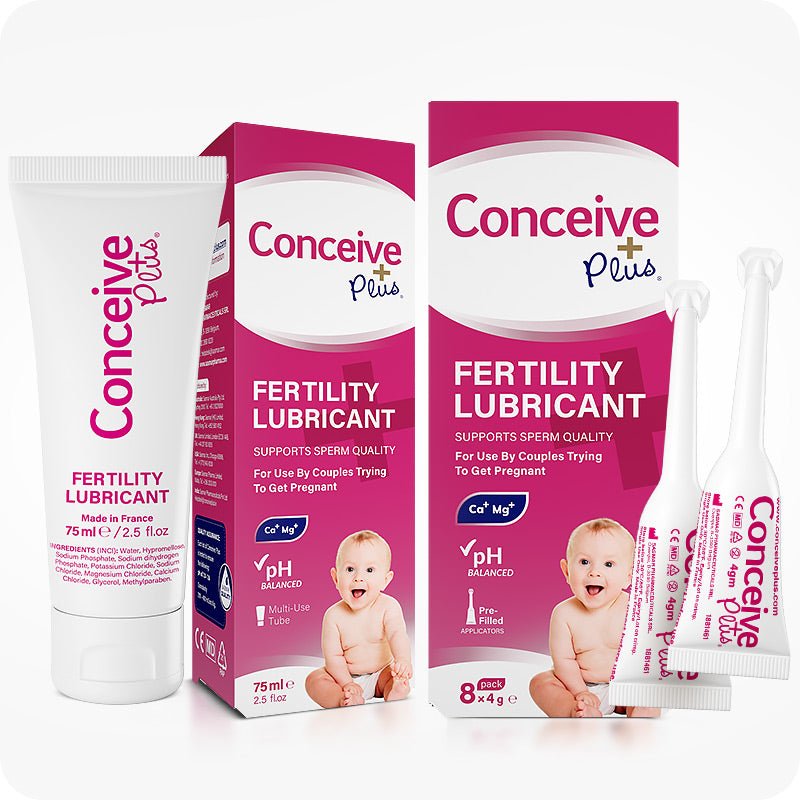
Conceive Plus supports women with PCOS through targeted supplements — ovulation support, women’s fertility multivitamins, and fertility-friendly lubricants — all designed to work with your body, not against it.
Shop Women’s Fertility Range →