Ovulation Tracking: The Complete Guide for Women Trying to Conceive


Ovulation Tracking: The Complete Guide for Women Trying to Conceive
Understanding when you ovulate is one of the most powerful things you can do to improve your chances of conception. Ovulation tracking transforms the often frustrating experience of "just trying" into an informed, strategic approach grounded in your own biology — and for many couples, it's the single change that makes the difference.
Whether you have regular cycles or irregular periods, are just starting to try to conceive or have been trying for a while, this comprehensive guide covers every ovulation tracking method available — from free, at-home observation techniques to sophisticated digital tools — along with the science behind each.
What Is Ovulation and Why Does Timing Matter So Much?
Ovulation is the release of a mature egg (oocyte) from a follicle in the ovary, triggered by a surge in luteinising hormone (LH). Once released, the egg survives for just 12–24 hours — creating a narrow fertilisation window each cycle.
Sperm, by contrast, can survive in the female reproductive tract for up to 5 days when cervical mucus is fertile-quality. This creates a combined fertile window of approximately 6 days per cycle — the 5 days leading up to ovulation and the day of ovulation itself. Ovulation tracking helps you identify this window precisely so you can time intercourse (or insemination) for maximum effectiveness.
Studies show that couples who accurately identify and target the fertile window have a per-cycle conception rate of approximately 25–30% — compared to just 10–15% for untimed intercourse. The difference is significant, particularly for couples where time and emotional energy matter.
Basal Body Temperature (BBT) Tracking
Ready to Start Your Fertility Journey?
Explore Conceive Plus — clinically formulated to support your path to parenthood.
Shop Now →BBT tracking is one of the oldest and most validated forms of ovulation tracking. Basal body temperature — your resting temperature measured immediately on waking, before any activity — rises by approximately 0.2–0.5°C (0.4–1.0°F) after ovulation due to the thermogenic effect of progesterone.
How to track BBT accurately:
- Take temperature at the same time each morning before getting out of bed
- Use a specialised BBT thermometer (reads to 2 decimal places)
- Record temperatures on a chart or app (Fertility Friend, Kindara, Tempdrop)
- Look for a sustained rise (3 or more days above a cover line) to confirm ovulation occurred
Limitation: BBT confirms ovulation after it has already occurred — it cannot reliably predict ovulation in advance. However, after 2–3 cycles, you can identify your typical ovulation timing and plan accordingly. BBT is also excellent for confirming whether ovulation occurred in a given cycle.
Cervical Mucus Observation
Cervical mucus (CM) changes dramatically throughout the menstrual cycle under the influence of oestrogen and progesterone, providing a direct indicator of fertility. Learning to observe and interpret CM changes is a core skill in ovulation tracking.
The mucus progression:
- Post-period (days 1–5 approx): Dry or scant — sperm cannot survive
- Early follicular (days 6–9 approx): Sticky, white/yellow, crumbly — minimal fertility
- Pre-ovulatory (days 10–13 approx): Creamy, lotion-like, white — moderate fertility
- Peak fertility: Clear, slippery, stretchy — raw egg white consistency — this is the highest fertility sign. Sperm can survive 3–5 days in this environment.
- Post-ovulation: Returns to sticky or dry as progesterone rises
The egg white cervical mucus (EWCM) phase typically coincides with the 1–2 days before and including ovulation day — making it highly actionable. Check CM by observing what's on toilet paper or on your underwear, or by checking internally (wash hands thoroughly).
Ovulation Predictor Kits (OPKs)
Ovulation predictor kits detect the LH surge that triggers ovulation — typically 24–36 hours before the egg is released. For most women, OPKs are the most accurate at-home ovulation tracking method for timing intercourse precisely.
Types of OPKs:
- Traditional strip/midstream OPKs: Detect LH above a threshold (~25-40 mIU/mL). A positive means LH is surging — ovulation typically follows within 12–36 hours. Best value, generally accurate.
- Digital OPKs (e.g., Clearblue): Display smiley faces for easy reading, eliminating line interpretation anxiety. Some versions also detect oestrogen rise (flashing smiley) before the LH surge (solid smiley) — extending the fertility window detected.
- Dual hormone monitors (e.g., Clearblue Advanced Fertility Monitor): Track both oestrogen and LH, identifying up to 6 fertile days per cycle. The most comprehensive OPK-based system, though more expensive.
- Wearable LH sensors: Continuous LH monitoring devices (e.g., Mira) that use electrochemical sensors to track LH from urine — some with companion apps and hormonal graphs.
OPK tips for accuracy:
- Test between 10am–8pm (not first morning urine — LH surge is processed by the kidneys 4 hours later)
- Reduce liquid intake for 2 hours before testing
- Test at the same time each day
- Women with PCOS may have elevated baseline LH, causing false positives — continuous testing over the cycle helps identify the true peak
Fertility Apps and Digital Ovulation Tracking
Fertility apps range from simple period trackers to sophisticated algorithmic predictors that combine multiple data inputs. Understanding what each type actually does is important when choosing an ovulation tracking tool.
Algorithm-only apps (e.g., Flo, Clue, Ovia) predict ovulation based on cycle length data. They assume ovulation occurs 14 days before your next period — which is accurate for women with regular 28-day cycles but significantly less accurate for women with cycle variability. Use these as a rough guide only.
Symptom + data apps (e.g., Fertility Friend, Natural Cycles) integrate BBT, CM, and OPK data to generate more personalised and accurate predictions. Fertility Friend in particular has been used in research contexts and generates sophisticated cycle charts.
Connected device apps (e.g., Ava, Oura, Mira) pair with wearable sensors that measure physiological parameters (skin temperature, pulse, breathing, heart rate variability) to detect hormonal changes. Ava's algorithm was validated in a clinical trial showing identification of the fertile window with 89% accuracy.
The Sympto-Thermal Method: Combining BBT and CM
The sympto-thermal method (STM) combines BBT temperature charting with cervical mucus observation to identify both the opening and closing of the fertile window with greater accuracy than either method alone. When combined with OPK confirmation, this creates a comprehensive ovulation tracking protocol.
The fertile window by STM opens when:
- Fertile-quality cervical mucus first appears (usually 3–5 days before ovulation)
The fertile window closes when:
- BBT has been elevated for 3 consecutive days AND cervical mucus has returned to non-fertile quality
Used correctly, STM is approximately 99.6% effective as a family planning method (when trying to avoid pregnancy) — demonstrating its accuracy as a fertility indicator in the other direction too.
Irregular Cycles and Ovulation Tracking Challenges
Irregular cycles make ovulation tracking more complex but no less important. For women with irregular periods, OPKs and cervical mucus observation become even more valuable — because algorithm-based cycle predictions are unreliable when cycle length varies.
Strategies for irregular cycles:
- Begin OPK testing earlier in the cycle (from cycle day 8–10) to avoid missing an early ovulation
- Test OPKs twice daily during suspected peak fertility if your cycle varies significantly
- Use CM observation daily — it's not tied to any assumed cycle day
- Consider a connected fertility monitor (Clearblue or Mira) that adapts to irregular cycles rather than relying on set-day predictions
Common causes of cycle irregularity include PCOS, thyroid dysfunction, elevated prolactin, and perimenopause — all of which affect ovulation timing. If cycles are consistently very irregular (>35 days or <21 days), evaluation by a GP or gynaecologist is recommended.
Optimising Fertility Around Your Ovulation Window
Accurate ovulation tracking tells you when to try to conceive — but supporting your reproductive health throughout the cycle gives your efforts the best physiological foundation.
Key supplements to support ovulation and fertile window conception:
- Inositol: Supports healthy ovarian function and LH signalling. Particularly effective for women with PCOS or anovulatory cycles.
- Vitamin D: Essential for follicular development and LH receptor sensitivity. Low vitamin D is associated with anovulation and irregular cycles.
- CoQ10: Supports mitochondrial energy in developing follicles, potentially improving egg quality released at ovulation.
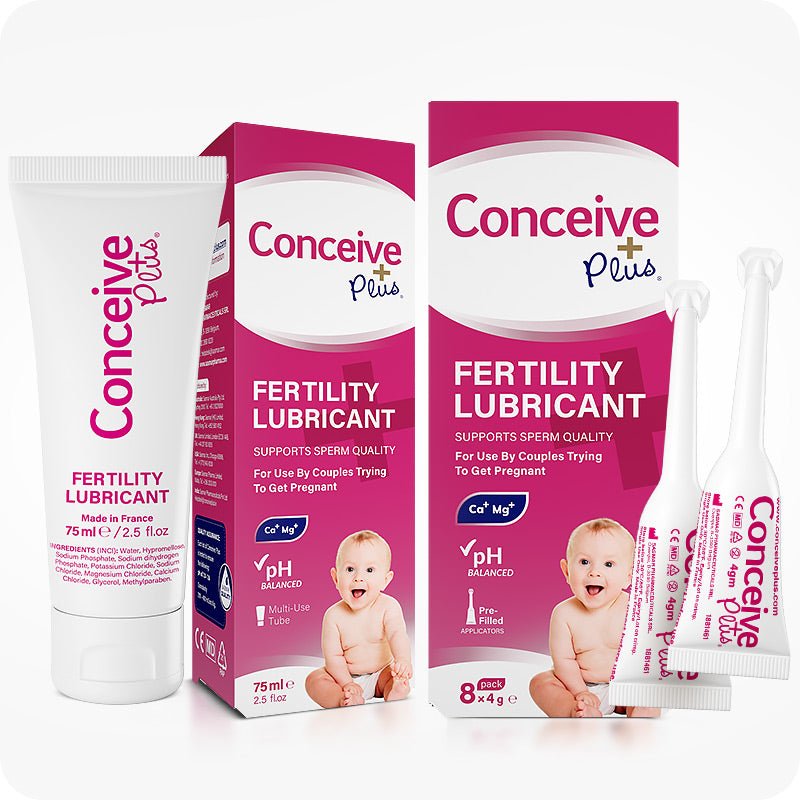
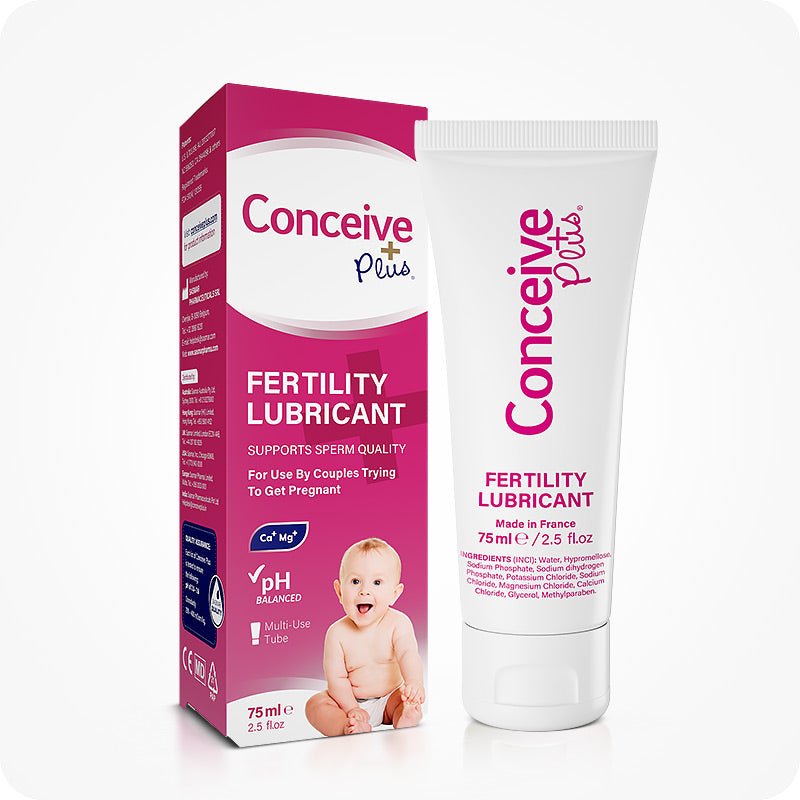
- Fertility-friendly lubricant: Standard lubricants can harm sperm before they reach the egg. Conceive Plus lubricant is pH-balanced and isotonic — compatible with sperm survival and motility for use during fertile days.
Conceive Plus Australia offers both fertility supplements and fertility-safe lubricant to support conception across your cycle. Visit conceiveplus.com.au to explore the full range.
FAQ: Ovulation Tracking Questions Answered
Q1: How do I know if I'm ovulating?
Signs of ovulation include: a positive OPK (LH surge), egg white cervical mucus, mid-cycle light spotting (mittelschmerz), breast tenderness, and a rise in BBT after ovulation. Using OPKs alongside CM observation is the most reliable at-home confirmation method.
Q2: Is ovulation always on day 14?
No — this is one of the most common fertility myths. Ovulation on day 14 applies only to a textbook 28-day cycle. Ovulation actually occurs approximately 12–16 days before the next period — so in a 30-day cycle, ovulation would typically be around day 15–18; in a 35-day cycle, around day 19–22. Track your own cycle rather than assuming day 14.
Q3: Can I get pregnant after ovulation?
The egg survives only 12–24 hours after ovulation. Intercourse after ovulation has already occurred has very low conception probability. This is why tracking the approach to ovulation — rather than confirming it has happened — is the critical goal. OPKs and CM observation allow you to act before and during ovulation rather than after.
Q4: How accurate are ovulation apps?
Algorithm-only apps (period trackers) that predict ovulation by cycle length are 21–43% accurate in identifying the actual fertile window. Apps that integrate BBT, CM, and/or OPK data — like Fertility Friend — are considerably more accurate. Connected device apps validated in clinical trials (Ava) show approximately 89% accuracy for fertile window detection.
Q5: How many days before ovulation should I have intercourse?
Research shows that intercourse in the 1–2 days immediately preceding ovulation has the highest conception probability per act (approximately 25–33%). Intercourse on ovulation day itself has slightly lower but still good probability (~15%). Starting 3–5 days before expected ovulation, when fertile CM appears, and continuing through the LH surge optimises your chances.
Q6: Does stress affect ovulation?
Yes — significant physical or emotional stress can delay or suppress ovulation by disrupting the hypothalamic-pituitary-ovarian (HPO) axis. Elevated cortisol can inhibit GnRH pulsatility, which is required for LH surge generation. This is why ovulation can occur later than usual during stressful months — another reason to track rather than assume cycle day.
Q7: Can I get pregnant without tracking ovulation?
Yes — many pregnancies occur without deliberate tracking. However, with daily intercourse over a full cycle, the conception probability is only approximately 25–30% for fertile couples. Accurate ovulation tracking can concentrate that probability into the actual fertile window and improve monthly success rates significantly.
Q8: What if my OPK never turns positive?
If you're testing correctly (right time of day, standard technique) and never detect a positive OPK over multiple cycles, this may indicate anovulatory cycles. This warrants evaluation by a GP or gynaecologist — blood tests (day 21 progesterone, FSH, LH, prolactin) and potentially an ultrasound can diagnose the cause.
Q9: Is the fertile window really 6 days long?
Research by Wilcox et al. (NEJM, 1995) demonstrated that pregnancies resulted only from intercourse in the 6-day window ending on ovulation day. However, probability was not equal across this window: highest on days -2 and -1 (2 days before ovulation and 1 day before), moderate on the day of ovulation itself, and declining in earlier days. Target the peak — days -2 to 0 — while covering the broader window with regular intercourse from when fertile CM appears.
Q10: Can I do ovulation tracking while breastfeeding?
Yes, though cycles may be irregular or temporarily suppressed while breastfeeding — a natural phenomenon called lactational amenorrhoea. As breastfeeding frequency decreases and cycles return, ovulation can occur unpredictably. CM observation is particularly useful in this phase as it's not dependent on cycle day. Note that the first ovulation after postpartum return often occurs before the first period — it's possible to conceive without having had a period first.
Conclusion: Making Ovulation Tracking Work for You
Effective ovulation tracking doesn't need to be complicated — but it does need to be consistent and method-appropriate for your body and cycle. Start with OPKs and cervical mucus observation for the most immediately actionable information; add BBT charting for cycle-level pattern recognition; consider a connected fertility monitor if budget allows or if cycles are irregular.
Pair your tracking with evidence-based supplements and fertility-safe lubricant from Conceive Plus Australia to support your fertility at every stage of the cycle — and approach each month with confidence rather than guesswork.
Ready to Start Your Fertility Journey?
Explore Conceive Plus — clinically formulated to support your path to parenthood.
Shop Now →