The Science of Timing Intercourse for Conception: Your Complete Fertile Window Guide


Understanding Your Fertile Window
The fertile window is the period during your menstrual cycle when conception is biologically possible. Because sperm can survive in the female reproductive tract for up to 5 days and an egg lives for only 12–24 hours after ovulation, your fertile window spans approximately 6 days — the 5 days before ovulation and the day of ovulation itself.
Timing intercourse within this window is one of the most impactful things a couple can do to maximise their natural conception chances. Research published in the New England Journal of Medicine found that the probability of conception is highest on the day before ovulation and the day of ovulation itself, with cumulative probabilities reaching 27–33% when intercourse occurs on the most fertile days.
Outside the fertile window, conception is essentially impossible. This means that a couple having frequent sex throughout the cycle but missing the fertile window will have a very low chance of conceiving — while a couple having sex just a few times at the right moments can optimise their chances significantly.
How to Identify Your Fertile Window
Supporting Your Fertility Journey
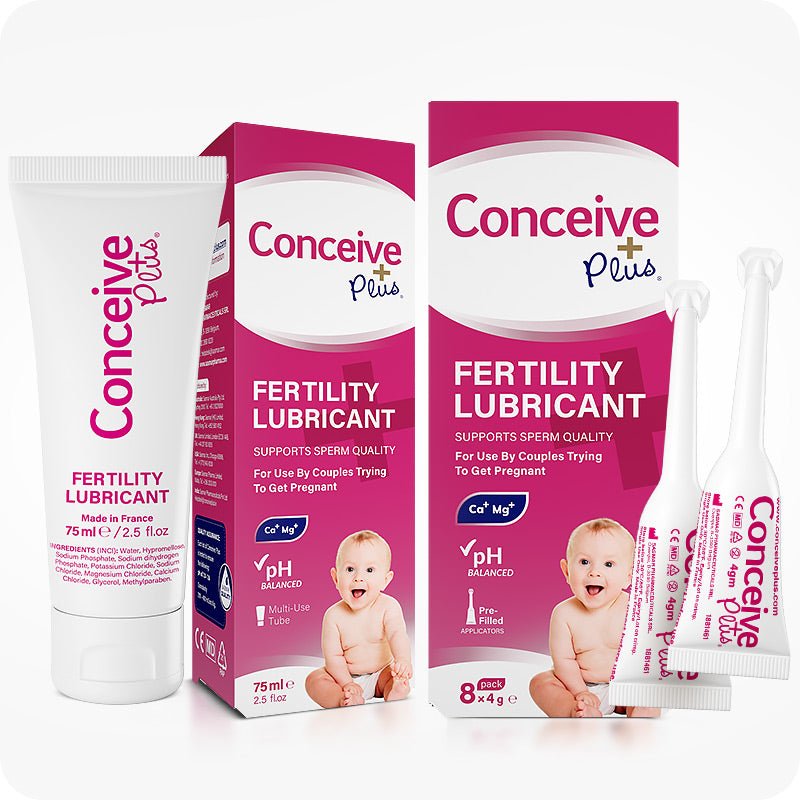
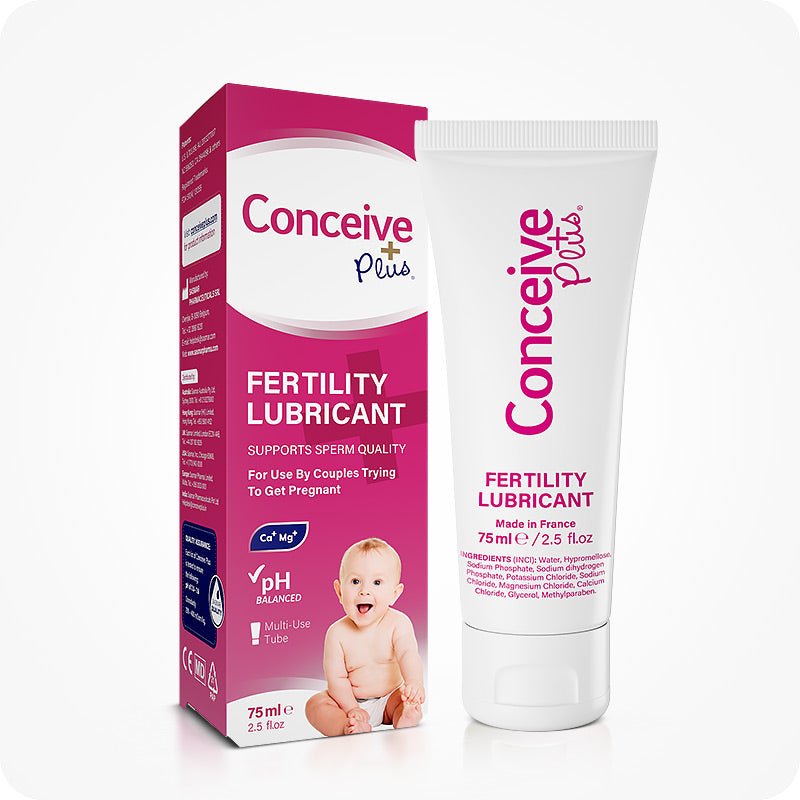
Conceive Plus is formulated by fertility specialists to work with your body — not against it. Our fertility-friendly lubricant is clinically tested to match the pH and osmolality of fertile cervical mucus, ensuring sperm can survive and reach the egg.
Accurately identifying your fertile window requires more precision than simply counting days. Here are the most effective methods:
Ovulation Predictor Kits (OPKs)
OPKs detect the surge of luteinising hormone (LH) that precedes ovulation by approximately 24–36 hours. Standard OPKs provide a positive result when LH reaches a threshold level, while more advanced digital OPKs can detect both estrogen rise (several days before ovulation) and the LH surge, providing a longer advance warning.
To use OPKs effectively:
- Begin testing a few days before expected ovulation (for a 28-day cycle, start around day 10)
- Test at the same time each day — late morning to early afternoon tends to give the most reliable results
- A positive result means the LH surge has begun — plan for intercourse in the next 24–36 hours
- Do not test with first morning urine as it may be too concentrated and give a false positive
Basal Body Temperature (BBT) Charting
Your basal body temperature rises by approximately 0.2–0.4°C after ovulation, due to the thermogenic effect of progesterone. While BBT charting confirms that ovulation occurred, it does so retrospectively — meaning it helps identify patterns over multiple cycles rather than timing intercourse in the current cycle.
To chart BBT:
- Take your temperature every morning before getting out of bed, at the same time each day
- Use a basal thermometer (accurate to two decimal places)
- Chart the readings on a graph or app — look for the rise that indicates post-ovulatory phase
- After 2–3 cycles, you will typically see a pattern that helps predict ovulation timing
Cervical Mucus Monitoring
As ovulation approaches, oestrogen levels rise and cause cervical mucus to become increasingly fluid and sperm-friendly. The progression typically looks like this:
- Post-menstrual: Dry or absent
- Pre-ovulatory: Sticky, creamy, or white
- Fertile: Clear, stretchy, and slippery — resembling raw egg whites
- Post-ovulatory: Returns to dry or creamy consistency
The presence of "egg white cervical mucus" (EWCM) is one of the most reliable natural indicators that you are in your fertile window. It creates a hospitable environment for sperm, helping them survive longer and travel toward the egg more efficiently.
Combining Methods for Maximum Accuracy
The most effective approach is to combine OPKs with cervical mucus monitoring. OPKs tell you when the LH surge has occurred; mucus monitoring tells you whether your body is creating the optimal environment for sperm. Together, they give you a 2–3 day window for targeted intercourse.
The Science of Sperm Survival and Egg Lifespan
Understanding the biology of sperm and egg survival helps explain why timing matters so much.
Sperm Survival
After ejaculation into the vagina, sperm must navigate through cervical mucus, the cervix, the uterine cavity, and into the fallopian tubes — a journey that takes 30 minutes to several hours. The most capable sperm can reach the fallopian tubes within 15–30 minutes; others may take longer or not arrive at all.
Sperm can survive in hospitable cervical mucus for up to 5 days. This is what makes intercourse several days before ovulation effective — sperm deposited on days 1–5 before ovulation can survive in the cervical crypts and "wait" for the egg. In poor-quality or acidic cervical mucus, survival drops significantly, sometimes to less than 12 hours.
Egg Lifespan
After ovulation, the egg is released from the follicle and swept into the fallopian tube. It is viable for fertilisation for approximately 12–24 hours. After this window, the egg degenerates and cannot be fertilised.
This very short window of egg viability is why the 24–48 hours surrounding ovulation are the most critical timing period — having sperm already present in the fallopian tube at the moment the egg arrives is the ideal scenario.
Optimal Frequency of Intercourse During the Fertile Window
One of the most common questions couples ask is how often to have sex during the fertile window. The evidence supports:
- Every 1–2 days throughout the fertile window (days 10–16 in a 28-day cycle) ensures consistent sperm presence in the reproductive tract
- Daily intercourse during the fertile window is equally effective for men with normal sperm parameters and may offer slight advantages in some studies
- For men with oligospermia (low sperm count), a 1–2 day abstinence period before peak fertile days may improve total sperm count for that cycle
Longer abstinence periods (more than 5 days) actually reduce sperm quality — while the total count may be higher, motility and morphology decline. For most couples, frequent intercourse during the fertile window is the optimal strategy.
The Role of Lubrication in Conception
Vaginal dryness during intercourse is common and can have several causes — stress, medication side effects, insufficient arousal time, or simply individual variation. Many couples reach for a lubricant without considering how it might affect their conception efforts.
This is a critical consideration. Research has consistently shown that most personal lubricants — including popular water-based brands, petroleum jelly, and even saliva — are toxic to sperm. A landmark study in the journal Fertility and Sterility found that common lubricants reduced sperm motility by 60–100% within 30–60 minutes, in a dose-dependent manner.
The mechanism is primarily pH-related. Healthy sperm require a pH of 7.2–8.0 to swim effectively. Most commercial lubricants have a lower pH designed for vaginal comfort (which naturally has a more acidic pH), creating an inhospitable environment for sperm. Osmolality (concentration) is a second factor — products with very high osmolality draw water out of sperm cells, damaging them.
Choosing a Fertility-Friendly Lubricant
If lubrication is needed, choose a product specifically formulated for conception — one that:
- Matches the natural pH of fertile cervical mucus (7.2–8.0)
- Has an osmolality compatible with sperm physiology
- Does not contain glycerol, parabens, or chlorhexidine (all of which impair sperm function)
- Has been clinically tested and shown not to impair sperm motility
- Ideally mimics the texture of fertile cervical mucus to maximise sperm transport
Cycle Tracking Apps: Useful Tool or Overrated?
Cycle tracking apps have become ubiquitous, with millions of women using them to predict their fertile window. The algorithms underlying these apps range from simple calendar arithmetic to sophisticated machine learning models that incorporate multiple physiological data points.
Research has found significant variability in the accuracy of fertility apps. A 2019 study published in the BJOG found that apps relying solely on calendar methods predicted ovulation correctly only 21% of the time for women with irregular cycles. Apps that incorporate BBT and/or LH data performed substantially better.
The key takeaways:
- Do not rely solely on a calendar-based app if you have irregular cycles
- Apps that incorporate OPK data (e.g. Inito, Mira, Ava) provide more accurate predictions
- Use apps as a complement to physical tracking methods, not a replacement
Common Timing Mistakes to Avoid
Even well-informed couples make timing errors that reduce their monthly chances. The most common include:
- Waiting for a positive OPK before having sex: By the time the LH surge is detected, you have 24–36 hours before ovulation. Start having sex regularly from the beginning of your fertile window (a few days before expected ovulation).
- Assuming a 28-day cycle: Fewer than 13% of women have a cycle of exactly 28 days. Track your actual cycle length over several months.
- Only having sex on ovulation day: Having sex after ovulation detection means the egg may already be past its fertilisable window. Having sperm present before the egg arrives is the optimal strategy.
- Stopping sex after a positive OPK: Some couples stop after one post-surge session. Having sex on both the day of the surge and the following day maximises coverage of the 24–36 hour post-surge window.
- Using non-fertility-safe lubricants: As discussed, these can significantly reduce sperm function.
- Not adjusting for cycle irregularity: Women with PCOS or other conditions may ovulate unpredictably or later than expected. Extended OPK testing may be needed.
Frequently Asked Questions About Timing Intercourse
What is the most fertile day in the cycle?
The day before ovulation and the day of ovulation are typically the most fertile. Studies show that the probability of conception is approximately 27–33% when intercourse occurs on either of these days. Conception is also possible from 5 days before ovulation due to sperm survival.
Can I use an OPK to confirm ovulation?
OPKs detect the LH surge that triggers ovulation — they do not confirm that ovulation actually occurred. Some women experience LH surges without releasing an egg (anovulatory cycles). BBT charting, which shows the post-ovulatory temperature rise, provides retrospective confirmation that ovulation occurred.
How long does the LH surge last?
The LH surge typically lasts 12–48 hours. Ovulation usually occurs 24–36 hours after the surge begins. Some women have brief surges that may be missed if testing only once daily.
What happens if we miss the fertile window?
If you miss the peak fertile days, conception is unlikely that cycle. Wait until the next cycle and begin tracking earlier. There is no harm in missing a cycle — take the opportunity to refine your tracking approach.
Can male factors affect timing strategies?
Yes. Men with lower sperm counts may benefit from slightly longer abstinence (1–2 days) before the most fertile day to ensure the highest possible sperm count for that session. However, very long abstinence periods (more than 5 days) reduce sperm quality.
Does the time of day we have sex matter?
There is some evidence that sperm quality peaks in late morning, but the magnitude of this effect is small and not clinically significant for most couples. Having sex when it is natural and comfortable for both partners is far more important than timing by the clock.
Should we avoid sex outside the fertile window?
No — outside the fertile window, sex has no bearing on conception in that cycle. Continuing to have sex throughout the cycle maintains intimacy and reduces the performance pressure that comes with "scheduled" conception sex. It also ensures that if your ovulation estimate was off, you haven't completely missed the window.
How do I track my cycle if it's very irregular?
Irregular cycles require more intensive monitoring. OPKs are your best tool — test daily from cycle day 8 or 9 onwards until you detect the surge. Apps that incorporate LH data (like Inito or Mira connected devices) can help identify patterns over time. A gynaecologist can also perform a follicle scan to track egg development in real time.
Can stress delay ovulation?
Yes. Psychological and physiological stress can disrupt hypothalamic-pituitary-ovarian signalling, leading to delayed or missed ovulation. This is one reason why cycles can be irregular during periods of illness, travel, or significant emotional upheaval.
Is the "missionary position" best for conception?
No evidence supports any specific sexual position as being superior for conception. Sperm swim toward the cervix regardless of body position, and gravity plays a minimal role in sperm transport. Use whatever position is comfortable and enjoyable for both partners.
Ready to Optimise Your Fertility?
Whether you're just starting your journey or have been trying for a while, Conceive Plus products are designed by fertility experts to support every step — from optimising the conception environment to providing the nutrients your body needs.
Trusted by thousands of couples around the world. Formulated with care, backed by science.